Li Textile Techniques
Traditional spinning, dyeing, weaving and embroidery knowledge of the Li people.
Open the UNESCO record ↗The short story
More than
a name.
Spinning, dyeing, weaving and embroidery meet in the textile knowledge of the Li people. Read together, they reveal a process rather than a decorative style detached from its makers. The UNESCO record is therefore a starting point for understanding what is being safeguarded before a visitor considers any modern object presented through the language of the tradition.
Why it is here
A useful starting point,
not a verdict.
UNESCO's safeguarding context offers a responsible starting point before considering a commercial object.
This listing is informational. It is not an endorsement, certification, ranking or guarantee. Independently confirm identity, credentials, licences, safety information, price, availability, terms and current operating status before acting.
The researched view
Then, now and
what can be verified next.
This section follows the named sources. If a future direction is not published by the source, it is not added here.
Four techniques held together
UNESCO’s record presents the traditional Li textile techniques of spinning, dyeing, weaving and embroidering as one connected body of knowledge in Hainan, China. The practice is carried through the skill of Li women rather than through a single decorative motif.
The urgent question is continuity
The element was placed on UNESCO’s List of Intangible Cultural Heritage in Need of Urgent Safeguarding in 2009. The designation is a call to sustain knowledge and transmission, not a quality seal for every textile sold with the Li name.
Learn the process before reading the product
Museums, cultural programmes and practitioner-connected sources can help a visitor understand the four-part process. For a purchase, ask who made the textile, where and with which techniques.
Questions worth carrying
Take these to
the source.
- 01
Use the heritage record for cultural context, terminology and safeguarding information.
- 02
Do not treat recognition of a tradition as verification of an individual seller or product.
- 03
Ask a commercial seller about maker identity, origin, materials, process and benefit to practitioners.
Before you act
Use the listing
with context.
These checks are adapted to this kind of entry. The official source remains the place to confirm current details.
- 01
Use the heritage record for cultural context, terminology and safeguarding information.
- 02
Do not treat recognition of a tradition as verification of an individual seller or product.
- 03
Ask a commercial seller about maker identity, origin, materials, process and benefit to practitioners.
Controlling source
Continue with
the official record.
Pass the intriguing part forward—then let the sourced profile do the explaining.
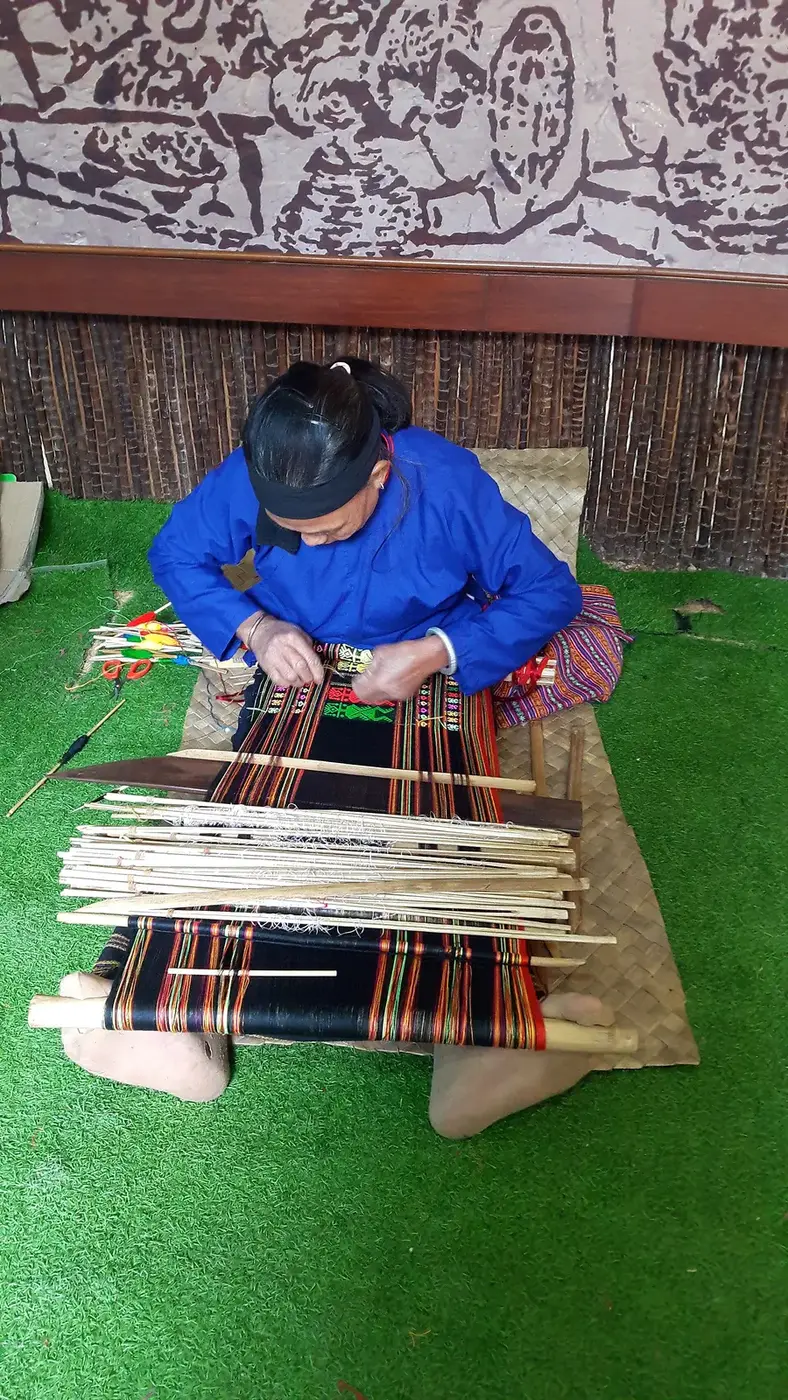
Spinning, dyeing, weaving and embroidery meet here as one endangered knowledge system.
Image: Popolon · CC BY-SA 4.0 · cropped, colour-adjusted and overlaid by Eightjune.com.
Ready to share
Made for personal and editorial sharing with Eight June attribution. Card copy is shortened; the listing and its named sources carry the full context.
Submit, claim or correct
Bring a useful name
into the blue.
Suggest a new listing, identify your relationship to an existing one, or send a correction. Every submission is reviewed before publication.
Payment cannot buy verification. Commercial relationships are labelled wherever they apply.