How · Living
How can deep-sea life thrive around hydrothermal vents without sunlight?
Hydrothermal-vent communities can build food webs from chemical energy rather than sunlight, with chemosynthetic microbes turning vent chemicals into organic matter.
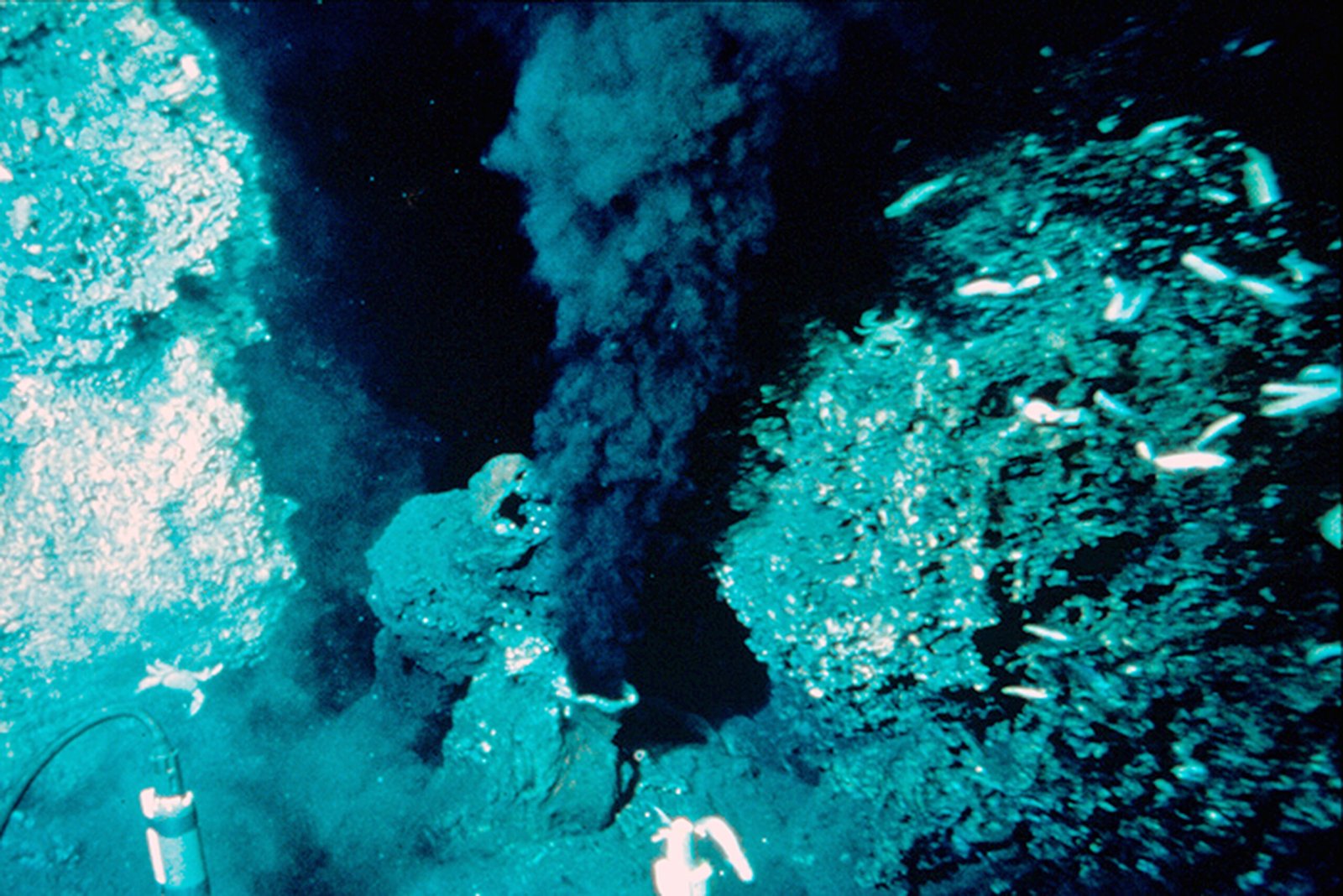
The food web begins with chemistry, not sunlight
Most familiar food webs begin with photosynthesis, but sunlight does not reach the deep seafloor. At hydrothermal vents, chemosynthetic microbes use energy from chemical reactions involving substances released from the crust.
NOAA describes these microbes as the base of food chains at vent communities. Some live freely; others live in close symbiosis with animals.
Seawater and hot rock create the vent
Hydrothermal vents form where seawater circulates through cracks in oceanic crust near volcanically active areas. The water is heated by hot rock and magma, reacts with surrounding minerals, and rises back toward the seafloor.
When hot, mineral-rich fluid meets cold seawater, dissolved material can precipitate and build chimney-like structures commonly called black smokers or white smokers.
Animals depend on microbial partners
Vent animals can include tubeworms, mussels, shrimp, crabs and other species adapted to extreme conditions. Many depend directly or indirectly on chemosynthetic microbes for nutrition.
That makes the chemistry of vent fluids central to the ecosystem: when venting changes or stops, the biological community can also change.
Vent ecosystems are rich but not permanent
NOAA notes that hydrothermal vents are comparatively volatile and short-lived geological features. New vents can form while older ones weaken or become inactive.
The result is a deep-sea landscape where life tracks geologic energy and chemical supply rather than seasons of sunlight.
Before you decide
Keep these five things with you.
- 01Separate chemosynthesis from photosynthesis: one uses chemical energy and the other uses light.
- 02Remember that the microbes, not the vent chimney itself, form the biological base of the food web.
- 03Connect vent communities with active seafloor geology and circulating seawater.
- 04Do not assume every deep-sea animal lives at or depends on hydrothermal vents.
- 05Use current NOAA or research-institution material when comparing individual vent fields because activity and communities vary by site.
How this story earns trust
Sources, method and relationship—visible.
Each reference is tagged by the geography and authority of the source. Country-specific evidence is never presented as a global rule.
Method
This Living explainer was researched and drafted by the Eight June AI-managed editorial workflow, then checked against current NOAA Ocean Exploration primary material. Duplicate screening covered the current article catalogue and recent daily packages before publication.
Commercial relationship
Independent editorial. NOAA, USGS and Wikimedia Commons did not pay for inclusion. This article contains no affiliate recommendation.
Correction or improvement
Found a mistake, a missing perspective or a source we should review? Send it to the editorial desk ↗
- 01What is the difference between cold seeps and hydrothermal vents? ↗
NOAA Ocean Exploration. Official explanation of hydrothermal vents, chemosynthesis and the food-web role of chemosynthetic bacteria.
- 02Hydrothermal Vents and Volcanoes ↗
NOAA Ocean Exploration. Official NOAA background on vent formation, underwater volcanism and chemosynthetic communities.
If this made you pause, pass the blue forward.
How can deep-sea life thrive around hydrothermal vents without sunlight?
Ready to share
Made for personal and editorial sharing with Eight June attribution. Facts are shortened for the card; the article carries the full context, method and sources.
Useful questions
Quick answers,
kept specific.
Do hydrothermal-vent ecosystems need sunlight?
Their food webs can be based on chemosynthesis, in which microbes use chemical energy rather than sunlight to make organic compounds.
Why are hydrothermal vents hot?
Seawater circulates through cracks in oceanic crust, is heated by hot rock and magma, and returns to the seafloor as hot mineral-rich fluid.
Are hydrothermal vents permanent?
No. NOAA describes vents as volatile and comparatively short-lived features; their flow and biological communities can change as seafloor activity changes.