How · Yours
How to understand a ship’s load-line marks
The small marks on a ship’s side connect everyday harbour scenes with a much larger story about loading, freeboard and safety at sea.
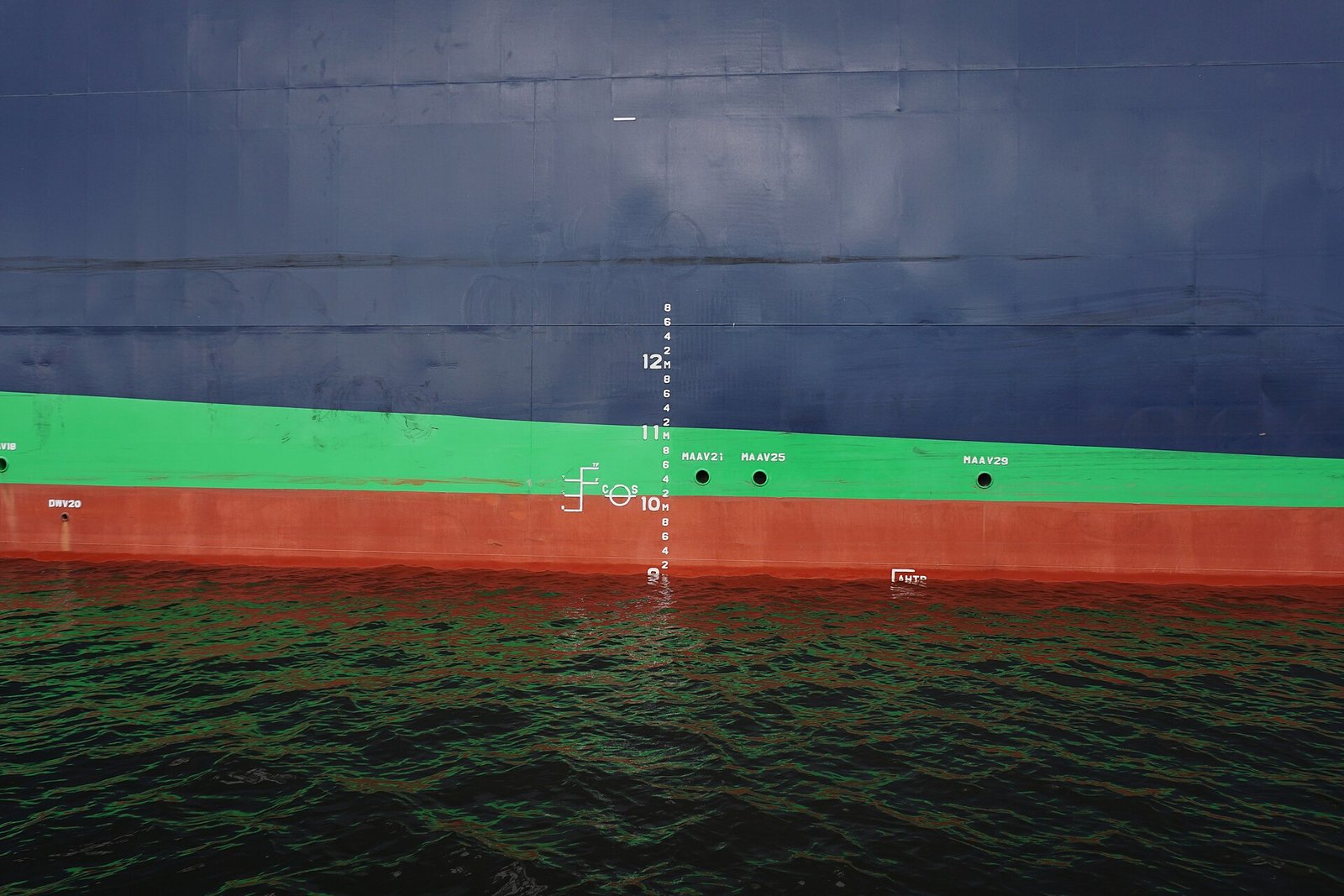
A mark with a purpose beyond the paint
IMO explains that limiting a ship’s loaded draught contributes to safety. The limits are expressed through freeboard: the space left between the water and a defined deck reference. The underlying concerns include reserve buoyancy, stability and stresses in an overloaded hull. These are connected requirements, rather than a promise delivered by a single painted symbol.
Why there can be more than one line
The international framework accounts for different geographical zones and seasons. IMO requires assigned load lines to be marked near the middle of the ship on both sides, with a deck line. This explains why a group of marks may appear together. It does not give a passer-by enough information to select the applicable mark or judge the loading condition.
The campaign behind the name
The familiar name Plimsoll recalls the nineteenth-century campaign against dangerous overloading. Lloyd’s Register’s historical account describes Samuel and Eliza Plimsoll’s work and the struggle to establish independent control of loading limits. The history makes an ordinary harbour detail a reminder of the people whose lives depended on how commercial ships were loaded.
A photograph cannot replace the documents
The Maritime and Coastguard Agency links the load-line regime with stability requirements and certification. Its guidance is directed at shipowners, masters, designers and surveyors, with provisions that depend on vessel type and the relevant rules. Its separate convention guidance also distinguishes international requirements from domestic arrangements. A general explainer cannot decide which requirements apply to a vessel you happen to see.
For an observer, the useful question is what the mark represents. An operational decision needs the vessel’s current documents, its actual condition and the responsible maritime professionals. Do not use a photograph, an apparent gap above the water or this article to decide whether a ship should sail.
Before you decide
Keep these five things with you.
- 01Treat a load-line mark as part of a wider system, not a stand-alone safety verdict.
- 02Keep the place, season and vessel-specific requirements in mind when reading an explanation.
- 03Refer operational or compliance questions to the responsible maritime authority or qualified professional.
- 04Distinguish an explanation of the international convention from guidance for one country or vessel type.
- 05Read the Plimsoll campaign as maritime history, rather than as a substitute for current requirements.
How this story earns trust
Sources, method and relationship—visible.
Each reference is tagged by the geography and authority of the source. Country-specific evidence is never presented as a global rule.
Method
Researched and drafted by AI from the linked IMO, Maritime and Coastguard Agency and Lloyd’s Register sources. A separate AI editorial read-back checked the finished copy, source scope, current site inventory, image provenance and five Share Studio cards on 21 October 2026. This is maritime discovery information, not loading instructions, a vessel survey or legal advice. No human review is claimed.
Commercial relationship
Independent editorial information. Any affiliate links or paid placements will be clearly labelled where they appear.
Correction or improvement
Found a mistake, a missing perspective or a source we should review? Send it to the editorial desk ↗
- 01IMO · International Convention on Load Lines ↗
International Maritime Organization. Purpose of freeboard and load-line assignment, zones, seasons and location of marks.
- 02MCA · Stability guidance and load lines ↗
Maritime and Coastguard Agency. Vessel stability, certificates and the professional scope of the guidance.
- 03MCA · Convention guidance ↗
Maritime and Coastguard Agency. International requirements and the distinction from domestic regimes.
- 04Plimsoll at 200 · the legacy beyond the load line ↗
Lloyd’s Register. Historical account by Nicolette Jones of Samuel and Eliza Plimsoll’s campaign.
If this made you pause, pass the blue forward.
How to understand a ship’s load-line marks
Ready to share
Made for personal and editorial sharing with Eight June attribution. Facts are shortened for the card; the article carries the full context, method and sources.
Useful questions
Quick answers,
kept specific.
Is a Plimsoll line the same idea as a load line?
Plimsoll is the familiar historical name associated with the load line. Read the current authority’s terminology and vessel documents for operational questions.
Does a visible mark prove that a ship is safe?
No. It cannot establish the vessel’s condition, certification or compliance for a specific voyage from a photograph alone.
Why are there several hull marks?
The international load-line framework accounts for different zones and seasons. Identifying which requirement applies needs vessel-specific information.