What · Pulse
What does a Blue Flag beach award actually mean?
A Blue Flag is a voluntary sustainability award for qualifying beaches, marinas and tourism boats. For beaches, it signals compliance with programme requirements spanning water quality, environmental management, education, safety, services and accessibility—but it is not a promise that every condition will be perfect on every visit.
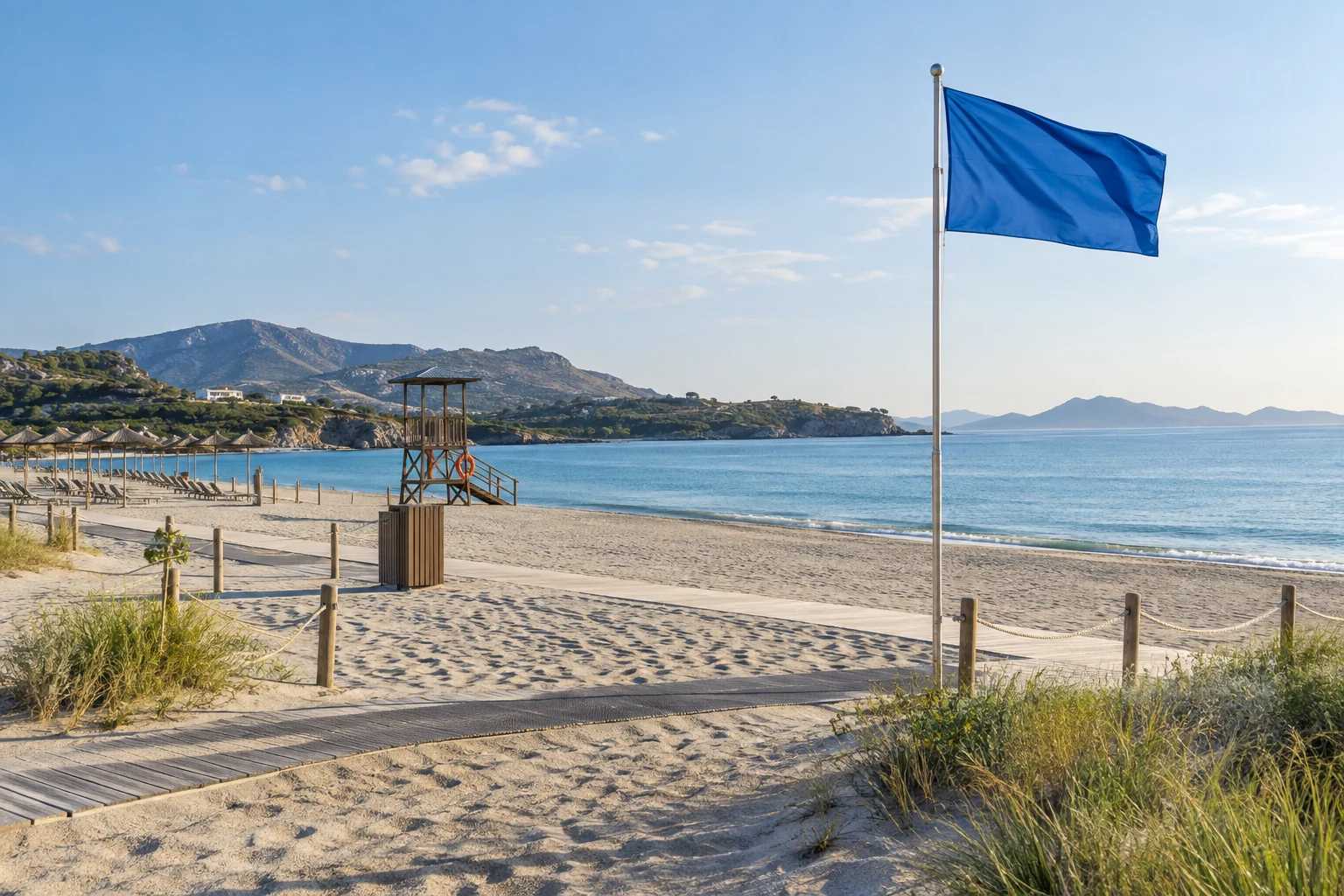
The award is broader than clean water
Blue Flag is operated by the Foundation for Environmental Education as an international voluntary programme for beaches, marinas and tourism boats. The requirements differ by site type, so a beach award should be read against the beach criteria rather than as a generic ocean label.
For beaches, water quality is central, but the programme also covers environmental management, education and information, biodiversity and climate action, accessibility, safety and visitor services.
A flag is evidence of a managed standard, not a forecast
Blue Flag says participating sites are evaluated and monitored and must maintain applicable requirements during the relevant award period. Its own programme information also places responsibility for continued compliance on the site owner or operator after an award is made.
That distinction matters to visitors. An award does not remove day-to-day variation in surf, weather, temporary pollution incidents, wildlife, closures or staffing. Current local notices still take priority for the visit in front of you.
- Check the current bathing-water notice
- Check lifeguard or safety-service status
- Read local hazard and access information
- Follow protected-area or wildlife rules
2026 has an unusual award timetable
In April 2026, Blue Flag International announced a transitional two-year award approach covering the 2026 and 2027 seasons while the programme aligns with evolving regulatory requirements.
For sites awarded in 2026, the award can remain valid for the 2027 season subject to continued compliance, annual monitoring and annual review. Blue Flag states that the transition does not lower the programme standards or scrutiny.
Use the flag as the start of a better beach check
A Blue Flag can narrow the question from “is this beach managed at all?” to “what do today’s conditions say within a site that participates in this programme?” That is a more useful way to read the symbol.
Before travelling, use the national or local Blue Flag operator and the relevant public authority for the current site status. At the beach, read posted water-quality, safety and environmental information rather than relying on the flag alone.
Before you decide
Keep these five things with you.
- 01Confirm the beach is awarded for the current season
- 02Read the latest bathing-water notice
- 03Check today’s weather, surf and safety warnings
- 04Check access, accessibility and temporary closure notices
- 05Follow site-specific environmental and wildlife guidance
How this story earns trust
Sources, method and relationship—visible.
Each reference is tagged by the geography and authority of the source. Country-specific evidence is never presented as a global rule.
Method
This Pulse article was researched, drafted, organised and independently reviewed using AI against Blue Flag International’s current programme and criteria pages and its April 2026 transitional-award notice. It explains what the programme itself says the award covers and preserves the difference between award status and day-of-visit conditions.
Commercial relationship
Independent editorial. Blue Flag and the Foundation for Environmental Education did not approve or verify this article. Any affiliate links or paid placements will be clearly labelled where they appear.
Correction or improvement
Found a mistake, a missing perspective or a source we should review? Send it to the editorial desk ↗
- 01Blue Flag criteria ↗
Blue Flag · Foundation for Environmental Education. Current overview of programme requirements and the six key areas.
- 02Our Programme ↗
Blue Flag · Foundation for Environmental Education. Programme scope, monitoring and operator responsibility for continued compliance.
- 03Transitional award approach for 2026–2027 ↗
Blue Flag · Foundation for Environmental Education. April 2026 explanation of the temporary two-year award mechanism and continued annual monitoring.
If this made you pause, pass the blue forward.
What does a Blue Flag beach award actually mean?
Ready to share
Made for personal and editorial sharing with Eight June attribution. Facts are shortened for the card; the article carries the full context, method and sources.
Useful questions
Quick answers,
kept specific.
Does a Blue Flag mean the sea is safe every day?
No. The award includes water-quality and safety requirements, but visitors still need current local information about weather, surf, water quality, closures and other hazards.
Is Blue Flag only a beach programme?
No. The programme also covers marinas and tourism boats, with requirements that vary by site category.
Why can a 2026 award still matter in 2027?
Blue Flag introduced a temporary 2026–2027 award approach. A 2026 award may continue into 2027 only with continued compliance, annual monitoring and annual review.