Where · Compass
Where do loggerhead sea turtles return to nest after crossing an ocean?
Female loggerheads can cross ocean basins and later nest near their birthplace. Explore the evidence for magnetic navigation, what it does not prove and why protecting nesting beaches matters.
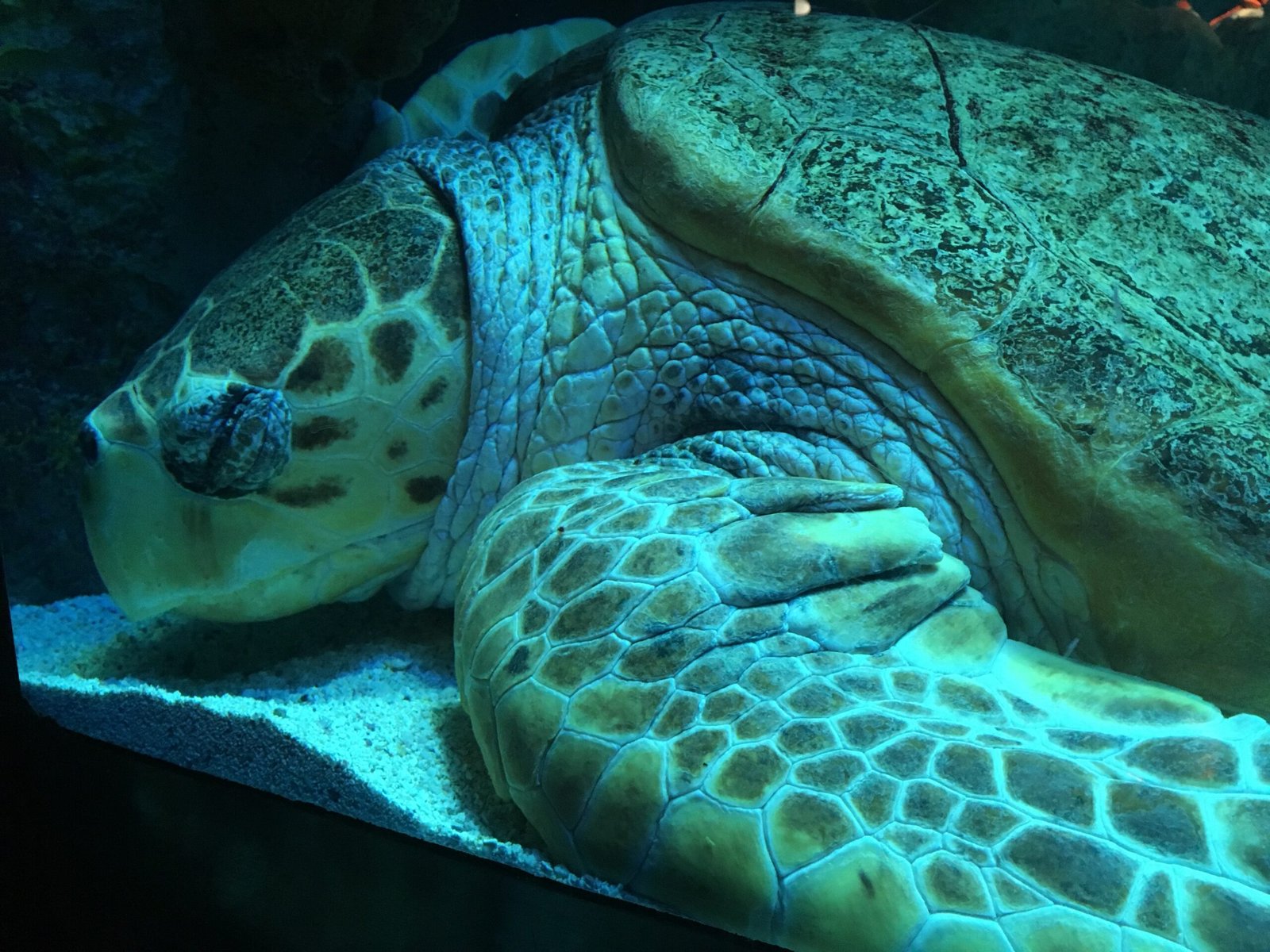
The destination is a coastal region, not an exact footprint
NOAA Fisheries describes loggerheads as long-distance marine migrants. Adult females commonly return to nesting beaches in the general area where they hatched decades earlier. The precise beach and nesting location may vary.
This distinction matters: natal homing is a strong regional tendency, not a promise that every turtle revisits one unchanged point. The shoreline itself can move with erosion, storms and changing coastal conditions.
A lifetime between open ocean and shore
After leaving their nesting beaches, young loggerheads spend years in the open ocean. NOAA describes later movement into nearshore feeding habitats and eventual adult migration between feeding grounds and breeding beaches.
Some Pacific loggerheads make exceptionally long ocean crossings. The route can involve currents and different ocean habitats; migration is not a straight line drawn on a map.
The magnetic-map hypothesis
A study by J. Roger Brothers and Kenneth Lohmann examined nineteen years of loggerhead nesting records and changes in the Earth's magnetic field. Nesting patterns shifted in ways consistent with the prediction that turtles learn a magnetic signature associated with their natal coast.
That evidence supports geomagnetic imprinting as an important navigation mechanism. It does not directly reveal everything an individual turtle senses or exclude other environmental cues.
Navigation is more than a built-in compass
Experimental research on young loggerheads found different swimming responses when exposed to magnetic fields corresponding to locations along migratory routes. These responses may help turtles stay within useful ocean-current and temperature conditions.
A magnetic compass indicates direction; a magnetic map may provide information about location. Researchers continue to investigate how these capabilities combine with currents and other sensory cues.
Why a familiar beach still needs protection
Returning females need suitable nesting habitat. NOAA identifies artificial beachfront lighting as a threat because hatchlings can move away from the natural seaward horizon. Nesting females can also be disoriented by lighting.
Conservation therefore includes beach management, light reduction, reducing disturbance and protecting the marine habitats turtles use between nesting seasons. A navigational ability cannot compensate for a nesting beach made unsafe.
How to interpret a turtle tracking story
Check whether a map shows a satellite-tracked individual, a population-wide migration or a model. Ask whether the animal is juvenile or adult, and whether the destination is a nesting beach or a feeding ground.
Never approach nesting turtles, handle hatchlings for photographs or shine bright lights on a nesting beach. Follow local wildlife-authority rules rather than generic advice from social media.
Before you decide
Keep these five things with you.
- 01Check whether the source describes loggerheads or another sea turtle species.
- 02Distinguish a return to a natal region from a claim of exact-beach precision.
- 03Treat magnetic imprinting as supported scientific evidence, not a complete explanation of every journey.
- 04Check whether a tracking map follows a single turtle or summarizes a population.
- 05Respect nesting-beach lighting restrictions and local wildlife guidance.
How this story earns trust
Sources, method and relationship—visible.
Each reference is tagged by the geography and authority of the source. Country-specific evidence is never presented as a global rule.
Method
AI-assisted editorial synthesis of NOAA Fisheries and peer-reviewed primary research. The current repository's article and listing catalogues, 39 legacy daily article records, dated packages through 7 November and remote-media declarations were screened for duplicate titles, intent and image provenance. Native WordPress inventory could not be reached. A licensed contextual aquarium photograph was inspected at its Wikimedia source and original raster.
Commercial relationship
Independent educational article. No sponsorship, affiliate relationship or payment from NOAA, the researchers, the aquarium or photographer is represented.
Correction or improvement
Found a mistake, a missing perspective or a source we should review? Send it to the editorial desk ↗
- 01Loggerhead turtle ↗
NOAA Fisheries. Adult females migrate long distances and commonly return to the general area where they hatched.
- 02Evidence for geomagnetic imprinting and magnetic navigation in natal homing ↗
Brothers and Lohmann, Current Biology / PubMed. Nineteen-year loggerhead nesting analysis supports a role for geomagnetic imprinting, not a perfect GPS mechanism.
- 03Magnetic navigation behavior and the oceanic ecology of young loggerhead sea turtles ↗
Journal of Experimental Biology. Experimental magnetic-field responses of young turtles and interaction with ocean currents.
If this made you pause, pass the blue forward.
Where do loggerhead sea turtles return to nest after crossing an ocean?
Ready to share
Made for personal and editorial sharing with Eight June attribution. Facts are shortened for the card; the article carries the full context, method and sources.
Useful questions
Quick answers,
kept specific.
Do loggerheads return to the exact beach where they hatched?
Females usually return to the general natal coastal region, but exact beach-level precision should not be assumed.
Do sea turtles have an internal GPS?
Research supports magnetic navigation and possible geomagnetic imprinting, but GPS is an analogy, not a literal device or a complete scientific explanation.
How long can loggerheads remain at sea before nesting?
NOAA describes years in oceanic and coastal habitats before females mature and return to breed.
Why is artificial beach lighting a problem?
Artificial light can disorient hatchlings and nesting females, disrupting movement toward and from the sea.