Who · Voices
Who listens for whales beneath the ocean surface?
Meet the acoustic researchers who listen for marine mammals with hydrophones, and learn what underwater sound can—and cannot—reveal about ocean life.
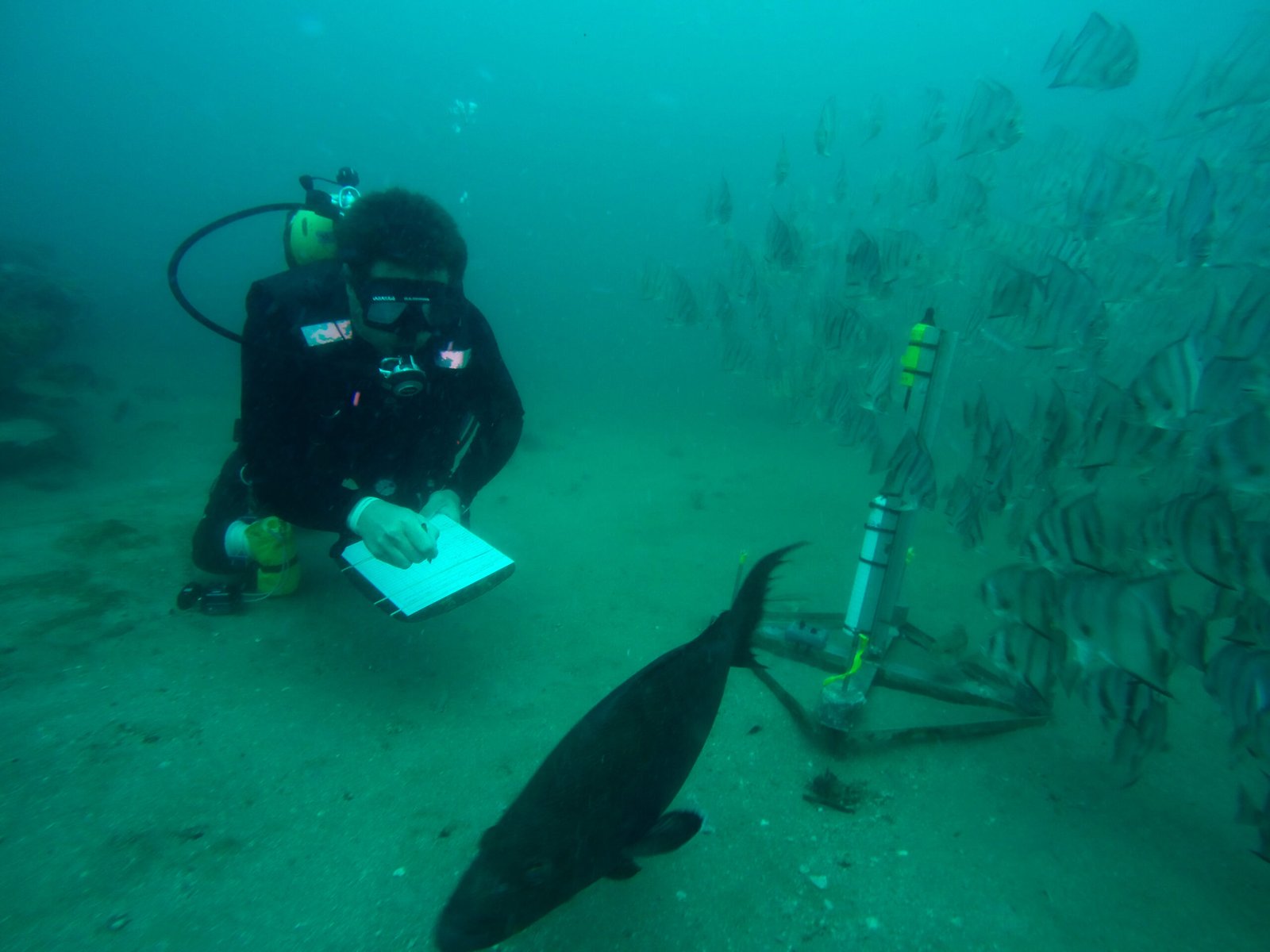
The listeners are scientists, not just microphones
NOAA Fisheries describes teams of acoustic scientists who work on marine mammal surveys in the Atlantic and Gulf. Their work connects field crews, sound-recording equipment, analysts and population assessment specialists.
A hydrophone is a microphone designed to detect underwater sound. It does not independently tell researchers which animal made every noise; interpretation depends on known call patterns, context, recording quality and specialist analysis.
A moving ship can tow an underwater listening array
NOAA's Southeast Fisheries Science Center uses arrays of multiple hydrophones to listen for toothed whales and dolphins during ship-based surveys. The hydrophones can be towed hundreds of metres behind the vessel to reduce interference from the ship and help detect animal sounds.
Sound reaches individual hydrophones at slightly different times. Researchers can use those differences to estimate a sound's direction, though accurately determining a source's location depends on the array, signal and environment.
Fixed listening stations record a changing soundscape
NOAA National Marine Sanctuaries also documents underwater listening stations, including shallow-water hydrophones used to record fish and boat sounds and deeper stations that can detect whales and ships.
These recordings are useful because the ocean is not silent between sightings. They can help researchers investigate seasonal activity, marine noise and the presence of vocal animals even when direct visual observation is difficult.
One sound is evidence, not a headcount
A whale or dolphin must vocalise within detection range for an acoustic system to register it. Some calls are faint, masked by vessels or other noise, or too distant to identify confidently. Species differ in their vocal behaviour.
A call detection can support presence or distribution research, but estimating population abundance requires additional assumptions, effort measurements, detection probabilities and often visual surveys. Researchers should not present every acoustic event as one separate animal.
What ocean noise changes
Recordings can contain biological sound, waves, rain and human-made sound from ships. Some noise overlaps frequencies used by marine mammals, which complicates both communication research and the scientist's ability to hear a signal.
An acoustic record is therefore also a record of conditions. Scientists consider the time, place, equipment, weather and soundscape before interpreting changes as changes in animal activity.
How to read a whale-sound headline
Ask whether the study used a fixed recorder, a towed array or another method, and whether it identified a species or simply detected a sound category. The distinction affects how much can be concluded.
Look for the monitoring period, survey area, acoustic detection limits and independent supporting observations. Listening opens a valuable window on marine life, but it does not remove scientific uncertainty.
Before you decide
Keep these five things with you.
- 01Identify whether the recording came from a fixed hydrophone or a towed array.
- 02Check which whale or dolphin species the researchers say they detected.
- 03Distinguish an acoustic detection from an estimate of the number of animals.
- 04Look for the survey period, location and known detection limitations.
- 05Read the original research institution's explanation before sharing a sound clip.
How this story earns trust
Sources, method and relationship—visible.
Each reference is tagged by the geography and authority of the source. Country-specific evidence is never presented as a global rule.
Method
AI-assisted editorial drafting from NOAA Fisheries primary technical pages and NOAA National Marine Sanctuaries image documentation, with duplicate screening against current base catalogues, 39 legacy daily articles, 27 dated packages through 8 November and remote-media declarations. Public WordPress REST inventory was inaccessible. The NOAA licensed original was opened and visually inspected.
Commercial relationship
Independent educational article. No sponsorship, affiliate commission, payment or partnership with NOAA, the researchers or image contributors is represented.
Correction or improvement
Found a mistake, a missing perspective or a source we should review? Send it to the editorial desk ↗
- 01Passive Acoustic Research at the Southeast Fisheries Science Center ↗
NOAA Fisheries. NOAA scientists tow hydrophone arrays to record cetacean sounds and assess distribution and abundance.
- 02Passive Acoustic Technologies Used at the Southeast Fisheries Science Center ↗
NOAA Fisheries. Towed hydrophone arrays, timing differences, and limits of acoustic localization.
- 03Hydrophone deployment in Gray's Reef National Marine Sanctuary ↗
NOAA National Marine Sanctuaries. NOAA documented hydrophone monitoring of fish, whales, ships and ambient sanctuary sound.
If this made you pause, pass the blue forward.
Who listens for whales beneath the ocean surface?
Ready to share
Made for personal and editorial sharing with Eight June attribution. Facts are shortened for the card; the article carries the full context, method and sources.
Useful questions
Quick answers,
kept specific.
Who uses hydrophones to listen for whales?
Marine mammal acousticians and ocean research teams use hydrophones to record underwater calls, often alongside visual surveys.
Can a hydrophone identify every whale?
No. Identification depends on species-specific sounds, signal quality, noise and the animal's vocal activity.
Does one whale call mean one whale?
No. One animal can call repeatedly, and acoustic detections alone do not give an automatic count of individuals.
Why do researchers tow several hydrophones?
Differences in when a sound reaches each hydrophone can help researchers estimate its direction.