Why · Essence
Why can coastal water run out of oxygen?
Coastal hypoxia develops when dissolved oxygen falls too low to support many animals, often after nutrient-fuelled algal growth, decomposition and restricted mixing combine.
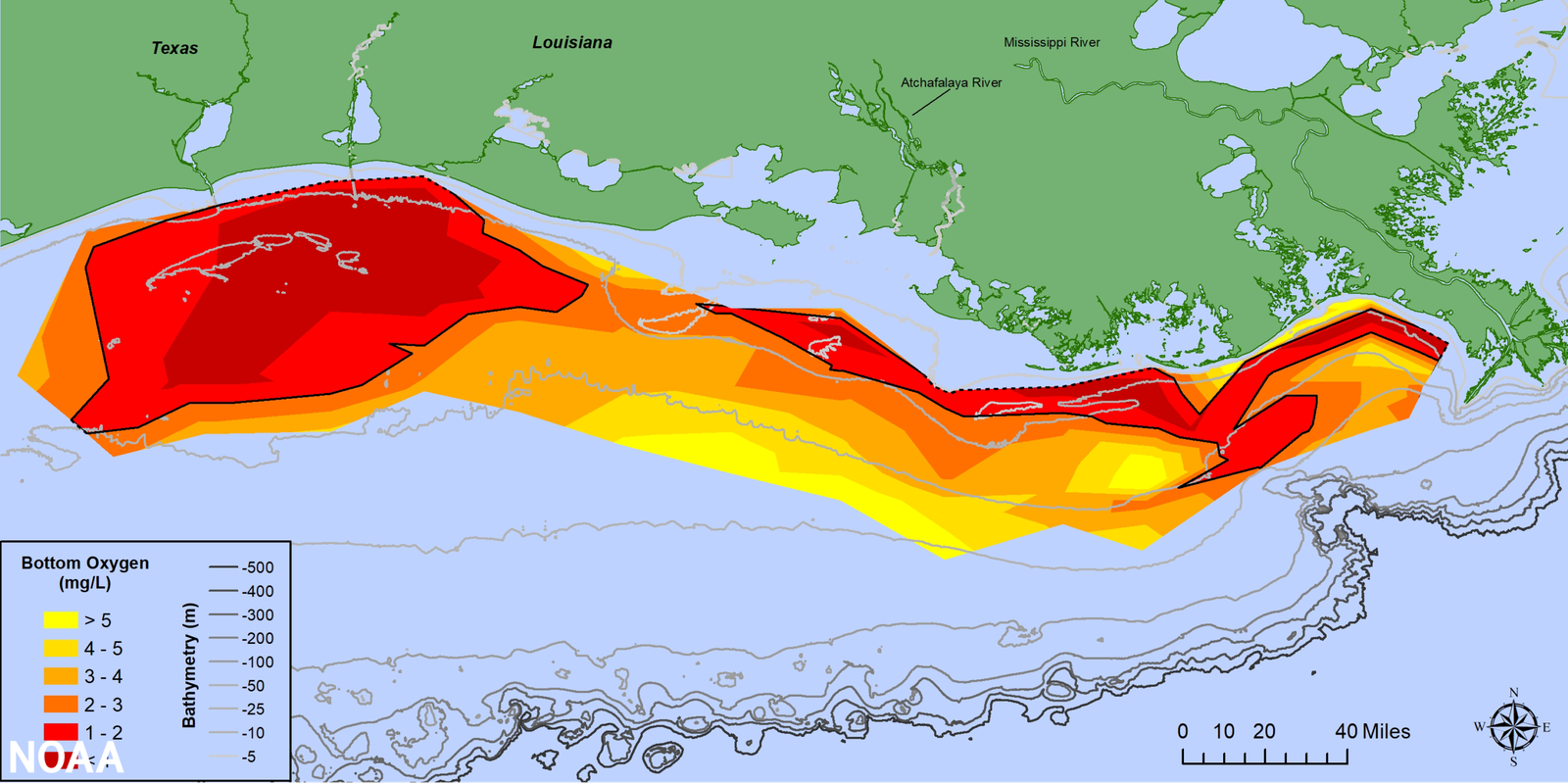
Hypoxia means there is too little dissolved oxygen
Marine animals do not breathe the oxygen atom bound inside water molecules; they depend on oxygen gas dissolved in the water. NOAA uses hypoxia for low or depleted dissolved oxygen and notes that severely affected areas are commonly called dead zones.
Mobile animals may leave when they can. Less mobile organisms and bottom communities can be stressed or die when oxygen stays too low.
Nutrients can start a biological chain reaction
Nitrogen and phosphorus entering coastal waters can stimulate excessive algal growth. The visible bloom is only part of the story.
When algae die and sink, bacteria decompose that organic matter. Decomposition consumes dissolved oxygen, reducing what remains available to marine life.
Stratification can stop oxygen from being replaced
Fresh water entering an estuary can sit above denser salty seawater and create layers. NOAA identifies this water-column stratification as an important physical contributor to hypoxia.
When vertical mixing is weak, oxygen from the atmosphere and oxygenated surface water does not readily reach deeper water, while decomposition can continue consuming oxygen below.
A dead zone is not literally empty of all life
The phrase dead zone is useful shorthand, but oxygen conditions vary across space, depth and time. Some organisms escape, some tolerate lower oxygen better than others, and conditions can change with weather and mixing.
For a specific coast, use current monitoring from the responsible environmental or ocean authority rather than assuming that a historic hypoxic zone describes today’s conditions.
Before you decide
Keep these five things with you.
- 01Distinguish dissolved oxygen from the oxygen chemically bound in water molecules
- 02Look for nutrient inputs and algal growth when studying human-enhanced coastal hypoxia
- 03Remember that decomposition consumes oxygen after organic matter sinks
- 04Check whether stratification is restricting vertical mixing
- 05Use current local monitoring before drawing conclusions about a particular coast
How this story earns trust
Sources, method and relationship—visible.
Each reference is tagged by the geography and authority of the source. Country-specific evidence is never presented as a global rule.
Method
This Essence article was researched, drafted and editorially reviewed by the Eight June AI-managed workflow using current NOAA Ocean Service explanations of hypoxia and dead zones, with claims limited to the controlling primary sources.
Commercial relationship
Independent editorial. NOAA and the image contributors did not pay for inclusion. This article does not certify the water quality or safety of any particular coast.
Correction or improvement
Found a mistake, a missing perspective or a source we should review? Send it to the editorial desk ↗
- 01What is a dead zone? ↗
NOAA Ocean Service. Official explanation of hypoxia, nutrient pollution, decomposition and effects on marine life.
- 02Hypoxia ↗
NOAA Ocean Service. Official explanation of low dissolved oxygen, stratification and dead-zone formation.
If this made you pause, pass the blue forward.
Why can coastal water run out of oxygen?
Ready to share
Made for personal and editorial sharing with Eight June attribution. Facts are shortened for the card; the article carries the full context, method and sources.
Useful questions
Quick answers,
kept specific.
What does hypoxia mean in coastal water?
It means dissolved oxygen has fallen to a low or depleted level that can stress or exclude many aquatic organisms.
Why can algal growth lead to low oxygen?
When algae and other organic matter die and decompose, microbes consume dissolved oxygen during decomposition.
Why does stratification make hypoxia worse?
Layering can restrict vertical mixing, so oxygenated surface water does not readily replenish deeper water where oxygen is being consumed.