Why · Living
Why do kelp forests form underwater canopies?
Kelp are large brown algae that anchor to rocky seafloors and grow upward through cool, nutrient-rich coastal water, creating layered marine habitat from the bottom to the surface.
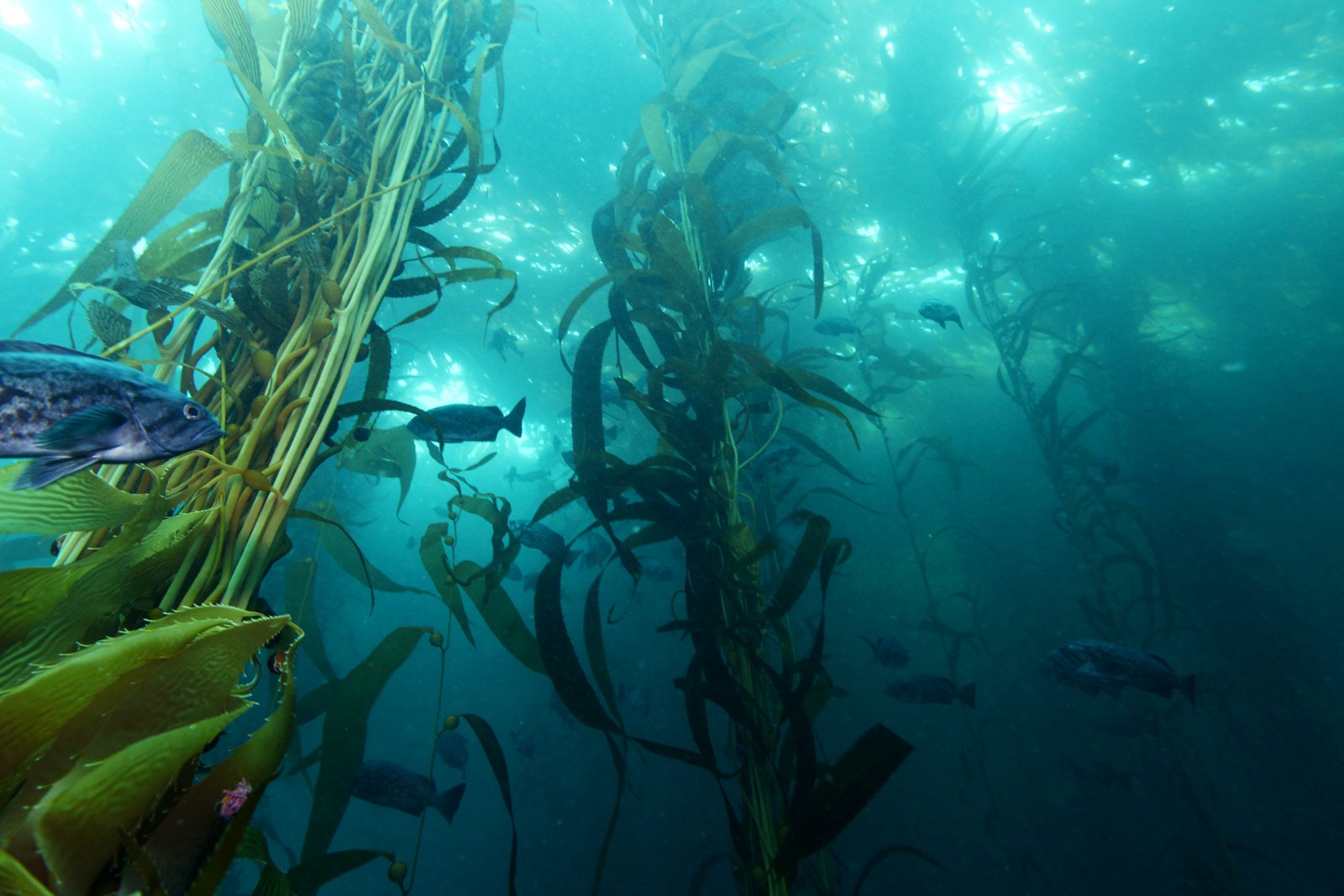
Kelp needs the right coastal setting
Kelp is algae rather than a rooted land plant. NOAA describes kelp as large brown algae that thrive mainly in cool, nutrient-rich coastal waters where light can reach the seafloor.
A rocky bottom matters because the holdfast grips rock and keeps the kelp attached while waves and currents move the flexible upper structure.
Growth turns individual algae into a canopy
Stipes carry leaf-like blades upward toward sunlight. Some kelp species have gas-filled pneumatocysts that help suspend those blades higher in the water column.
When many individuals grow densely together, their blades can spread near the surface and create a canopy that changes light, water movement and shelter below.
The forest has layers
NOAA describes kelp forests as layered habitats. The floating canopy can shelter animals near the surface, while stipes and blades create midwater structure used by fish for feeding and refuge.
At the bottom, holdfasts and rocky reef support sea stars, crabs, snails, urchins, anemones and other organisms. This vertical structure is why a kelp bed functions as more than a patch of seaweed.
A kelp forest can expand or retreat
Kelp responds quickly to ocean conditions. Warming water, pollution, habitat disturbance and shifts in predators and grazers can all affect a forest.
Sea urchins are an important example: NOAA notes that heavy grazing can remove kelp, particularly when ecological changes allow grazer populations to increase. A kelp forest is therefore a dynamic marine ecosystem rather than a permanent underwater fixture.
Before you decide
Keep these five things with you.
- 01Look for cool, nutrient-rich coastal water rather than assuming kelp grows in every sea
- 02Remember that kelp anchors to hard substrate with a holdfast rather than roots
- 03Read the canopy, midwater and seafloor as different habitat layers
- 04Connect fish and invertebrate abundance with the shelter and food created by kelp structure
- 05Check current local sanctuary or marine-management guidance before entering or harvesting in a kelp area
How this story earns trust
Sources, method and relationship—visible.
Each reference is tagged by the geography and authority of the source. Country-specific evidence is never presented as a global rule.
Method
This Living article was researched, drafted and editorially reviewed by the Eight June AI-managed workflow using NOAA National Marine Sanctuaries, NOAA Ocean Service and NOAA Fisheries material on kelp biology, habitat structure and ecosystem pressures.
Commercial relationship
Independent editorial. NOAA did not pay for inclusion. The article does not endorse harvesting, diving, fishing or any commercial operator.
Correction or improvement
Found a mistake, a missing perspective or a source we should review? Send it to the editorial desk ↗
- 01Kelp Forest ↗
NOAA Office of National Marine Sanctuaries. Official explanation of kelp structure, habitat layers, ecosystem value and pressures.
- 02What lives in a kelp forest? ↗
NOAA Ocean Service. Official overview of animals associated with kelp-forest habitat.
- 03Kelp Forest Habitat on the West Coast ↗
NOAA Fisheries. Official fisheries context for kelp distribution, productivity and grazing pressure.
If this made you pause, pass the blue forward.
Why do kelp forests form underwater canopies?
Ready to share
Made for personal and editorial sharing with Eight June attribution. Facts are shortened for the card; the article carries the full context, method and sources.
Useful questions
Quick answers,
kept specific.
Is kelp a plant?
No. NOAA describes kelp as large brown algae, even though dense kelp can form a forest-like marine habitat.
Why does kelp often grow on rocky seafloors?
Its holdfast needs a firm surface to anchor the alga against waves and currents.
Why are kelp forests important to marine animals?
Their canopy, blades, stipes and holdfasts create food, shelter and nursery habitat for many fish, invertebrates, marine mammals and seabirds.