Why · Essence
Why does ‘marine snow’ fall through the deep ocean?
Marine snow is a continuous shower of mostly organic particles sinking from surface waters, carrying food and carbon toward the deep ocean.
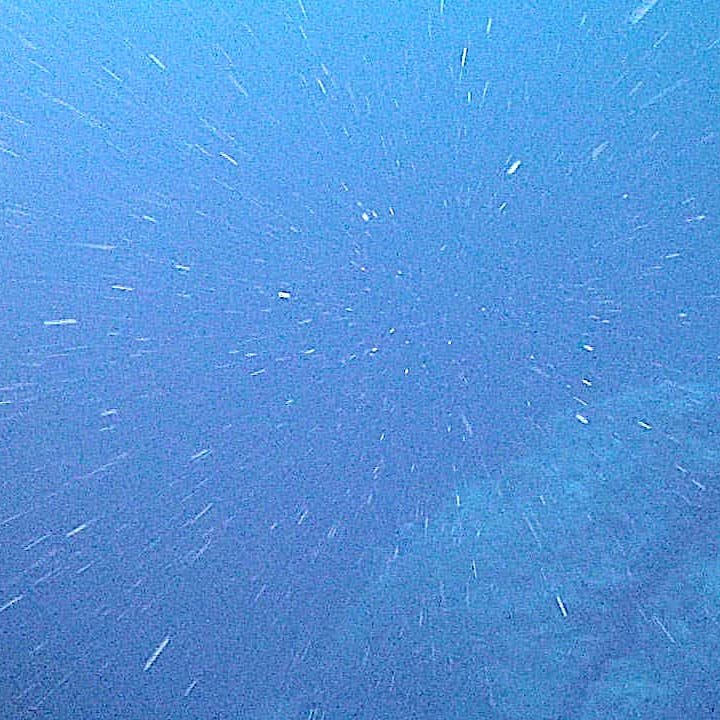
The ‘snow’ begins near the ocean surface
NOAA explains that marine snow originates largely in upper ocean waters, including phytoplankton, microbes and material from dead or decaying organisms.
As particles sink they can collect fecal material, suspended sediment and other debris. The flakes can grow as they descend, which helps some of them sink faster.
Falling particles connect bright water to the dark ocean
Below the sunlit zone, many organisms cannot rely directly on photosynthesis. The steady rain of particles from above becomes an important food supply.
NOAA notes that deep-sea animals filter marine snow from the water or scavenge it after it reaches the seabed.
Most marine snow is recycled before it reaches the bottom
Sinking material is consumed and decomposed throughout the water column, so only part of the original material survives the full journey.
The fraction that reaches the seafloor can become incorporated into deep-ocean sediments and continue to be broken down by biological activity.
Marine snow is part of the ocean carbon story
Because marine snow transports carbon-containing material away from the surface, scientists study it as part of the biological carbon pump.
The amount reaching depth varies with surface productivity, decomposition, consumption and ocean currents, so marine snowfall is not uniform across the sea.
Before you decide
Keep these five things with you.
- 01Think of marine snow as sinking particles, not frozen water
- 02Connect surface phytoplankton and microbes with deep-ocean food supply
- 03Remember that particles can be eaten or decomposed while sinking
- 04Separate the visible flakes from the broader biological carbon-pump process
- 05Use current oceanographic research when comparing how much material reaches depth in different regions
How this story earns trust
Sources, method and relationship—visible.
Each reference is tagged by the geography and authority of the source. Country-specific evidence is never presented as a global rule.
Method
This Essence explainer was researched and drafted by the Eight June AI-managed editorial workflow, then checked against NOAA National Ocean Service and NOAA Ocean Exploration primary material before publication.
Commercial relationship
Independent editorial. NOAA and Wikimedia Commons did not pay for inclusion. This article contains no affiliate recommendation.
Correction or improvement
Found a mistake, a missing perspective or a source we should review? Send it to the editorial desk ↗
- 01What is marine snow? ↗
NOAA National Ocean Service. Official explanation of marine snow, its composition, sinking and role as deep-sea food.
- 02What is ‘marine snow’? ↗
NOAA Ocean Exploration. Official explanation of particle origins, sinking, consumption and variability through the water column.
If this made you pause, pass the blue forward.
Why does ‘marine snow’ fall through the deep ocean?
Ready to share
Made for personal and editorial sharing with Eight June attribution. Facts are shortened for the card; the article carries the full context, method and sources.
Useful questions
Quick answers,
kept specific.
Is marine snow actually frozen?
No. It is mostly biological debris and other particles sinking through seawater; the name comes from its snow-like appearance.
How long can marine snow take to reach the seafloor?
NOAA notes that some flakes can fall for weeks before reaching the ocean floor.
Why does marine snow matter to deep-sea animals?
It transports usable organic material from productive surface waters into dark depths where many animals filter or scavenge it as food.