Why · Essence
Why do ocean waves break as they reach the shore?
As wind-driven waves enter shallow coastal water, interaction with the seabed slows and steepens them until they become unstable and break.
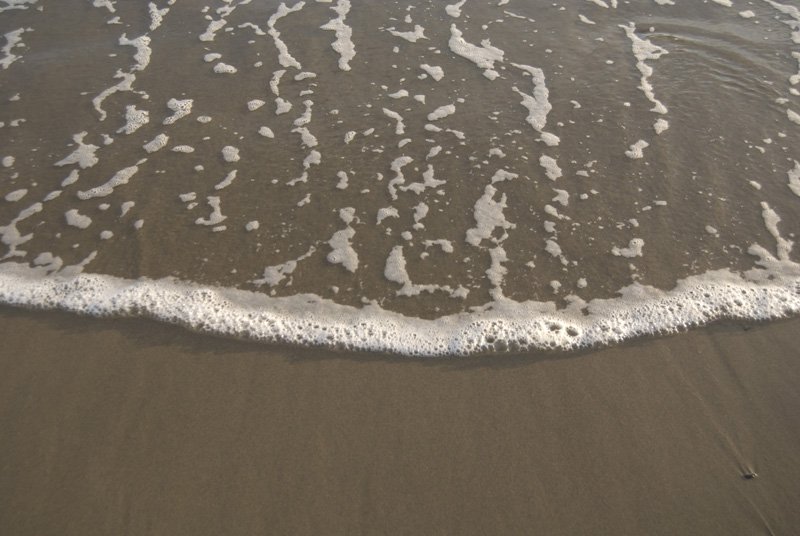
Deep-water waves meet the seabed
Far offshore, ordinary wind-driven surface waves can travel without strongly interacting with the bottom. As they approach a coast, decreasing depth brings the moving water into increasing interaction with the seabed.
NOAA describes friction between the seafloor and water as a key reason approaching waves become progressively steeper.
Slowing below makes the wave steeper
The wave does not simply stop when it reaches shallow water. Its shape changes as bottom interaction slows its motion and the wave grows steeper.
When that steepness becomes unstable, the crest can no longer support its shape and falls forward. That visible collapse is the breaking wave.
The shape of the shore changes the break
A gently sloping bottom can produce a different breaker from a steep beach or abrupt drop in depth. NOAA notes that shorebreak can form where there is a rapid transition from deep to shallow water and can be hazardous even when waves do not look exceptionally large.
Sandbars, reefs, rocky shelves and changing beach profiles can therefore alter where and how incoming waves break.
A breaking wave is also part of coastal circulation
Breaking transfers wave energy into the surf zone and helps drive nearshore currents. NOAA notes that waves travelling from deep to shallow water break near shore and generate currents, including conditions associated with rip currents.
Understanding the process explains the surf, but it does not make a particular beach safe. Current lifeguard advice, beach flags and official marine conditions should control decisions about entering the water.
Before you decide
Keep these five things with you.
- 01Look for the point where incoming waves become steep and collapse
- 02Remember that seabed depth and slope affect how waves break
- 03Do not assume a smaller wave or calm-looking gap in breakers is automatically safer
- 04Check beach flags and lifeguard advice before entering surf
- 05Use current official marine and surf information for real-world decisions
How this story earns trust
Sources, method and relationship—visible.
Each reference is tagged by the geography and authority of the source. Country-specific evidence is never presented as a global rule.
Method
This Essence article was researched, drafted and editorially reviewed by the Eight June AI-managed workflow using NOAA National Ocean Service education and beach-hazard material on waves, shallow water, shorebreak and surf-zone currents.
Commercial relationship
Independent editorial. NOAA and the image creator did not pay for inclusion. This explainer is not a surf forecast, swimming instruction or recommendation to enter the water.
Correction or improvement
Found a mistake, a missing perspective or a source we should review? Send it to the editorial desk ↗
- 01Waves — Currents Tutorial ↗
NOAA National Ocean Service. Official explanation of wind-driven waves becoming steeper and breaking as they approach shallow coastal water.
- 02Dangers at the Beach ↗
NOAA National Ocean Service. Official shorebreak and beach-hazard context.
- 03Currents Tutorial ↗
NOAA National Ocean Service. Official educational context connecting waves breaking in shallow water with surf-zone currents.
If this made you pause, pass the blue forward.
Why do ocean waves break as they reach the shore?
Ready to share
Made for personal and editorial sharing with Eight June attribution. Facts are shortened for the card; the article carries the full context, method and sources.
Useful questions
Quick answers,
kept specific.
Why do waves get steeper near a beach?
As waves enter shallow water, interaction with the seabed slows their motion and their shape becomes increasingly steep.
What makes a wave finally break?
A wave breaks when it becomes too steep and unstable to maintain its shape, causing the crest to collapse forward.
Do all beaches make waves break in the same way?
No. Water depth, bottom slope, sandbars, reefs and other coastal features influence where and how waves break.