Why · Essence
Why do sea otters wrap themselves in kelp?
Kelp is more than a backdrop for sea otters. Learn how its floating canopy helps them rest without drifting, how it differs from their insulating fur and how to watch respectfully.
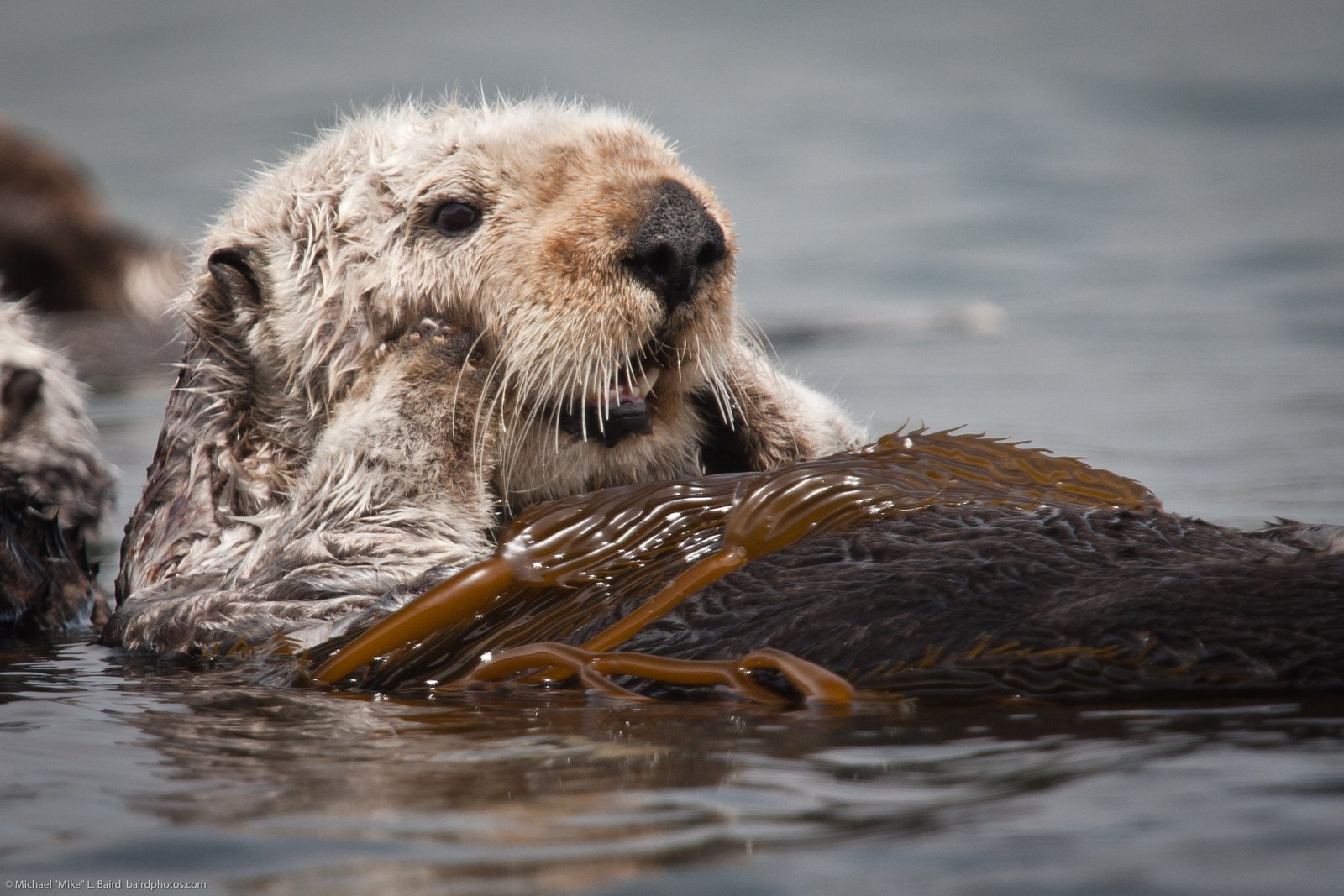
The simple reason: a floating anchor
Sea otters spend much of their lives at the sea surface. In coastal kelp forests, floating fronds can help them stay in one place while resting. NOAA's National Marine Sanctuaries programme describes otters wrapping themselves in kelp to avoid drifting away.
This is not a nest built on land or a permanent tether. It is a practical way to use an available part of the marine habitat while floating.
A forest with a surface canopy
Kelp is a large brown alga that attaches to rocky seabeds through a holdfast and grows upward into the water column. In suitable coastal waters, blades reach the surface and create a canopy.
The canopy offers structure for fish, invertebrates and marine mammals. Sea otters use that structure at the surface, while many other organisms occupy the water and rocks below.
Resting, grooming and keeping warm
A sea otter's dense fur is central to its insulation. NOAA describes otters grooming their fur and trapping air within it to help retain warmth in cold water.
Wrapping in kelp helps with position during rest; it should not be confused with the insulation supplied by well-maintained fur. Both behaviours can be seen in the same animal, but they serve different immediate purposes.
Kelp can help hold food too
NOAA's sea-otter account also describes an otter using a blade of kelp to secure one crab while eating another. This is a separate use of the same flexible marine material.
It would be inaccurate to say every otter always wraps itself in kelp, or that kelp is needed for every meal. The behaviour depends on habitat, circumstance and the animal.
Why otters and kelp forests are linked
Sea otters eat marine invertebrates including sea urchins. Urchins can graze kelp heavily, so changes in predator and grazer populations can affect kelp-forest conditions.
This ecological relationship is more complicated than a single species automatically 'saving' a forest everywhere. Local conditions, food webs and human impacts matter; the visible resting behaviour is only one part of a much larger marine story.
Watching without changing the behaviour
Observe from a distance and avoid approaching an otter to obtain a photograph. The U.S. Department of the Interior advises keeping at least five kayak lengths or 60 feet away from sea otters.
If an otter changes direction, dives repeatedly or stops resting because of your presence, increase your distance. A photograph of a naturally resting animal is more meaningful than a staged encounter.
Before you decide
Keep these five things with you.
- 01Look for sea otters from shore or another respectful viewing position rather than approaching them.
- 02Notice whether the otter is resting within floating kelp or moving through open water.
- 03Distinguish kelp's anchoring role from the insulating air trapped in an otter's fur.
- 04Avoid assuming every otter must use kelp or that all kelp forests contain otters.
- 05Keep at least five kayak lengths or 60 feet away and back off if the animal reacts.
How this story earns trust
Sources, method and relationship—visible.
Each reference is tagged by the geography and authority of the source. Country-specific evidence is never presented as a global rule.
Method
AI-assisted editorial drafting based on NOAA's kelp forest and sea-otter educational resources, with Department of the Interior wildlife-distance guidance. The latest repository catalogues, 23 dated daily packages and 39 legacy daily-article records were screened for duplicate topics. Native WordPress REST inventory could not be retrieved. The licensed photograph's creator, dimensions and direct original image were checked on Wikimedia Commons.
Commercial relationship
Independent informational editorial; no payment, sponsorship or affiliate relationship with NOAA, the Department of the Interior or the image photographer is represented.
Correction or improvement
Found a mistake, a missing perspective or a source we should review? Send it to the editorial desk ↗
- 01Life in the Kelp Forest ↗
NOAA Office of National Marine Sanctuaries. Kelp surface canopy and sea otters wrapping in kelp to rest without drifting.
- 02Sea Otters 101 ↗
NOAA Ocean Today. Fur grooming, kelp use while resting and holding prey.
- 0312 Facts About Otters ↗
U.S. Department of the Interior. Resting sea otters, seaweed and respectful viewing distance.
If this made you pause, pass the blue forward.
Why do sea otters wrap themselves in kelp?
Ready to share
Made for personal and editorial sharing with Eight June attribution. Facts are shortened for the card; the article carries the full context, method and sources.
Useful questions
Quick answers,
kept specific.
Does kelp keep a sea otter warm?
Kelp helps some otters remain in place while resting; dense, groomed fur that traps air is their main insulation.
Do sea otters sleep on land?
Sea otters can rest afloat in coastal water, often using kelp where it is available; their resting behaviour varies.
Do all sea otters wrap themselves in kelp?
No. NOAA describes the behaviour, but kelp availability and circumstances vary, so it is not a universal requirement.
How close can I get to a resting sea otter?
The U.S. Department of the Interior advises staying at least five kayak lengths or 60 feet away; increase distance if the animal reacts.