Why · Essence
Why can sea urchins turn a kelp forest into a barren?
Urchins belong in kelp ecosystems. Trouble develops when grazing and other pressures exceed the forest's ability to replace itself.
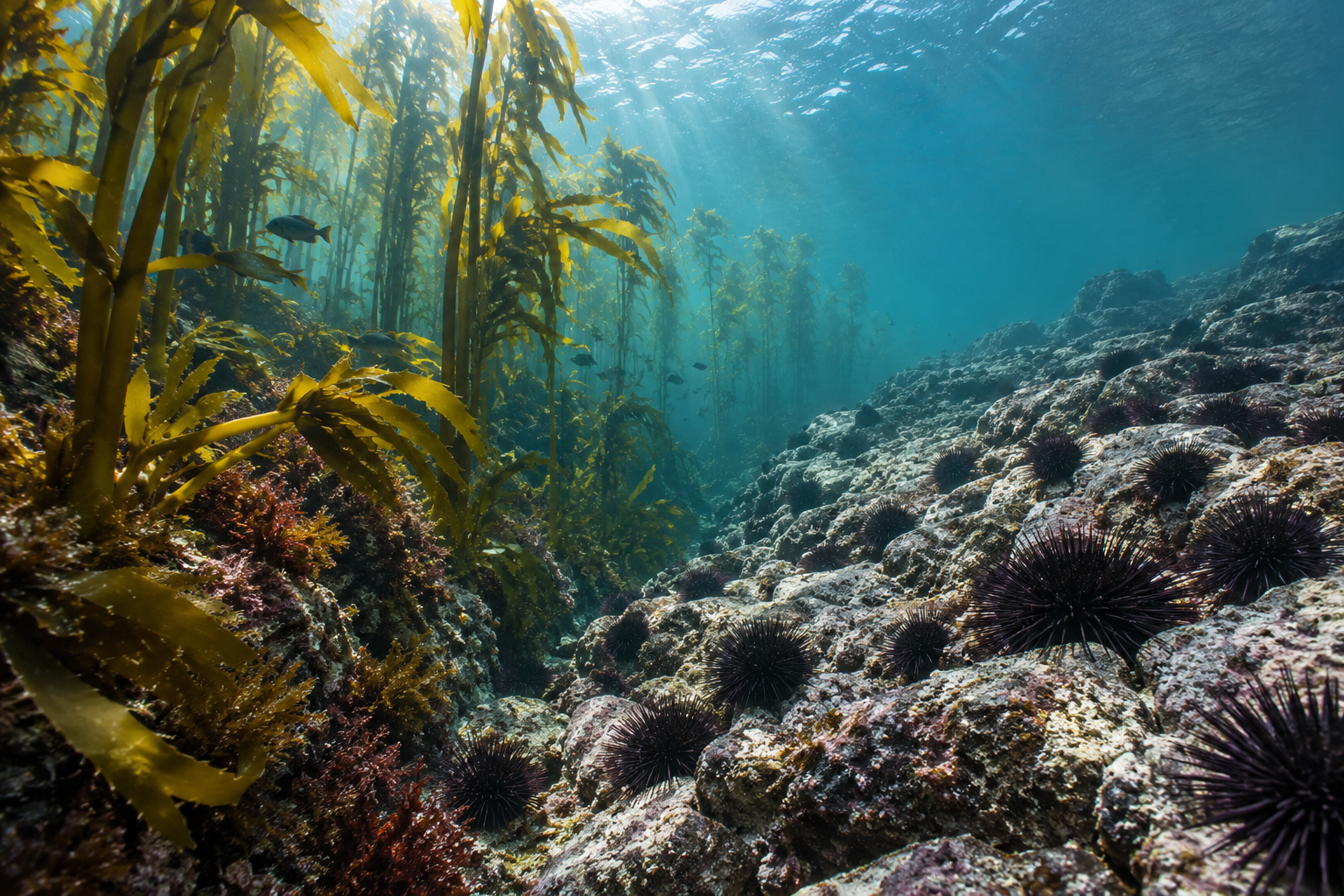
A kelp forest is habitat, not simply vegetation
Large brown algae create a three-dimensional coastal habitat. Their holdfasts grip rock, while blades extend into the water above. Fish and invertebrates occupy different parts of that structure. Losing the canopy changes the space available to many other organisms; it is more than a change in the view from a kayak.
Predators can change the effects of grazing
NOAA uses sea otters, sea urchins and kelp as an example of a trophic cascade: a change at one level of a food web affects other levels. Predators can limit grazer numbers and influence feeding behaviour. Their effects depend on which animals and kelp species are present.
Urchins are not the only pressure
Temperature, nutrients, sediment and disturbance also affect kelp. NOAA Fisheries identifies warming and pollution among the threats to West Coast kelp habitat. A reef can therefore lose kelp through interacting stresses rather than one isolated cause.
Ask a local question before proposing a remedy
For a particular bay, look for dated monitoring and research explaining what changed there. A general food-web diagram helps frame questions, but it does not establish the cause of a specific decline. Observation and authorised conservation projects are more useful starting points than attempting to alter wildlife yourself.
Before you decide
Keep these five things with you.
- 01Identify the kelp species and region.
- 02Look for local observations across several years.
- 03Separate predator effects from temperature and nutrient effects.
- 04Do not infer local causes from a single photograph.
- 05Follow protected-area rules and authorised conservation guidance.
How this story earns trust
Sources, method and relationship—visible.
Each reference is tagged by the geography and authority of the source. Country-specific evidence is never presented as a global rule.
Method
Researched and drafted by AI using the cited primary sources, then read back as a separate editorial review. The latest main source, existing daily packages and published WordPress title/slug inventories were screened. This catch-up publication covers a missed daily slot; the publication date shown is the actual publication date. The illustration is AI-generated and does not document a real observation.
Commercial relationship
Independent editorial information. Any affiliate links or paid placements will be clearly labelled where they appear.
Correction or improvement
Found a mistake, a missing perspective or a source we should review? Send it to the editorial desk ↗
- 01NOAA Fisheries — Kelp forest habitat ↗
NOAA. Primary source supporting the article; checked 18 October 2026.
- 02NOAA — Aquatic food webs ↗
NOAA. Primary source supporting the article; checked 18 October 2026.
- 03NOAA Sanctuaries — Kelp forest ↗
NOAA. Primary source supporting the article; checked 18 October 2026.
If this made you pause, pass the blue forward.
Why can sea urchins turn a kelp forest into a barren?
Ready to share
Made for personal and editorial sharing with Eight June attribution. Facts are shortened for the card; the article carries the full context, method and sources.
Useful questions
Quick answers,
kept specific.
Are sea urchins always harmful?
No. They are normal members of coastal ecosystems; their effects depend on grazing intensity and local conditions.
Will adding predators always restore kelp?
A food-web relationship alone does not establish that a particular intervention will succeed.