Why · Pulse
Why can sound travel so far through the ocean?
A deep-ocean sound channel can trap low-frequency sound so that it travels hundreds or even thousands of miles through seawater.
The ocean bends sound instead of letting it travel in a straight line
Sound speed in seawater changes with temperature, pressure and other water properties. In much of the deep ocean, the combined effects create a depth where sound speed is relatively low.
Sound waves moving away from this minimum-speed zone are refracted back toward it. The result is a natural acoustic pathway known as the SOFAR channel.
Low-frequency sound can stay inside the channel for great distances
Because the sound is repeatedly refracted toward the channel axis, less acoustic energy is lost into the surface or seabed than it would be along many other paths.
NOAA notes that sounds in this channel can travel hundreds and sometimes thousands of miles; under suitable conditions, low-frequency signals can cross very large portions of an ocean basin.
Hydrophones let scientists listen to the ocean
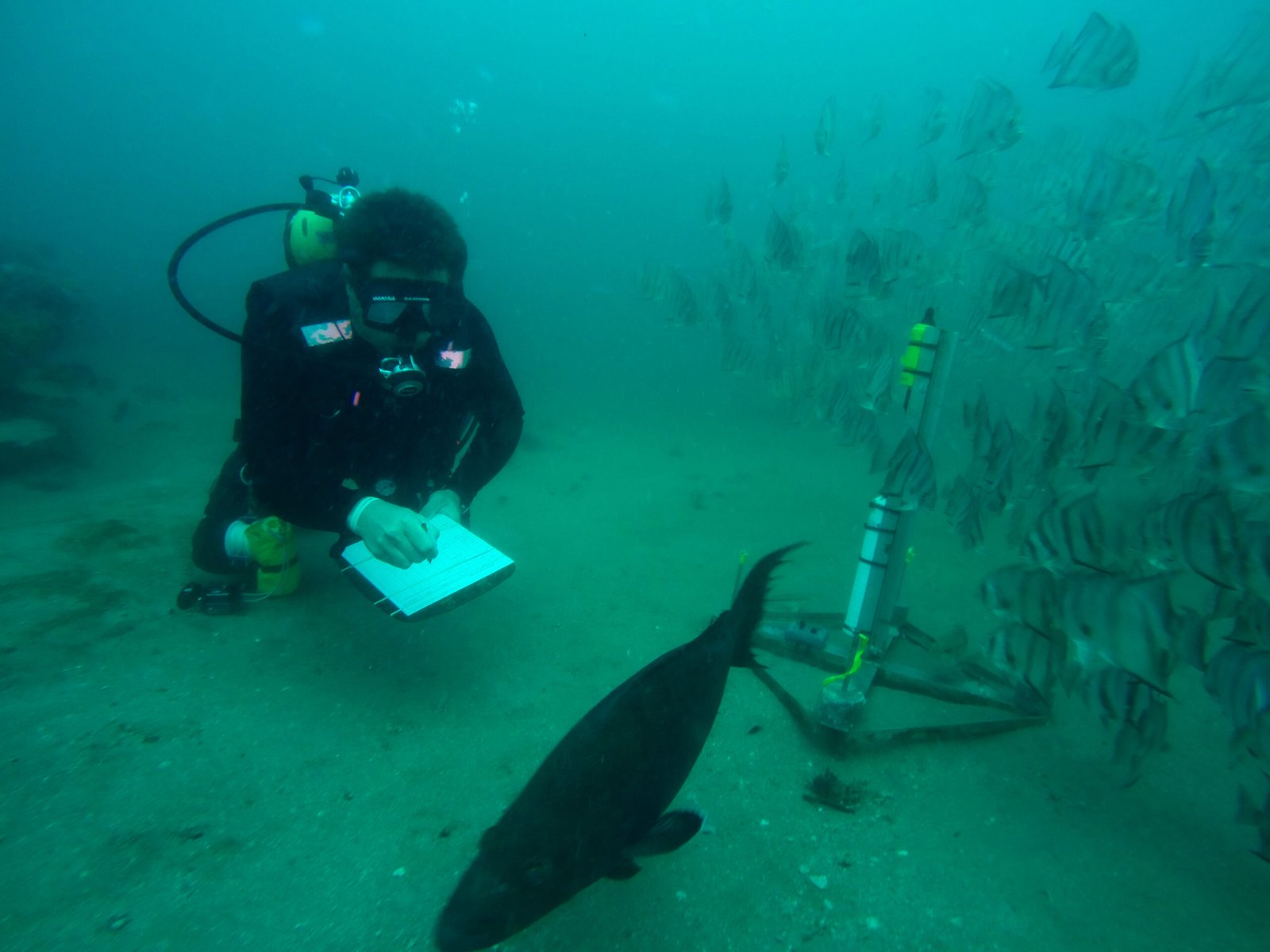
A hydrophone is an underwater microphone. Researchers deploy hydrophones to record whales, fish, ships and other sources of ocean sound.
Long-range listening can help scientists study marine animals and the acoustic character of ocean environments without needing to see the source directly.
Long-range sound also explains why ocean noise matters
Marine animals use sound for functions that can include communication, navigation and finding food. The same physics that carries biological sound can also carry human-made noise.
Whether a particular sound travels far depends on its frequency, source depth, ocean conditions and the path between source and receiver, so the SOFAR channel should not be treated as a universal amplifier for every underwater sound.
Before you decide
Keep these five things with you.
- 01Remember that SOFAR is a sound-speed minimum in the ocean, not a physical tunnel
- 02Expect low-frequency sound to travel farther than many high-frequency signals
- 03Separate sound refraction from simple reflection off the surface or seabed
- 04Use hydrophone recordings as acoustic evidence rather than assuming they identify a source by themselves
- 05Check location, depth, season and water structure before generalising about how far a sound will travel
How this story earns trust
Sources, method and relationship—visible.
Each reference is tagged by the geography and authority of the source. Country-specific evidence is never presented as a global rule.
Method
This Pulse explainer was researched and drafted by the Eight June AI-managed editorial workflow, then checked against NOAA National Ocean Service material and NOAA National Marine Sanctuaries image documentation before publication.
Commercial relationship
Independent editorial. NOAA and Wikimedia Commons did not pay for inclusion. This article contains no affiliate recommendation.
Correction or improvement
Found a mistake, a missing perspective or a source we should review? Send it to the editorial desk ↗
- 01What is SOFAR? ↗
NOAA National Ocean Service. Official explanation of the SOFAR channel and long-distance underwater sound.
- 02SOFAR infographic ↗
NOAA National Ocean Service. Official NOAA visual explanation of sound travelling within the deep sound channel.
If this made you pause, pass the blue forward.
Why can sound travel so far through the ocean?
Ready to share
Made for personal and editorial sharing with Eight June attribution. Facts are shortened for the card; the article carries the full context, method and sources.
Useful questions
Quick answers,
kept specific.
What does SOFAR mean?
SOFAR stands for Sound Fixing and Ranging. It is the name used for the deep-ocean sound channel in which some sounds can travel unusually long distances.
Can every underwater sound travel thousands of miles?
No. Long-range propagation depends on factors including frequency, depth, water structure and the path between the source and receiver.
How do scientists listen to distant underwater sound?
They use hydrophones, underwater microphones that can record biological, natural and human-made sounds in the ocean.