How · Yours
How do sea stars walk without legs?
A sea star travels using hundreds of hydraulic tube feet controlled by a water-vascular system; many feet can also grip rocks or hold prey.
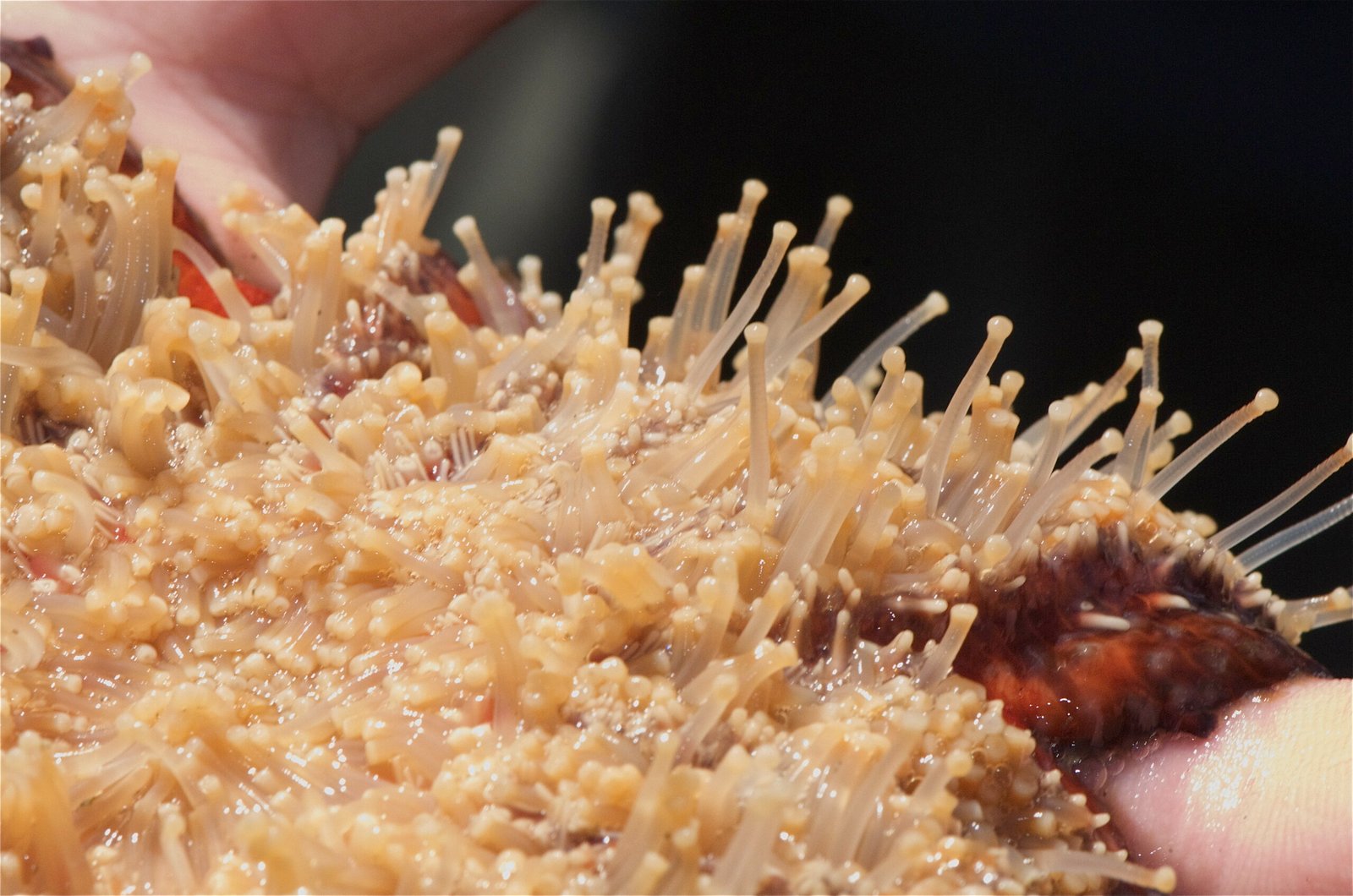
The underside holds hundreds of moving feet
A sea star is an echinoderm, not a fish. NOAA notes that sea stars have no fins and travel using tube feet on the undersides of their arms.
There can be hundreds or thousands of these small structures, depending on the animal. A close look at the underside reveals an entire moving surface rather than five rigid walking limbs.
Water pressure extends the tube feet
The water-vascular system is an internal network of fluid-filled canals associated with the tube feet. Muscular structures help change pressure inside the feet and control their extension and retraction.
Individual feet take small steps while their coordinated action creates the smoother motion that can make a sea star appear to glide.
Adhesive contact helps the animal hold on
Smithsonian Ocean explains that sea-star tube feet can release adhesive and de-adhesive substances to attach temporarily to surfaces and let go again.
Many sea stars can move along rough rocks or cling to vertical or uneven surfaces. Describing every foot as a simple vacuum sucker misses this chemical and physical control.
The same structures help with feeding
NOAA notes that tube feet also help sea stars hold prey during feeding.
Different species use their feet in different ways; their speed, prey and preferred habitat vary. The sea star’s body is not built like a fish, and its way of exploring the seafloor is just as different.
Before you decide
Keep these five things with you.
- 01Look beneath the arms to find the rows of tube feet.
- 02Connect movement to the water-vascular system, not to external walking legs.
- 03Remember that coordinated small movements can look like smooth gliding.
- 04Do not treat chemical adhesion as identical to simple vacuum suction.
- 05Remember that tube feet can help hold prey as well as move the animal.
How this story earns trust
Sources, method and relationship—visible.
Each reference is tagged by the geography and authority of the source. Country-specific evidence is never presented as a global rule.
Method
The Eight June AI-managed editorial workflow drafted this Yours explainer after checking NOAA National Ocean Service, NOAA Fisheries and Smithsonian Ocean primary descriptions. Repository catalogues and dated editorial packages were screened for an existing article with the same sea-star locomotion intent.
Commercial relationship
Independent, informational editorial. NOAA, the Smithsonian, the photographer and Wikimedia Commons did not pay for inclusion; no affiliate relationship is represented.
Correction or improvement
Found a mistake, a missing perspective or a source we should review? Send it to the editorial desk ↗
- 01Are starfish really fish? ↗
NOAA National Ocean Service. NOAA's explanation of sea stars, the water-vascular system, tube feet and prey handling.
- 02Sea Stars, Urchins, and Relatives ↗
Smithsonian Ocean. Museum scientific explanation of hydraulic extension and adhesive attachment of echinoderm tube feet.
- 03Woods Hole Science Aquarium FAQs ↗
NOAA Fisheries. NOAA explanation of how coordinated tube feet move sea stars.
If this made you pause, pass the blue forward.
How do sea stars walk without legs?
Ready to share
Made for personal and editorial sharing with Eight June attribution. Facts are shortened for the card; the article carries the full context, method and sources.
Useful questions
Quick answers,
kept specific.
Do sea stars really have feet?
Yes. They have rows of small tube feet beneath the arms, although these are not jointed legs like a crab's or a person's.
Do sea stars move with suction?
Some tube feet can adhere strongly, but Smithsonian Ocean explains that adhesive and de-adhesive substances also help them attach and release; movement should not be reduced to suction alone.
Can tube feet do anything besides walking?
Yes. NOAA reports that sea stars also use tube feet to grip prey.