Who · Voices
Pearl farmers reading change in the water
A pearl farm asks a living animal to grow something beautiful inside changing water. Farmers therefore read temperature, storms, mortality, water quality and time alongside the qualities a buyer sees at the jewellery counter.
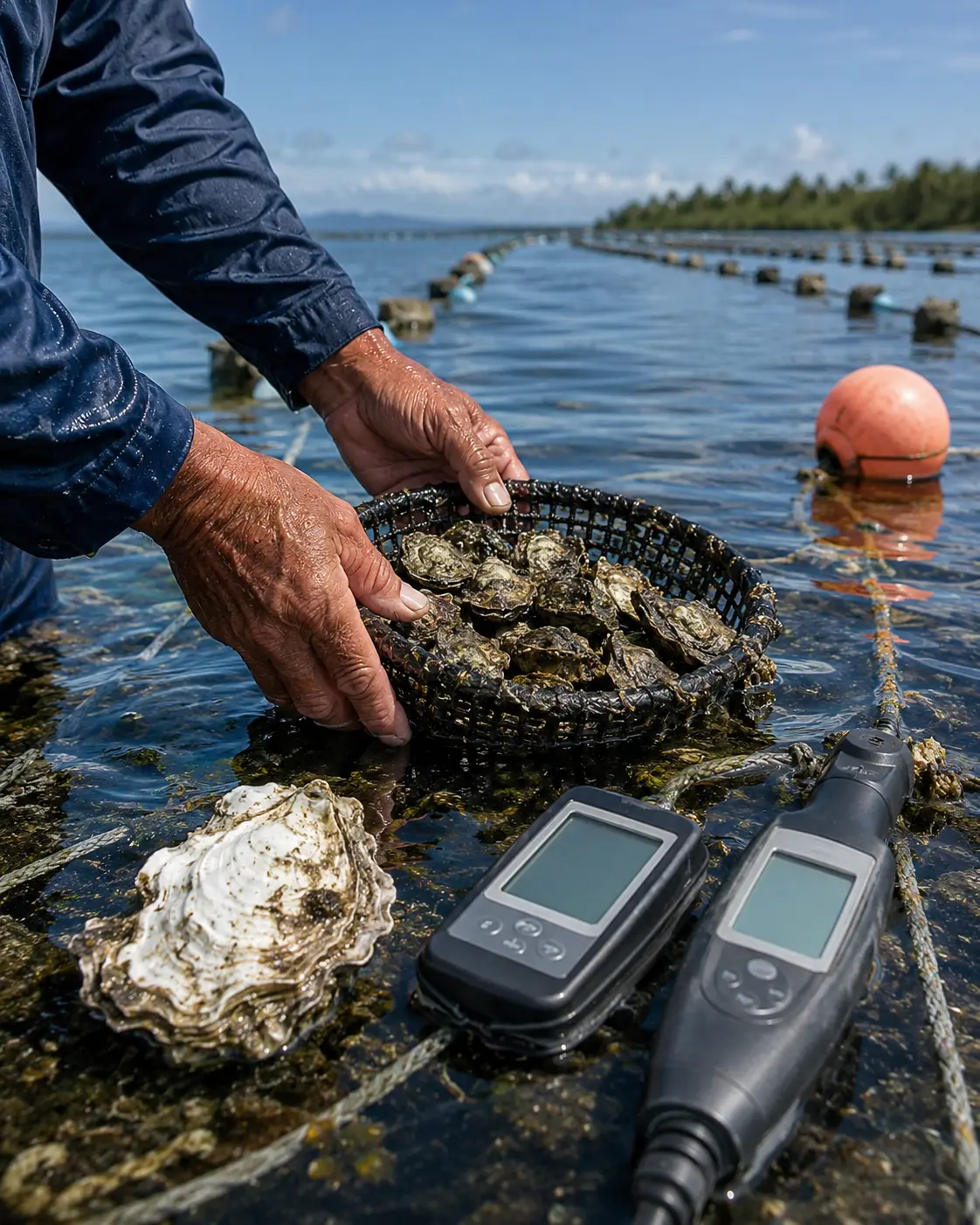
The farmer works with uncertainty
Pearl oysters respond to water conditions, disease, storms and handling. Grafting, care, cleaning, harvest and selection involve many hands and long periods in which value can be lost.
That makes a pearl both a gem and an agricultural outcome. Origin matters, but origin alone does not certify environmental or labour performance.
Sustainability needs a method
GIA’s recent sustainability reporting describes work with The Nature Conservancy on a science-based framework for assessing environmental, social and governance impacts in pearl production.
This is a developing evidence field, not permission to call every cultured pearl nature-positive.
- Ask for farm or regional origin.
- Ask what practices are measured.
- Separate an assessment from a marketing pledge.
- Look for worker and community information as well as ecology.
What the buyer can reward
Reward sellers who can identify the pearl type, region, treatment and supply-chain evidence without inventing a romantic farm story.
When evidence is incomplete, honest limits build more trust than a sweeping sustainability label. Buy the pearl for its beauty and description; evaluate the farm claim separately.
Before you decide
Keep these five things with you.
- 01Confirm pearl identity
- 02Ask for origin evidence
- 03Read the assessment scope
- 04Separate beauty from impact claims
- 05Prefer honest limits
How this story earns trust
Sources, method and relationship—visible.
Each reference is tagged by the geography and authority of the source—not by the reader’s location. A country tag means the evidence is country-specific; it is never presented as a global rule.
Method
The story does not invent a farmer or present an industry initiative as proof about every farm. Claims are limited to the cited programme.
Commercial relationship
Independent editorial. No pearl farm, jeweller, laboratory or conservation organisation paid for inclusion.
Correction or improvement
Found a mistake, a missing perspective or a source we should review? Send it to the editorial desk ↗
- 01Pearl Buyer’s Guide ↗
Gemological Institute of America. Consumer guidance on pearl identity, quality and buying questions.
- 02GIA Sustainability Report 2023–2024 ↗
Gemological Institute of America. Reports development of a science-based ESG assessment platform for pearl production.
If this made you pause, pass the blue forward.
Pearl farmers reading change in the water
Ready to share
Made for personal and editorial sharing with Eight June attribution. Facts are shortened for the card; the article carries the full context, method and sources.
Questions readers ask next
Three sourced answers
to keep close.
What is the shortest answer?
Cultured pearl farming joins husbandry, ecology and craft. Responsible claims require evidence about farm practices, community benefit and environmental effects; the beauty of the final pearl does not prove the quality of the system behind it.
Which evidence is carrying the answer?
The evidence trail names Pearl Buyer’s Guide, GIA Sustainability Report 2023–2024. Open those records for their exact scope, geography, definitions and update dates.
What should I carry into the decision?
The page’s checklist highlights these points: Confirm pearl identity; Ask for origin evidence; Read the assessment scope; Separate beauty from impact claims. Use the linked sources to confirm any detail that changes by place, provider or date. The editorial information on this page was last reviewed on 1 September 2026. Time-sensitive conditions, prices, rules and availability should still be confirmed at the linked source on the day they matter.