Who · Voices
The boatbuilders who keep maritime memory alive
A traditional boat is not only an object. Its proportions can hold knowledge of local timber, currents, fishing, trade, wind and repair—knowledge that survives because people keep building, sailing and teaching it.
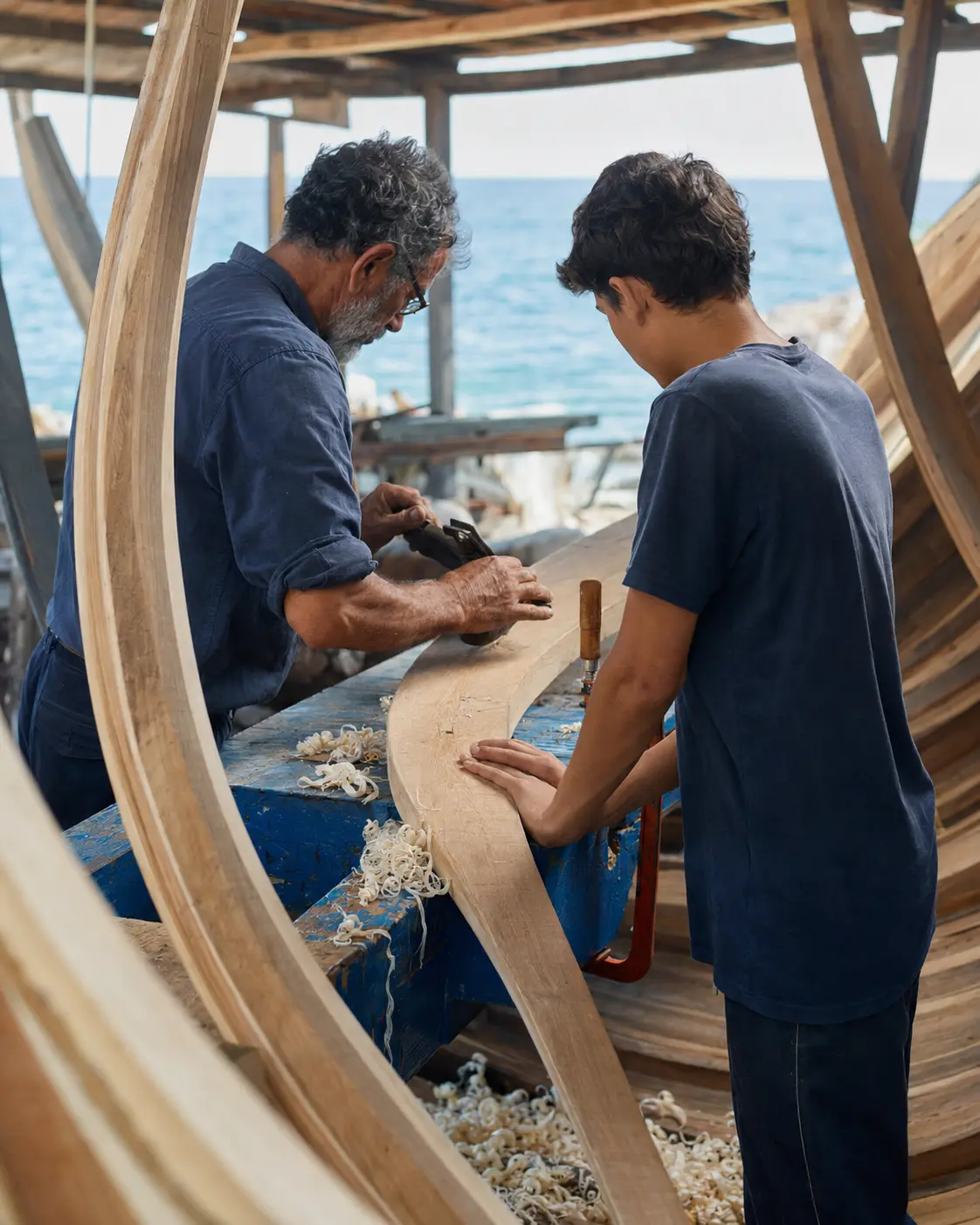
The plans may live in practice
Some traditions are transmitted through measurement systems, templates, songs, apprenticeship and embodied judgement rather than a single architectural drawing.
UNESCO’s lists show maritime knowledge across regions, including Pinisi boatbuilding in South Sulawesi and traditional wooden boatbuilding in Carriacou and Petite Martinique.
Visit the workshop with respect
A working yard is not automatically an attraction. Seek organised access, follow safety boundaries and ask before photographing tools, templates or people.
Do not pressure a maker to reveal restricted knowledge or turn a complex tradition into a decorative souvenir.
- Ask who teaches whom.
- Notice repair as well as new construction.
- Learn the boat’s working purpose.
- Credit the community’s own name.
What keeps knowledge alive
Recognition can help, but apprentices, affordable material, access to water, working demand and local pride keep a tradition in motion.
The strongest encounter leaves you understanding not only how the hull looks, but why it was shaped for that coast.
Before you decide
Keep these five things with you.
- 01Use organised access
- 02Ask before photographing
- 03Name the tradition correctly
- 04Support practitioner-led work
- 05Learn purpose, not only appearance
How this story earns trust
Sources, method and relationship—visible.
Each reference is tagged by the geography and authority of the source—not by the reader’s location. A country tag means the evidence is country-specific; it is never presented as a global rule.
Method
The story compares official heritage records without claiming all boatbuilding traditions share one method or safeguarding need.
Commercial relationship
Independent editorial. No museum, workshop or tourism authority paid for inclusion.
Correction or improvement
Found a mistake, a missing perspective or a source we should review? Send it to the editorial desk ↗
- 01Browse the Lists of Intangible Cultural Heritage ↗
UNESCO. Official international register of living heritage elements and safeguarding work.
- 02Pinisi, art of boatbuilding in South Sulawesi ↗
UNESCO Intangible Cultural Heritage. Official record of the Indonesian tradition.
- 03Traditional wooden boatbuilding in Carriacou and Petite Martinique ↗
UNESCO Intangible Cultural Heritage. Official record of the Grenadian tradition.
If this made you pause, pass the blue forward.
The boatbuilders who keep maritime memory alive
Ready to share
Made for personal and editorial sharing with Eight June attribution. Facts are shortened for the card; the article carries the full context, method and sources.
Questions readers ask next
Three sourced answers
to keep close.
What is the shortest answer?
Living boatbuilding traditions connect craft with navigation, work and community identity. UNESCO lists traditions from Indonesia, the Nordic countries, Grenada and elsewhere, but safeguarding depends on practitioners—not only display.
Which evidence is carrying the answer?
The evidence trail names Browse the Lists of Intangible Cultural Heritage, Pinisi, art of boatbuilding in South Sulawesi, Traditional wooden boatbuilding in Carriacou and Petite Martinique. Open those records for their exact scope, geography, definitions and update dates.
What should I carry into the decision?
The page’s checklist highlights these points: Use organised access; Ask before photographing; Name the tradition correctly; Support practitioner-led work. Use the linked sources to confirm any detail that changes by place, provider or date. The editorial information on this page was last reviewed on 1 September 2026. Time-sensitive conditions, prices, rules and availability should still be confirmed at the linked source on the day they matter.