What · Pulse
What FAO’s Global Record can—and cannot—tell you about a fishing vessel
FAO’s Global Record is a public route to State-supplied vessel identity and related data. It can strengthen a source investigation, but coverage depends on participating authorities and a record is not a real-time activity map or automatic illegality verdict.
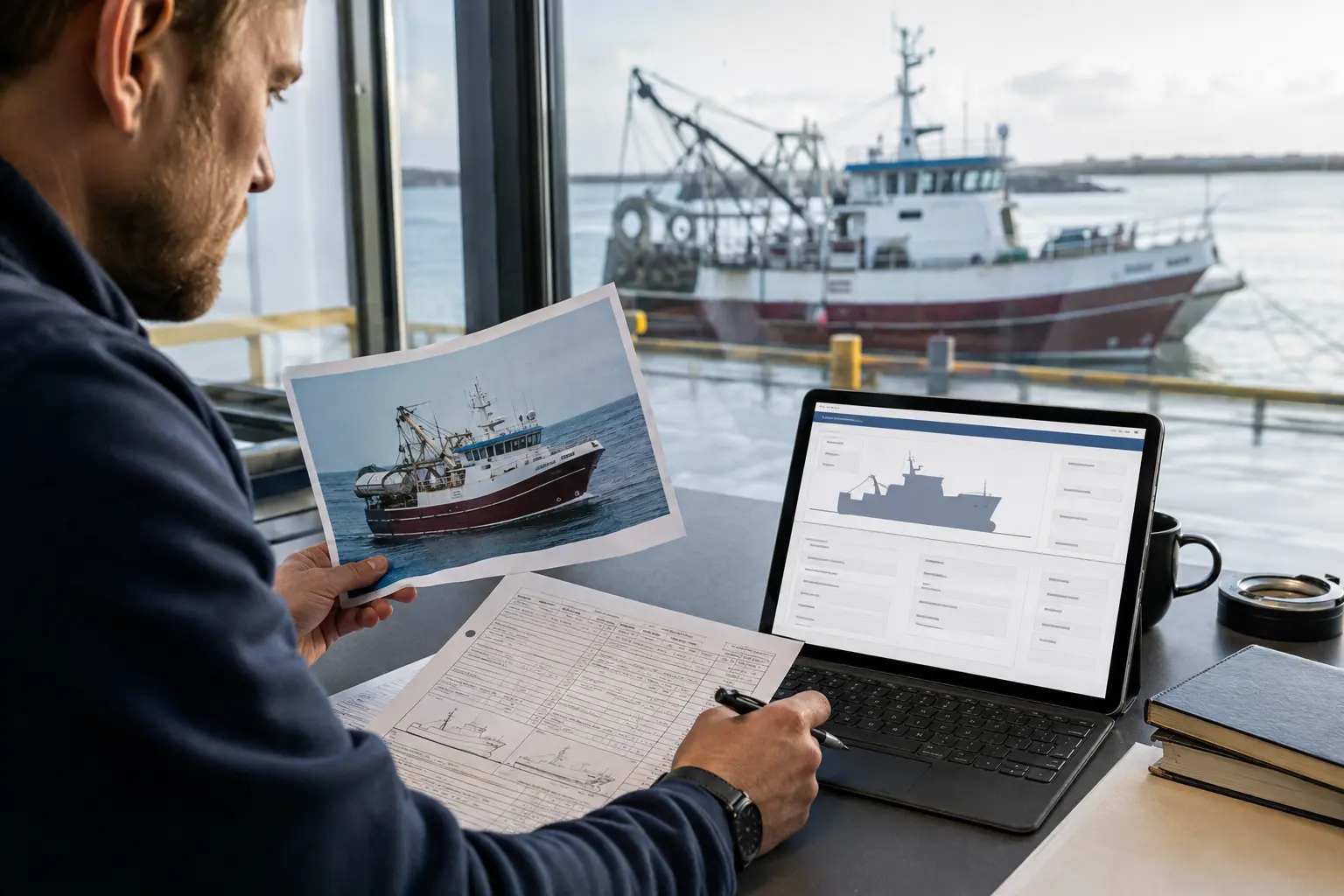
The Global Record is an identity layer
FAO describes the Global Record of Fishing Vessels, Refrigerated Transport Vessels and Supply Vessels as a phased, collaborative initiative that makes certified data from State authorities available through a single access point.
The public information system is designed around vessel and provider records. That makes it useful for resolving names, identifiers and official data sources before attaching a sourcing claim to a vessel.
Documented purpose: closing an information gap around IUU fishing
FAO developed the initiative to support States in combating illegal, unreported and unregulated fishing by reducing the global information gap around vessels used in fishing and fishing-related activity.
That purpose does not turn every search result into an enforcement finding. The database supplies information; legal status and compliance depend on the relevant authority, authorization, place and date.
Present position: coverage and freshness remain part of the answer
The public dashboard identifies data providers and regional overviews, while FAO describes participation as collaborative and phased. A vessel may change name, flag, authorization or role, and not every authority contributes the same fields at the same time.
A positive match should therefore be recorded with the search date and identifiers used. A missing result should not be described as proof that a vessel does not exist or is unregistered.
- Search more than one identifier when available
- Record the search date and contributing authority
- Compare historical names where the tool permits
- Check current authorization at the competent source
- Keep identity data separate from observed activity
The genuine opportunity is a joined evidence trail
A careful seafood investigation can combine the Global Record’s identity layer with current national authorization lists, port State information, traceability documents and—where appropriate—activity datasets such as AIS-based maps.
Eight June’s interpretation is that the tool is strongest when it narrows a question and exposes the responsible authority. It should not be used to manufacture certainty that the underlying sources do not provide.
Before you decide
Keep these five things with you.
- 01Start with an exact vessel identifier
- 02Note the contributing State authority
- 03Capture the search date
- 04Check current authorization separately
- 05Do not equate absence with wrongdoing
How this story earns trust
Sources, method and relationship—visible.
Each reference is tagged by the geography and authority of the source. Country-specific evidence is never presented as a global rule.
Method
This Pulse article reads FAO’s programme description together with its current public information system. It distinguishes the system’s stated purpose from editorial cautions about coverage, timeliness and legal inference.
Commercial relationship
Independent editorial. FAO, governments, vessel owners and seafood businesses did not pay for inclusion. A database match is not an Eight June verification.
Correction or improvement
Found a mistake, a missing perspective or a source we should review? Send it to the editorial desk ↗
- 01Global Record of Fishing Vessels, Refrigerated Transport Vessels and Supply Vessels ↗
Food and Agriculture Organization of the United Nations. Programme purpose, phased participation and State-authority data model.
- 02Global Record public information system ↗
Food and Agriculture Organization of the United Nations. Current public dashboard, fleet records and data-provider interface.
If this made you pause, pass the blue forward.
What FAO’s Global Record can—and cannot—tell you about a fishing vessel
Ready to share
Made for personal and editorial sharing with Eight June attribution. Facts are shortened for the card; the article carries the full context, method and sources.
Useful questions
Quick answers,
kept specific.
Does a Global Record match prove a vessel is operating legally today?
No. It provides State-supplied vessel information; current authorization and compliance must be checked with the competent authority.
Does no result prove a vessel is unregistered?
No. FAO describes the initiative as phased and collaborative, so coverage and data provision must be considered.
Is the Global Record a live vessel-tracking map?
No. It is an identity and vessel-information system, not a real-time activity map.