What · Pulse
What is really changing in seaweed
Seaweed is appearing in menus, snacks, farms, packaging ideas and climate conversations. The interesting signal is not uninterrupted growth; it is the shift from novelty to harder questions about species, production, processing and genuine use.
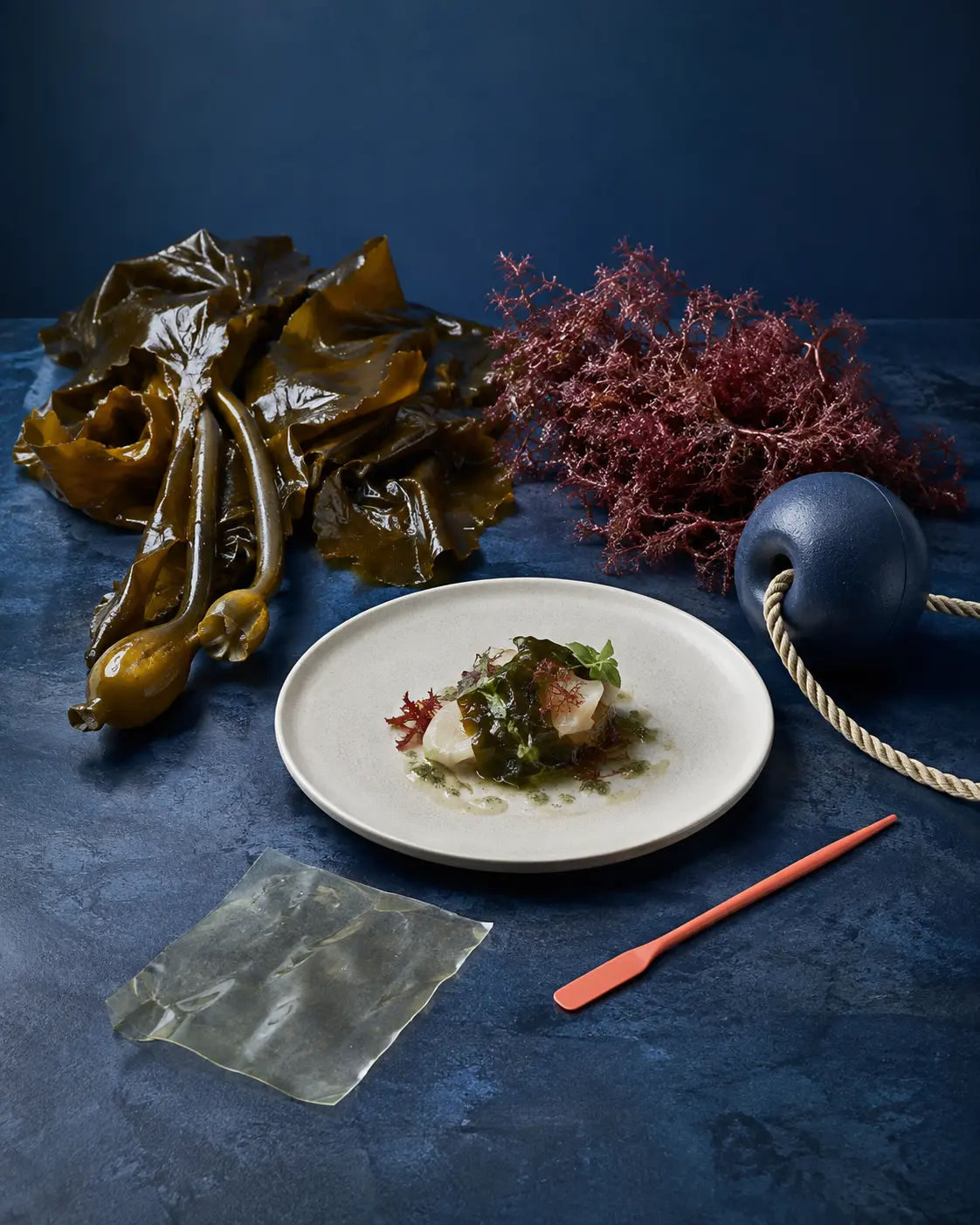
Interest is wider than the dinner plate
Seaweeds are used as foods, hydrocolloids, agricultural inputs and ingredients in research-led materials. Those uses involve different species, qualities and supply chains.
FAO’s 2026 GLOBEFISH analysis reported lower 2025 global imports and exports of seaweed for human consumption than in 2024. That cooling counters headlines that describe only expansion.
What the new customer asks
A diner may want species, origin, texture and preparation. A buyer may need iodine, contaminant and storage information. A design claim needs evidence that includes processing, durability and end of life.
The mature question is fit: does this species and process make sense for this food, farm or material?
- Food: species and origin.
- Farm: local ecology and permitted cultivation.
- Material: processing and end-of-life evidence.
- Trend claim: dated production or trade data.
How to read the next headline
Separate production volume, trade volume, retail launches and search attention. They measure different things and may move in different directions.
For visitors, the richer experience is regional: taste seaweed where communities know the species, season and preparation rather than treating every marine ingredient as a global superfood.
Before you decide
Keep these five things with you.
- 01Look for the species
- 02Separate production from trade
- 03Ask about processing
- 04Treat health claims carefully
- 05Prefer regional knowledge
How this story earns trust
Sources, method and relationship—visible.
Each reference is tagged by the geography and authority of the source—not by the reader’s location. A country tag means the evidence is country-specific; it is never presented as a global rule.
Method
The trend article distinguishes production, trade and product attention. Trade figures are dated and not presented as demand in every market.
Commercial relationship
Independent editorial. No seaweed producer, restaurant or biomaterials company paid for inclusion.
Correction or improvement
Found a mistake, a missing perspective or a source we should review? Send it to the editorial desk ↗
- 01The State of World Fisheries and Aquaculture 2026 ↗
Food and Agriculture Organization of the United Nations. Current global evidence on fisheries and aquaculture production, resources and food systems.
- 02Seaweed market analysis ↗
FAO GLOBEFISH. 23 July 2026 update on global trade in seaweed for human consumption.
If this made you pause, pass the blue forward.
What is really changing in seaweed
Ready to share
Made for personal and editorial sharing with Eight June attribution. Facts are shortened for the card; the article carries the full context, method and sources.
Questions readers ask next
Three sourced answers
to keep close.
What is the shortest answer?
Seaweed remains a major aquaculture product and versatile ingredient, but FAO GLOBEFISH reported that global trade in seaweed for human consumption cooled in 2025. Attention is broadening while the market becomes more selective.
Which evidence is carrying the answer?
The evidence trail names The State of World Fisheries and Aquaculture 2026, Seaweed market analysis. Open those records for their exact scope, geography, definitions and update dates.
What should I carry into the decision?
The page’s checklist highlights these points: Look for the species; Separate production from trade; Ask about processing; Treat health claims carefully. Use the linked sources to confirm any detail that changes by place, provider or date. The editorial information on this page was last reviewed on 1 September 2026. Time-sensitive conditions, prices, rules and availability should still be confirmed at the linked source on the day they matter.