When · Moments
When a reef visit should wait
The best time to visit a reef is not simply the driest month. Safe sea conditions, live heat-stress information, local closures, visibility and pressure at the site can make a different day—or a different activity—the better choice.
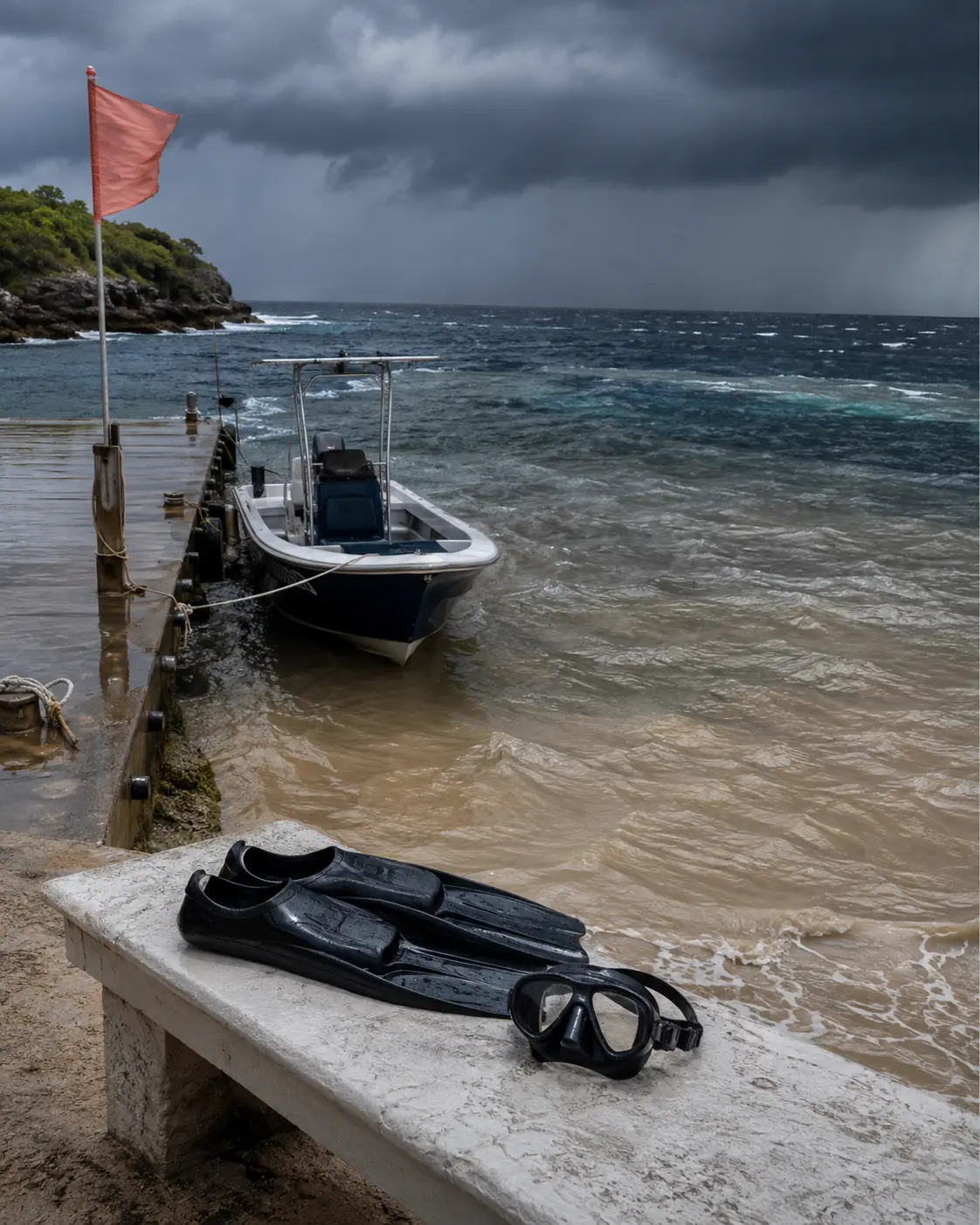
Calendar advice is only the first filter
Long-term climate can help choose a travel month, but it cannot replace a same-week forecast. Wind, swell, current, rain and runoff can change safety and visibility quickly.
NOAA Coral Reef Watch provides near-real-time heat-stress products for reefs globally. Those products are scientific context, not personal clearance to enter the water.
Three reasons to change the plan
First, safety: marine warnings, operator cancellation or conditions outside your experience. Second, protection: closures, heat-stress measures or requests from managers. Third, quality: crowding or poor visibility that encourages guests to press closer.
A responsible operator offers an alternative rather than minimizing the condition.
- Official warning or closure.
- Unsafe entry, current or swell.
- Active local protection measure.
- Crowding the operator cannot manage.
Keep a second blue plan
Choose a mangrove walk, coastal museum, market, workshop or shoreline interpretation programme that does not depend on entering the reef.
A flexible itinerary protects the visitor and reduces pressure to force an activity because it was prepaid. Read cancellation terms before booking.
Before you decide
Keep these five things with you.
- 01Check live marine weather
- 02Read park notices
- 03Review heat-stress information
- 04Know your ability
- 05Keep a land-based alternative
How this story earns trust
Sources, method and relationship—visible.
Each reference is tagged by the geography and authority of the source—not by the reader’s location. A country tag means the evidence is country-specific; it is never presented as a global rule.
Method
Monitoring data, weather and local management notices are treated as separate signals. The article does not issue a site-specific safety decision.
Commercial relationship
Independent editorial. No reef operator, park or destination paid for inclusion.
Correction or improvement
Found a mistake, a missing perspective or a source we should review? Send it to the editorial desk ↗
- 01NOAA Coral Reef Watch ↗
National Oceanic and Atmospheric Administration. Near-real-time global satellite products for coral-reef heat stress.
- 02Coral reef ecosystems ↗
National Oceanic and Atmospheric Administration. Overview of reef ecology, coastal protection, livelihoods and recreation.
If this made you pause, pass the blue forward.
When a reef visit should wait
Ready to share
Made for personal and editorial sharing with Eight June attribution. Facts are shortened for the card; the article carries the full context, method and sources.
Questions readers ask next
Three sourced answers
to keep close.
What is the shortest answer?
Check official marine weather, park notices and reef-health information close to the visit. Delay when authorities close the site, conditions exceed your ability, or the operator cannot avoid crowding and contact.
Which evidence is carrying the answer?
The evidence trail names NOAA Coral Reef Watch, Coral reef ecosystems. Open those records for their exact scope, geography, definitions and update dates.
What should I carry into the decision?
The page’s checklist highlights these points: Check live marine weather; Read park notices; Review heat-stress information; Know your ability. Use the linked sources to confirm any detail that changes by place, provider or date. The editorial information on this page was last reviewed on 1 September 2026. Time-sensitive conditions, prices, rules and availability should still be confirmed at the linked source on the day they matter.