When · Moments
When do horseshoe crabs come ashore to spawn in Delaware Bay?
The Delaware Bay horseshoe crab spawning season follows spring warmth, high tides and the lunar cycle. Here is when to look without disturbing wildlife.
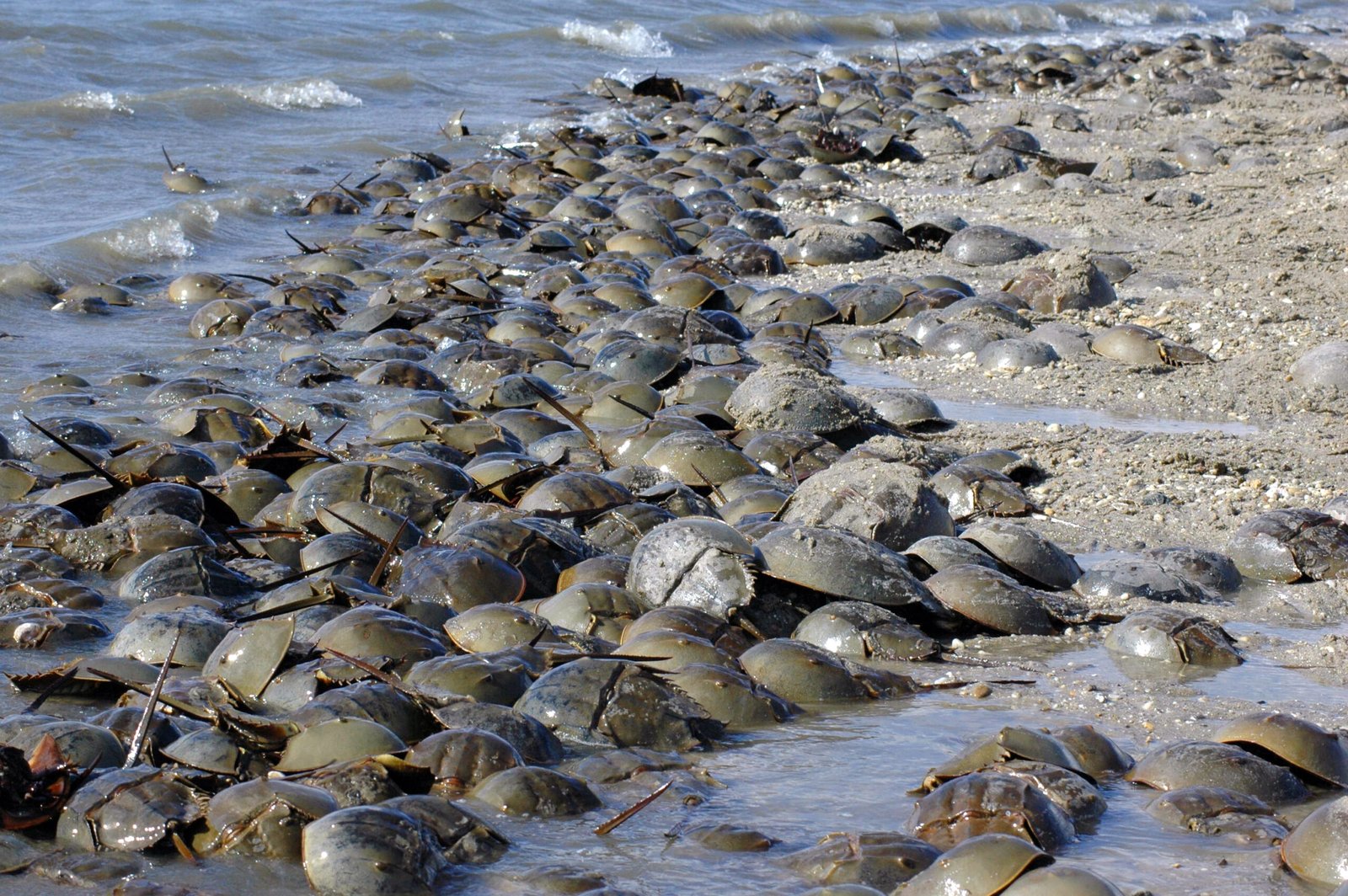
Begin with spring, not a fixed calendar day
Delaware DNREC identifies late April through June as a useful observation period around Mispillion Harbor, with peak spawning generally in May. Its wider viewing guidance places most spawning in May and June.
Water temperature and local conditions affect timing. A quiet beach on one evening does not mean spawning has ended.
High tide is the daily clue
Horseshoe crabs move onto sandy shores as the water rises. DNREC reports that spawning coincides with high tides, often with the largest gatherings at nighttime high tide.
Rough surf can delay spawning because it raises the risk of stranding. High tide is a useful starting point, not a certainty.
New and full moons shape the likely peak
DNREC and the Delaware River Basin Commission describe higher spawning activity around new- and full-moon high tides.
Consult a current local tide table rather than relying only on the moon phase. Tide heights and timing vary by location and year.
The eggs are vital to migratory birds
Female horseshoe crabs deposit eggs in beach sand. Migrating shorebirds, particularly red knots, feed on exposed eggs during their northward spring journey.
DNREC asks observers to keep their distance from feeding shorebirds. The spawning spectacle is part of a connected coastal food web.
Plan a respectful visit
DNREC identifies the DuPont Nature Center at Mispillion Harbor and several Delaware Bayshore beaches as observation options, subject to local access rules.
Check the tide, surf, weather, parking and beach restrictions. Avoid handling crabs or disturbing birds for photographs, and keep light and noise low at night.
Before you decide
Keep these five things with you.
- 01Check whether your visit falls within the main May–June spawning season.
- 02Compare local high-tide times with new- or full-moon dates.
- 03Check surf and weather before assuming crabs will gather.
- 04Confirm beach access and use authorised observation areas.
- 05Give feeding shorebirds space and avoid handling spawning animals.
How this story earns trust
Sources, method and relationship—visible.
Each reference is tagged by the geography and authority of the source. Country-specific evidence is never presented as a global rule.
Method
The AI-managed Eight June editorial workflow checked Delaware DNREC viewing and DuPont Nature Center guidance against the Delaware River Basin Commission's species account. The complete latest repository catalogues, 17 available dated packages and remote-media declarations were screened for duplicate intent and image provenance. Live WordPress inventory endpoints and the 30 October pages could not be accessed by the independent retrieval layer.
Commercial relationship
Independent informational editorial. DNREC, the Delaware River Basin Commission, USFWS and the photographer did not sponsor or endorse this article. No affiliate relationship is represented.
Correction or improvement
Found a mistake, a missing perspective or a source we should review? Send it to the editorial desk ↗
- 01Horseshoe Crab Viewing ↗
Delaware DNREC. State guidance on May–June spawning, lunar high tides, night viewing and rough surf.
- 02Horseshoe Crabs, Shorebirds and the Delaware Bay ↗
Delaware DNREC. Official observation locations, seasonal peaks and shorebird advice.
- 03Living Resources: Horseshoe Crabs ↗
Delaware River Basin Commission. Interstate commission explanation of species biology, high tides and red knots.
If this made you pause, pass the blue forward.
When do horseshoe crabs come ashore to spawn in Delaware Bay?
Ready to share
Made for personal and editorial sharing with Eight June attribution. Facts are shortened for the card; the article carries the full context, method and sources.
Useful questions
Quick answers,
kept specific.
Which months are best for horseshoe crab spawning in Delaware Bay?
Most spawning occurs in May and June, although activity at Mispillion Harbor can begin in late April.
Is a full moon necessary?
No. Spawning occurs at other high tides too, but new- and full-moon periods often bring larger gatherings.
Is night the only time to see spawning?
No. Daytime observations are possible, although DNREC notes that numbers can be greatest at nighttime high tide.
Why do red knots gather?
Migrating red knots feed on horseshoe crab eggs during their spring stop in Delaware Bay.