Why · Essence
Why tides change the whole coastal day
A beach at breakfast may not be the same beach by late afternoon. Tides alter access, current, depth, feeding grounds and working hours, turning the coastal day into something planned with water rather than imposed upon it.
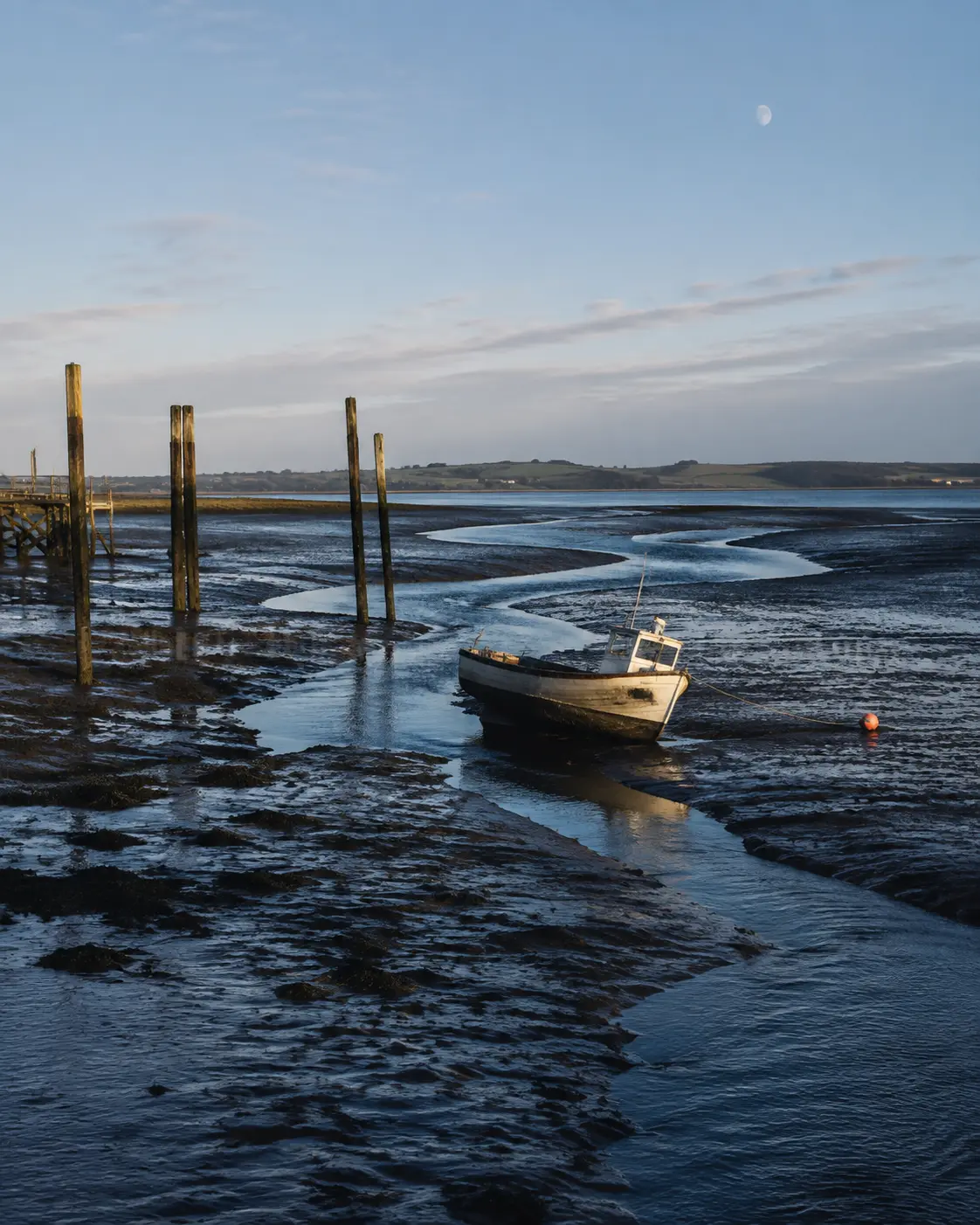
The same force, different shore
NOAA describes tides as very long-period waves that move through the ocean in response to forces exerted by the moon and sun. High and low water appear as those waves reach coastlines.
Local bays, estuaries, seabed shape, wind and air pressure affect timing and range. A tide time from another harbour is not a safe substitute for a local prediction.
What the tide changes
Low water can reveal rock pools, sandbars and walking routes while also exposing sharp surfaces and cutting off return paths. Rising water can deepen channels and strengthen currents.
Read the official local tide table, then pair it with weather and marine warnings. A predicted height is not a promise of safe swimming.
- Use the nearest official tide station.
- Check whether times use local time.
- Know whether your route can be cut off.
- Treat currents and swell as separate risks.
Plan around the coast
Arrange a tidal experience with enough margin to return before access changes. Ask local licensed operators how weather modifies the plan and what condition cancels it.
The most memorable days often move with the tide: market at dawn, tidal flats with a guide, lunch as boats return, and the beach after the water changes the light.
Before you decide
Keep these five things with you.
- 01Use a local official tide source
- 02Check weather separately
- 03Allow a return margin
- 04Ask about currents and access
- 05Never copy yesterday’s timing
How this story earns trust
Sources, method and relationship—visible.
Each reference is tagged by the geography and authority of the source—not by the reader’s location. A country tag means the evidence is country-specific; it is never presented as a global rule.
Method
The physics is summarized from NOAA. Safety advice directs readers to the destination’s local official predictions and warnings.
Commercial relationship
Independent editorial. No marine operator or forecasting service paid for inclusion.
Correction or improvement
Found a mistake, a missing perspective or a source we should review? Send it to the editorial desk ↗
- 01What are tides? ↗
NOAA National Ocean Service. Plain-language explanation of the origin and movement of tides.
- 02What are spring and neap tides? ↗
NOAA National Ocean Service. Explanation of lunar and solar alignment and tidal range.
If this made you pause, pass the blue forward.
Why tides change the whole coastal day
Ready to share
Made for personal and editorial sharing with Eight June attribution. Facts are shortened for the card; the article carries the full context, method and sources.
Questions readers ask next
Three sourced answers
to keep close.
What is the shortest answer?
Tides are long-period ocean waves driven mainly by the gravitational interaction of the moon, sun and Earth. Local coastline shape and weather influence what that rise and fall looks like at one place.
Which evidence is carrying the answer?
The evidence trail names What are tides?, What are spring and neap tides?. Open those records for their exact scope, geography, definitions and update dates.
What should I carry into the decision?
The page’s checklist highlights these points: Use a local official tide source; Check weather separately; Allow a return margin; Ask about currents and access. Use the linked sources to confirm any detail that changes by place, provider or date. The editorial information on this page was last reviewed on 1 September 2026. Time-sensitive conditions, prices, rules and availability should still be confirmed at the linked source on the day they matter.