When · Moments
When should pearls be checked, cleaned or restrung?
Pearls do not need fear; they need gentleness and attention. The useful schedule is not a rigid annual ritual but a rhythm based on how often the piece is worn and what the silk, clasp, drill holes and surface are telling you.
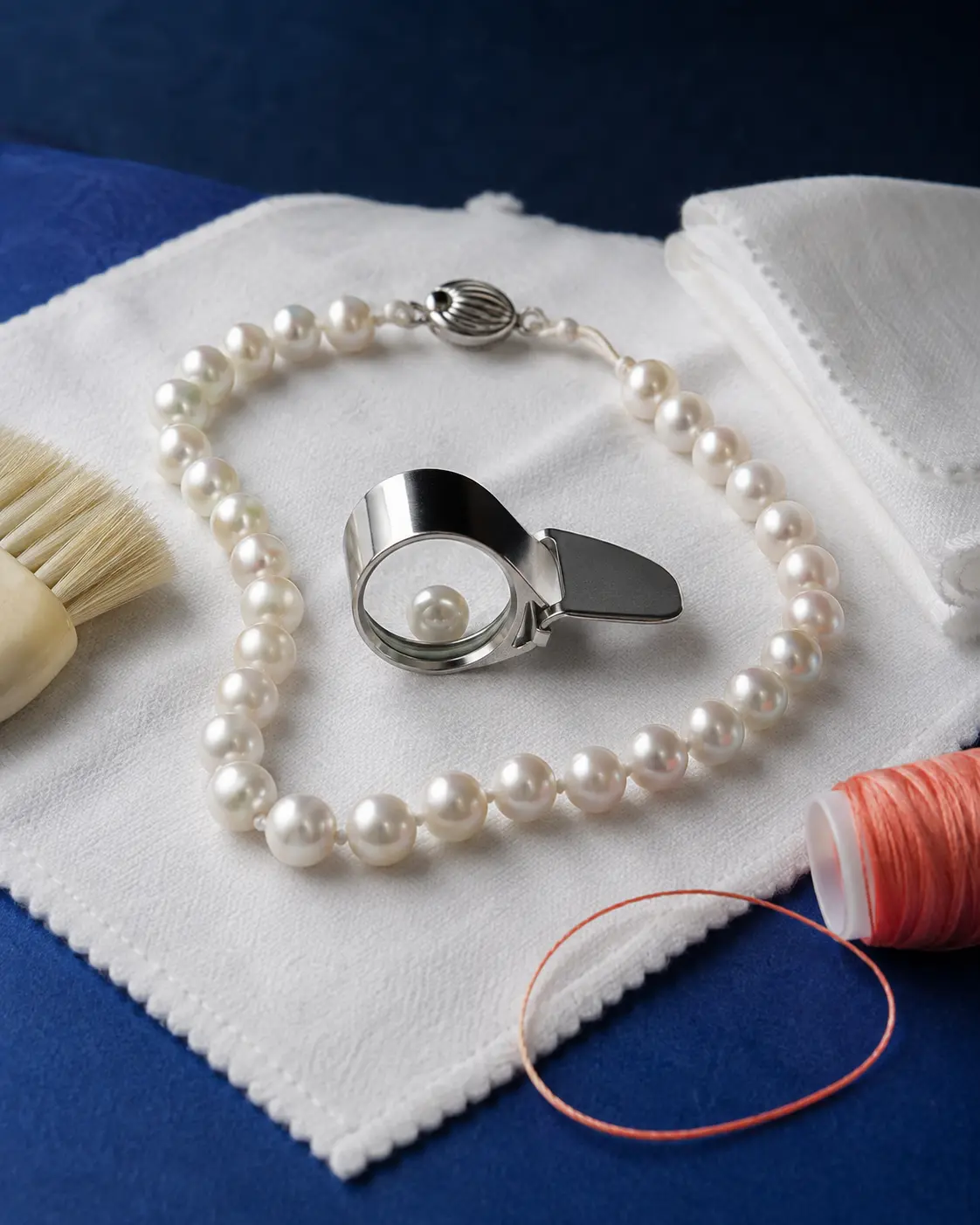
After wearing: one quiet minute
Put pearls on after perfume, hairspray and cosmetics have settled. When you take them off, wipe gently with a soft, clean, slightly damp cloth if needed, then let the strand dry flat before storing it.
Keep pearls away from abrasive jewellery. Avoid ultrasonic and steam cleaners unless a qualified professional who knows the whole piece says otherwise; pearl, adhesive, setting and string may not tolerate the same treatment.
Inspect before the calendar tells you to
Look along the strand, not only at the pearls. Is the silk fuzzy, darkened or stretched? Are knots loose? Is the clasp secure? Do drill holes show chipping or residue? A frequently worn necklace can need attention sooner.
A common service rhythm is around a year for often-worn strands, but condition is the real trigger. Ask the restringer whether each pearl will be knotted, what thread will be used and how the clasp will be attached.
When home cleaning should stop
If a pearl’s surface is peeling, unusually chalky, cracked or loose in its setting, stop wearing it and seek a jeweller experienced with pearls. Do the same for an heirloom with unknown adhesives or mixed gemstones.
Before handing over a valuable piece, photograph it in good light, count the pearls and agree in writing on the work. Care is also record-keeping.
Before you decide
Keep these five things with you.
- 01Pearls go on last and come off first
- 02Wipe after wear
- 03Dry flat before storage
- 04Inspect string, knots, clasp and drill holes
- 05Photograph and count before service
How this story earns trust
Sources, method and relationship—visible.
Each reference is tagged by the geography and authority of the source—not by the reader’s location. A country tag means the evidence is country-specific; it is never presented as a global rule.
Method
Care guidance follows GIA’s conservative recommendations and adds a practical inspection record. The article cannot assess unknown treatments, adhesives, string or settings remotely.
Commercial relationship
Independent editorial. No jeweller or cleaning-product company paid for inclusion. No cleaning method was product-tested by Eight June.
Correction or improvement
Found a mistake, a missing perspective or a source we should review? Send it to the editorial desk ↗
- 01Pearl Care and Cleaning ↗
Gemological Institute of America. GIA guidance on safe wear, cleaning and storage.
- 02Pearl Buyer’s Guide ↗
Gemological Institute of America. Consumer guidance on comparing pearls and understanding durability.
- 03Jewelry Guides ↗
U.S. Federal Trade Commission. Consumer-protection guidance on accurate descriptions and material disclosures.
If this made you pause, pass the blue forward.
When should pearls be checked, cleaned or restrung?
Ready to share
Made for personal and editorial sharing with Eight June attribution. Facts are shortened for the card; the article carries the full context, method and sources.
Questions readers ask next
Three sourced answers
to keep close.
What is the shortest answer?
Wipe pearls after wear, inspect the clasp and string regularly, and ask a jeweller to check often-worn strands about once a year or sooner if the string stretches, frays, soils or leaves large gaps.
Which evidence is carrying the answer?
The evidence trail names Pearl Care and Cleaning, Pearl Buyer’s Guide, Jewelry Guides. Open those records for their exact scope, geography, definitions and update dates.
What should I carry into the decision?
The page’s checklist highlights these points: Pearls go on last and come off first; Wipe after wear; Dry flat before storage; Inspect string, knots, clasp and drill holes. Use the linked sources to confirm any detail that changes by place, provider or date. The editorial information on this page was last reviewed on 1 September 2026. Time-sensitive conditions, prices, rules and availability should still be confirmed at the linked source on the day they matter.