Why · Essence
Why coral reefs matter far beyond the postcard
A reef is easy to reduce to colour. Its deeper value is practical: it shelters marine life, supports food and work, softens wave energy and carries cultural meaning for communities whose relationship with it began long before tourism.
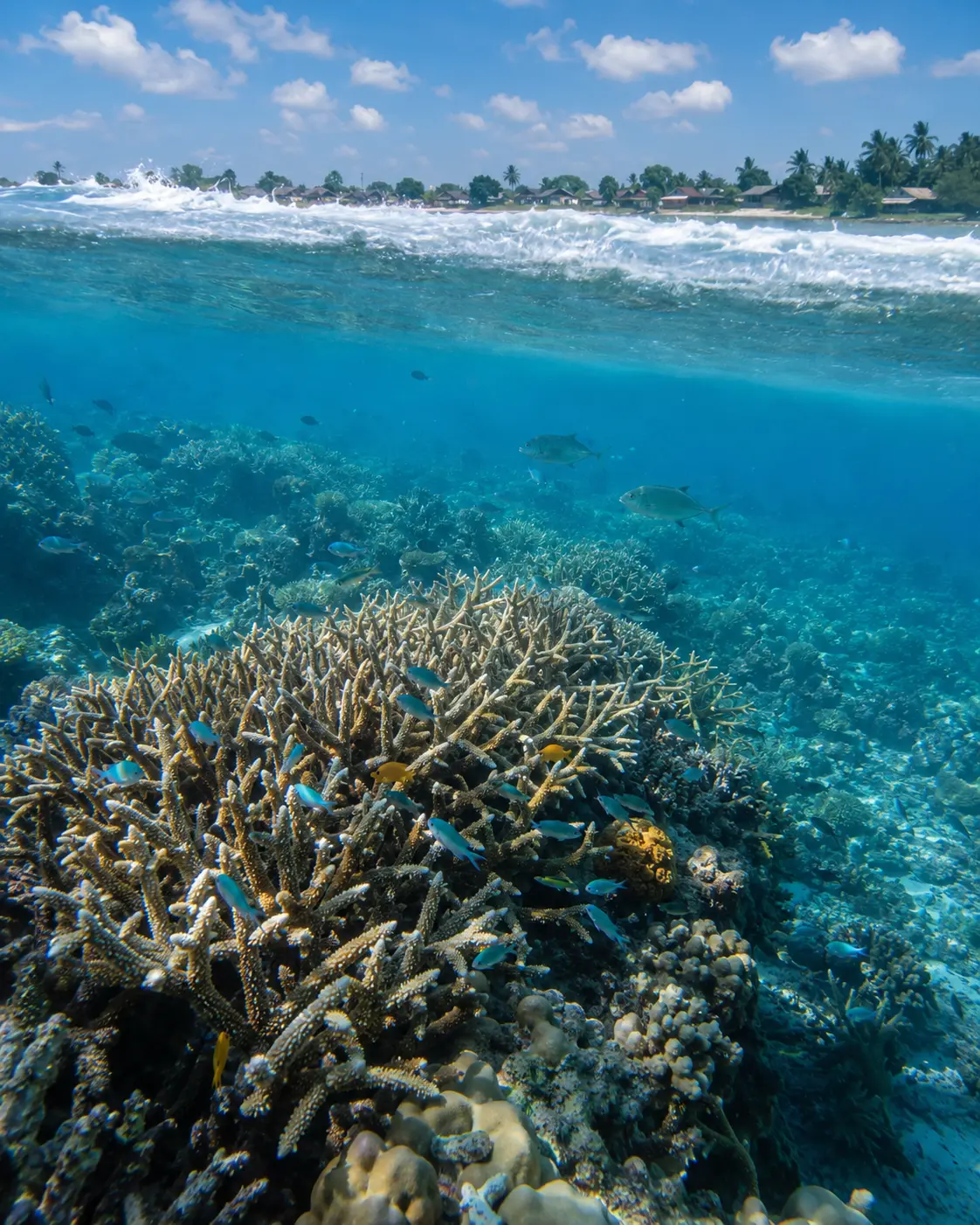
A city built by living animals
Reef-building corals are colonies of tiny animals that deposit calcium-carbonate skeletons. Over time, those structures create complex habitat used by fish and countless other organisms.
The visible coral is only one layer. Water quality, herbivorous fish, seagrass, mangroves, currents and nearby land use all affect whether the wider system can recover from stress.
Protection, food and work
Reefs can reduce incoming wave energy and help protect shorelines. They also support subsistence and commercial fisheries, tourism and recreation, though the scale and benefit differ by place.
Damage from warming, pollution, anchors, careless contact and unsustainable fishing can weaken the same services people rely on.
- Choose operators that brief guests before entering the water.
- Never stand on, chase or remove reef life.
- Keep fins, cameras and anchors clear of coral.
- Follow local closures and marine-park rules.
A better visitor question
Instead of asking only where the reef is most beautiful, ask who manages it, what pressures it faces, how operators avoid damage and whether local communities share in the value created.
A responsible visit may include fewer people, a mooring instead of an anchor, a land-based alternative during heat stress, or choosing not to enter a fragile site at all.
Before you decide
Keep these five things with you.
- 01Read the local reef rules
- 02Choose a briefed and licensed operator
- 03Keep physical distance
- 04Use established moorings
- 05Accept closures without negotiation
How this story earns trust
Sources, method and relationship—visible.
Each reference is tagged by the geography and authority of the source—not by the reader’s location. A country tag means the evidence is country-specific; it is never presented as a global rule.
Method
This explainer translates official reef science into visitor decisions. Global benefits are not used to claim identical conditions at every reef.
Commercial relationship
Independent editorial. No dive operator, resort or conservation programme paid for inclusion.
Correction or improvement
Found a mistake, a missing perspective or a source we should review? Send it to the editorial desk ↗
- 01Coral reef ecosystems ↗
National Oceanic and Atmospheric Administration. Overview of reef ecology, coastal protection, livelihoods and recreation.
- 02Restoring Coral Reefs ↗
NOAA Fisheries. Current overview of reef benefits, threats and restoration work.
If this made you pause, pass the blue forward.
Why coral reefs matter far beyond the postcard
Ready to share
Made for personal and editorial sharing with Eight June attribution. Facts are shortened for the card; the article carries the full context, method and sources.
Questions readers ask next
Three sourced answers
to keep close.
What is the shortest answer?
Coral reefs are living systems that support biodiversity, fisheries, coastal protection, recreation and culture. Visiting responsibly begins with understanding that the reef is habitat—not scenery designed for us.
Which evidence is carrying the answer?
The evidence trail names Coral reef ecosystems, Restoring Coral Reefs. Open those records for their exact scope, geography, definitions and update dates.
What should I carry into the decision?
The page’s checklist highlights these points: Read the local reef rules; Choose a briefed and licensed operator; Keep physical distance; Use established moorings. Use the linked sources to confirm any detail that changes by place, provider or date. The editorial information on this page was last reviewed on 1 September 2026. Time-sensitive conditions, prices, rules and availability should still be confirmed at the linked source on the day they matter.