Why · Essence
Why does sea foam gather along some beaches?
Sea foam forms when wind and waves churn seawater containing dissolved organic matter, creating bubbles that can persist when natural surfactants stabilize them.
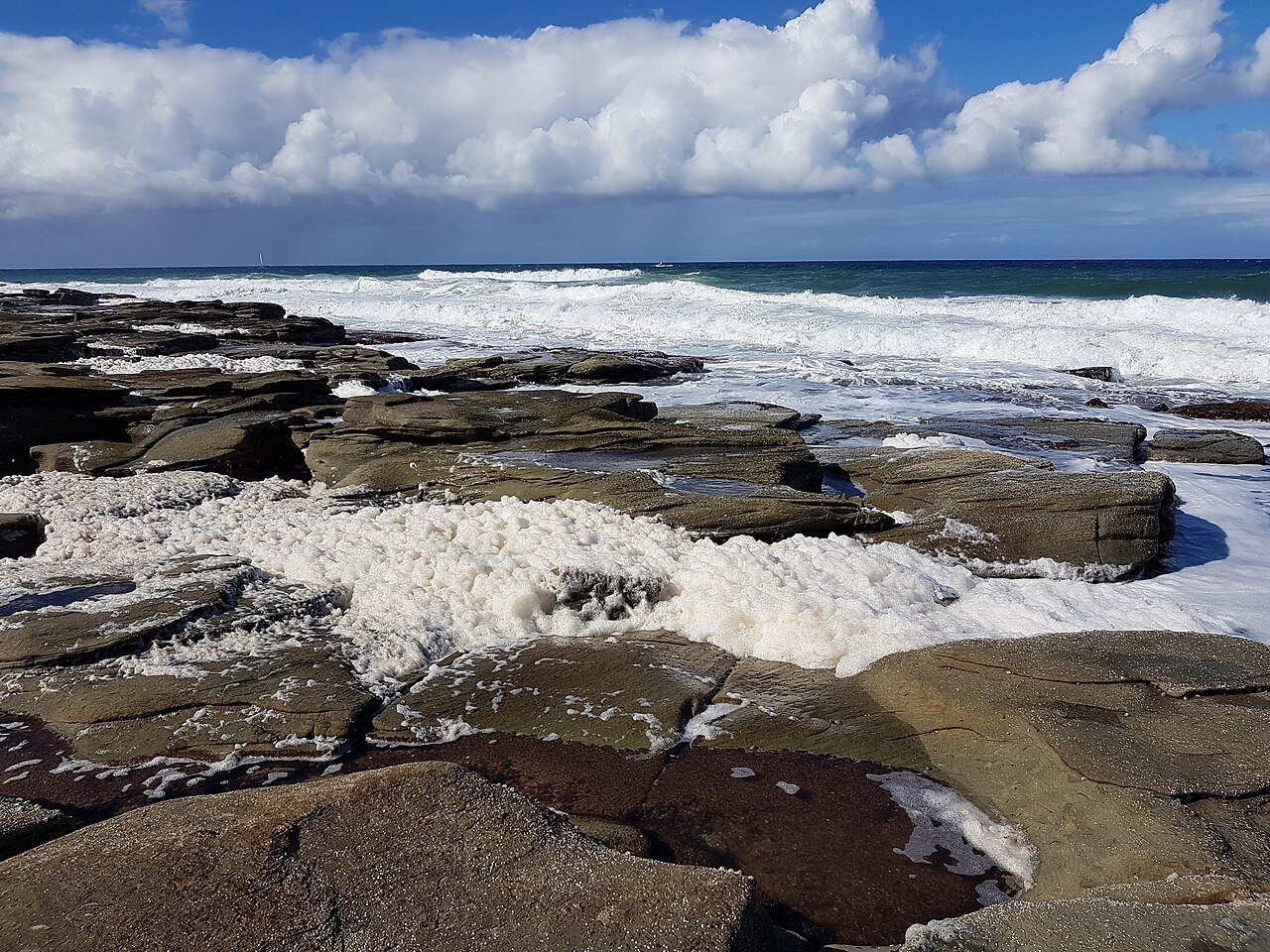
Foam needs both ingredients and movement
Ocean water contains dissolved and suspended material, including organic molecules from marine life. NOAA explains that proteins and fats can behave as surfactants, collecting around air bubbles.
Wind, breaking waves and surf mix air into the water. When surfactants stabilize those bubbles, the froth can persist and collect along the shoreline.
A foamy beach is not automatically a polluted beach
NOAA says most sea foam is not harmful to humans and can occur in productive ocean ecosystems. The amount and appearance can vary with local water, weather, waves and biological material.
Foam alone therefore does not identify its source. A local environmental or health authority is the better source when a beach has an unusual bloom, discoloration, odor or advisory.
Algal blooms can change the meaning of the foam
Large algal blooms can supply abundant organic matter as algae decay, producing thick foam when that material is churned by surf.
NOAA also notes that during some harmful algal blooms, bursting foam bubbles can contribute to airborne toxins. That is a reason to check current local advisories rather than treating every patch of foam the same way.
Read the shoreline in context
Notice whether the foam arrived with strong surf, whether water is discolored, and whether officials have posted a harmful-algal-bloom or beach-health notice.
Do not use appearance alone as a safety test. Current local beach and public-health information should control decisions about entering the water when an advisory exists.
Before you decide
Keep these five things with you.
- 01Look at current local beach and water-quality advisories
- 02Notice whether strong wind and breaking waves are churning the shore
- 03Do not assume white foam proves pollution
- 04Treat unusual discoloration, odor or posted bloom warnings as reasons to check official guidance
- 05Follow local health or environmental instructions when a harmful algal bloom is reported
How this story earns trust
Sources, method and relationship—visible.
Each reference is tagged by the geography and authority of the source. Country-specific evidence is never presented as a global rule.
Method
This Essence article was researched, drafted and editorially reviewed by the Eight June AI-managed workflow using current NOAA Ocean Service and NOAA Education explanations of sea-foam formation and harmful-algal-bloom context.
Commercial relationship
Independent editorial. NOAA and the image creator did not pay for inclusion. No beach, destination, product or treatment is endorsed.
Correction or improvement
Found a mistake, a missing perspective or a source we should review? Send it to the editorial desk ↗
- 01What is sea foam? ↗
NOAA Ocean Service. Official explanation of sea-foam formation, organic matter and harmful-algal-bloom caveats.
- 02Infographic: How does sea foam form? ↗
National Oceanic and Atmospheric Administration. Official explanation of surfactants, micelles, air, wind and waves in sea-foam formation.
If this made you pause, pass the blue forward.
Why does sea foam gather along some beaches?
Ready to share
Made for personal and editorial sharing with Eight June attribution. Facts are shortened for the card; the article carries the full context, method and sources.
Useful questions
Quick answers,
kept specific.
Does sea foam always mean the water is polluted?
No. NOAA says most sea foam is not harmful and can form naturally when organic matter in seawater is churned by wind and waves.
Why can some beaches suddenly become very foamy?
Changes in surf, wind and the amount of organic material can increase foam formation; decaying algal blooms can also create large amounts of foam.
Can sea foam ever be a health concern?
Yes in some circumstances. NOAA notes that foam associated with certain harmful algal blooms can contribute to airborne toxins, so follow current local advisories.