What · Pulse
What do diners now expect from the coastal table?
‘Fresh seafood’ used to be the whole promise. It no longer answers enough. Curious diners want to know the species, origin, production method and why the kitchen chose it.
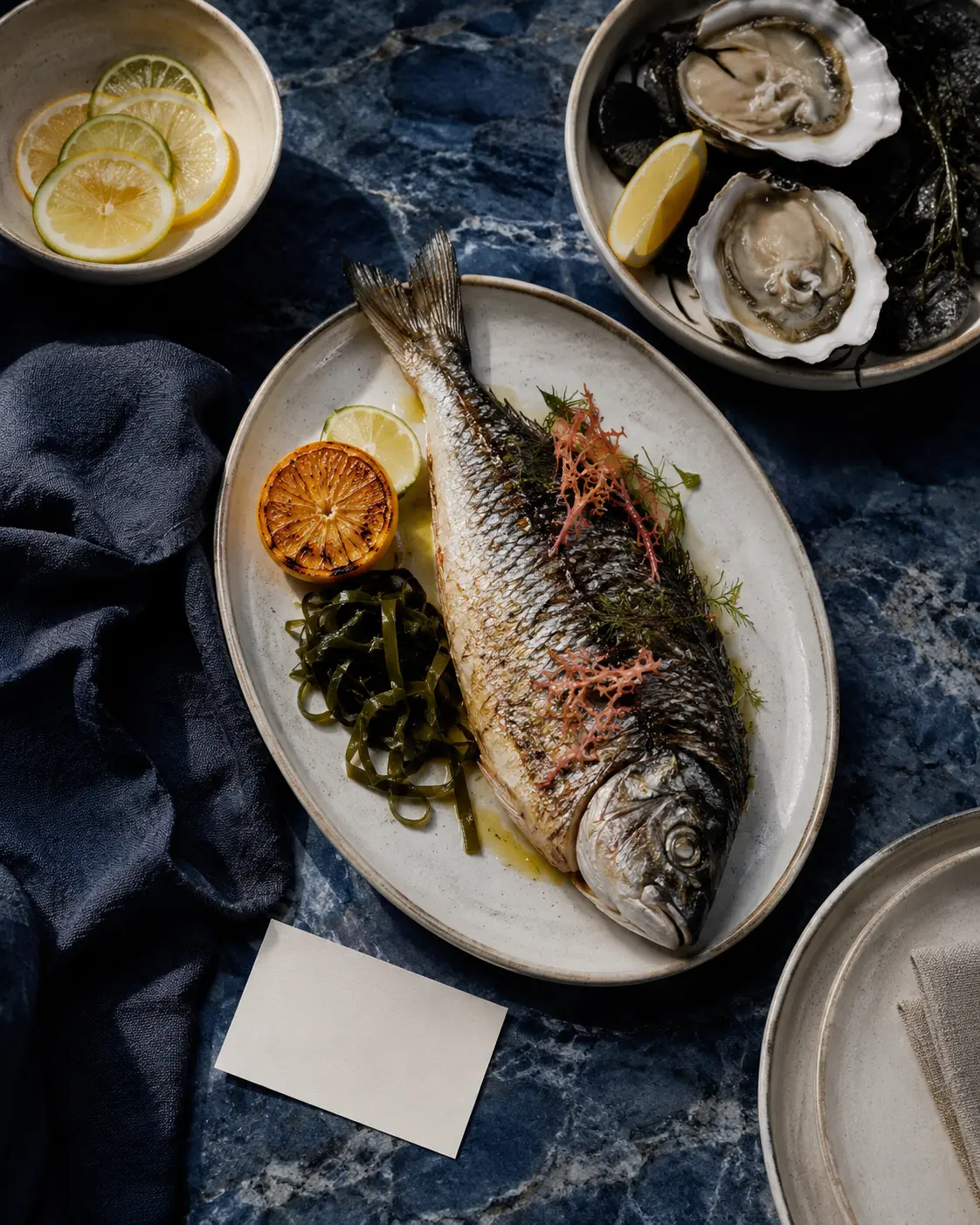
More seafood, more responsibility
FAO’s 2026 State of World Fisheries and Aquaculture estimates record global production of 235 million tonnes in 2024, including 195 million tonnes of aquatic animals. Scale makes traceability more important, not less.
Aquaculture and wild capture are not simple good-versus-bad categories. Species, location, feed, stock condition, farming system, labour, transport and management all change the answer.
Five questions a good menu can survive
You do not need to interrogate a waiter. Ask one useful question and listen to the clarity of the answer. ‘Which fish is this today?’ is stronger than ‘Is it fresh?’ because it opens the door to species, landing place and season.
For a small local restaurant, evidence may be a changing catch, named market or boat, and a willingness to say when something was unavailable.
- What is the species—not only the menu name?
- Was it wild-caught or farmed, and where?
- Is it local today or routinely frozen/imported?
- Why is it on the menu in this season?
- What happens when the preferred catch is unavailable?
Regional identity is more than garnish
The coastal table becomes memorable when technique belongs to place: the souring agent, oil, fermentation, smoke, leaf, grain or sequence of spices. Presentation can change without erasing the logic that made the dish work.
Look for menus that credit a region accurately and explain substitutions. The point is not purity; it is honesty about what changed and why.
Before you decide
Keep these five things with you.
- 01Ask for the species
- 02Look for origin and production method
- 03Prefer specific claims over vague badges
- 04Accept availability changes as honesty
- 05Notice whether regional technique has context
How this story earns trust
Sources, method and relationship—visible.
Each reference is tagged by the geography and authority of the source—not by the reader’s location. A country tag means the evidence is country-specific; it is never presented as a global rule.
Method
The article combines FAO system-level evidence with NOAA’s consumer-facing species approach. It does not certify a restaurant, fishery, farm or label.
Commercial relationship
Independent editorial. No restaurant, fishery, certification scheme or seafood brand paid for inclusion. No menu was anonymously tested.
Correction or improvement
Found a mistake, a missing perspective or a source we should review? Send it to the editorial desk ↗
- 01SOFIA 2026: production reaches new highs ↗
Food and Agriculture Organization of the United Nations. Latest global production figures.
- 02The State of World Fisheries and Aquaculture ↗
Food and Agriculture Organization of the United Nations. Current FAO evidence on production, resources and value chains.
- 03Sustainable Seafood ↗
NOAA Fisheries. Species profiles and consumer information on status, buying, handling and fraud.
- 04FAO work on traceability ↗
Food and Agriculture Organization of the United Nations. Traceability principles for seafood value chains.
If this made you pause, pass the blue forward.
What do diners now expect from the coastal table?
Ready to share
Made for personal and editorial sharing with Eight June attribution. Facts are shortened for the card; the article carries the full context, method and sources.
Questions readers ask next
Three sourced answers
to keep close.
What is the shortest answer?
The strongest shift is from generic freshness to verifiable identity: species, origin, production method, handling and local context. A short honest answer is better than a long sustainability claim without evidence.
Which evidence is carrying the answer?
The evidence trail names SOFIA 2026: production reaches new highs, The State of World Fisheries and Aquaculture, Sustainable Seafood, FAO work on traceability. Open those records for their exact scope, geography, definitions and update dates.
What should I carry into the decision?
The page’s checklist highlights these points: Ask for the species; Look for origin and production method; Prefer specific claims over vague badges; Accept availability changes as honesty. Use the linked sources to confirm any detail that changes by place, provider or date. The editorial information on this page was last reviewed on 1 September 2026. Time-sensitive conditions, prices, rules and availability should still be confirmed at the linked source on the day they matter.