What · Pulse
What makes Sydney Fish Market a working market—not merely a food hall
The new Sydney Fish Market combines public dining and retail with wharves, wholesale trade, auction facilities, ice-making, crate washing and seafood education. The working supply chain is part of the visitor story—not scenery behind it.
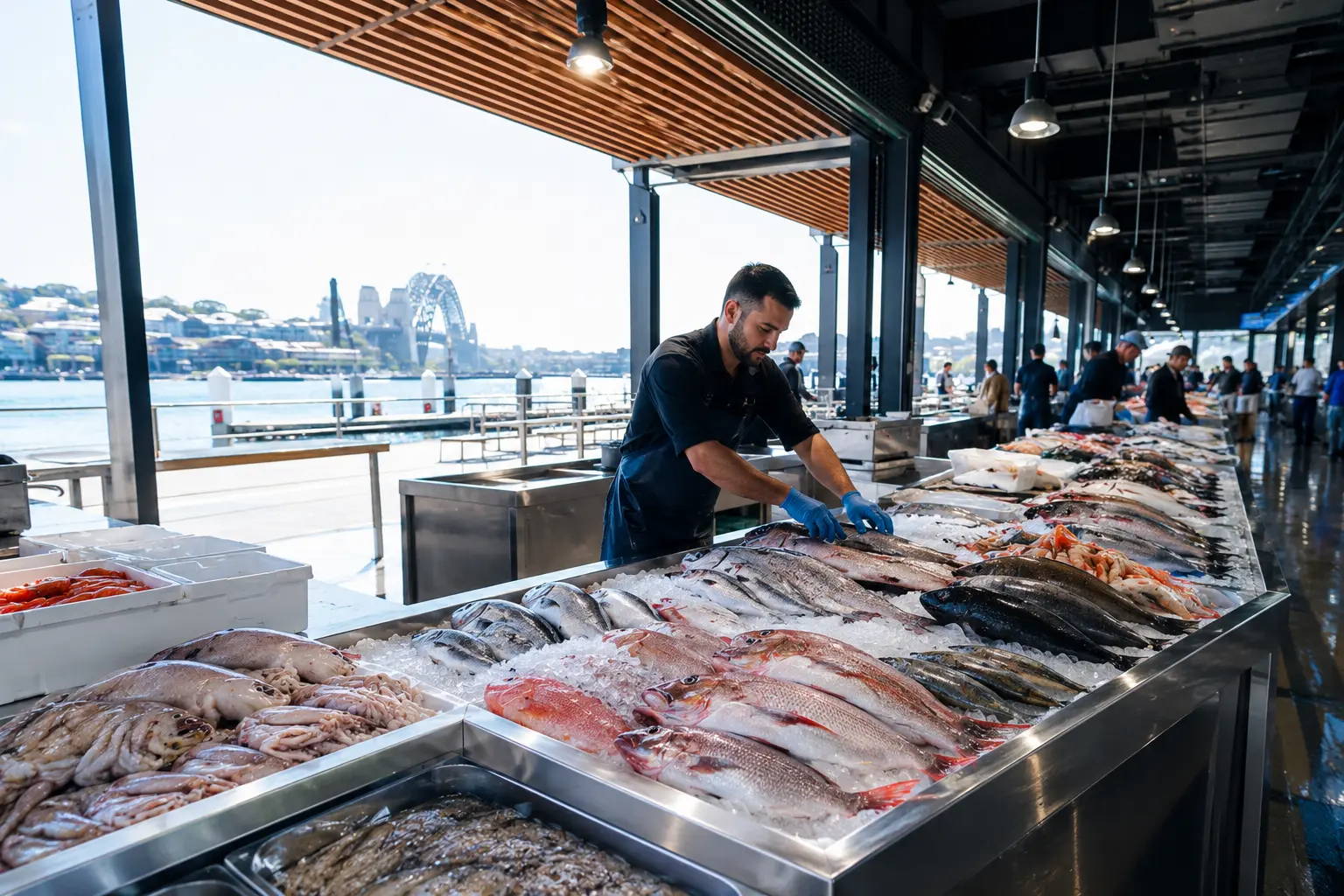
The public face and the trade floor share one roof
Sydney Fish Market’s current site presents seafood retail, dining, public space, tours and cooking classes. It also describes dedicated wharves, upgraded wholesale and auction facilities, ice-making and high-capacity crate washing.
That combination matters. A seafood market is not defined only by the number of counters or restaurants; its working identity comes from the movement of catch, information, buyers, cold handling and logistics.
Present position: the new market is designed to reveal work
The market says its open design provides viewing areas over the auction room and working wharf. Visitors can therefore see parts of wholesale operations without assuming they have access to every trade area.
Official visitor information currently lists daily public opening hours while warning that individual retailers keep their own hours. Live hours, tours, events, parking and accessibility should be checked for the intended date.
- Check the market’s visitor page
- Check the individual retailer
- Book a tour only through the current official route
- Keep wholesale viewing separate from unrestricted access
A seafood counter still requires product-level questions
A sophisticated building does not answer where a particular fish was caught or farmed, which species it is, how it was handled or whether it suits an allergy or dietary need. Those questions belong to the exact product and seller.
The market publishes species information, seasonal guidance and trade material that can improve the conversation. It does not turn every item under the roof into one uniform sourcing claim.
- Ask for the species and origin
- Ask whether it was wild-caught or farmed
- Confirm storage and consumption advice
- Treat ‘sashimi grade’ as a seller claim requiring detail
The opportunity is literacy, not spectacle alone
Tours, visible operations and the Sydney Seafood School create documented routes for visitors to understand how seafood moves and is prepared. The strongest use of the market is to connect appetite with better questions about species, season, handling and trade.
Eight June’s interpretation is that a working market earns repeat attention when the infrastructure remains legible. The sources support the facilities and public programmes; they do not support a universal claim that one visit verifies every supply chain.
Before you decide
Keep these five things with you.
- 01Check current public and retailer hours
- 02Use the official directory and map
- 03Ask product-specific sourcing questions
- 04Confirm allergies directly with the outlet
- 05Do not confuse a market listing with endorsement
How this story earns trust
Sources, method and relationship—visible.
Each reference is tagged by the geography and authority of the source. Country-specific evidence is never presented as a global rule.
Method
This Pulse article uses Sydney Fish Market’s live visitor, trade and new-market information. It describes the institution’s stated facilities without independently auditing individual retailers or seafood lots.
Commercial relationship
Independent editorial. Sydney Fish Market, its tenants and tourism partners did not pay for inclusion.
Correction or improvement
Found a mistake, a missing perspective or a source we should review? Send it to the editorial desk ↗
- 01New Sydney Fish Market ↗
Sydney Fish Market. Working wharves, auction, trade infrastructure, public viewing and market design.
- 02Sydney Fish Market · Home and Visit ↗
Sydney Fish Market. Live opening guidance, directory, experiences, species information and tours.
If this made you pause, pass the blue forward.
What makes Sydney Fish Market a working market—not merely a food hall
Ready to share
Made for personal and editorial sharing with Eight June attribution. Facts are shortened for the card; the article carries the full context, method and sources.
Useful questions
Quick answers,
kept specific.
Can visitors see wholesale activity?
The market says viewing areas overlook the auction room and working wharf; current access and tour arrangements should be checked directly.
Are all retailers open for the market’s full public hours?
No. The official site says individual retail trading hours apply.
Does buying at a fish market verify sustainability?
No. Ask for species, origin, production method and the evidence behind any environmental claim.