What · Pulse
What travellers now ask before a marine-wildlife encounter
The old promise was proximity. The better promise is restraint: an encounter shaped around the animal’s space, local rules and the possibility that the most responsible trip returns without the photograph advertised.
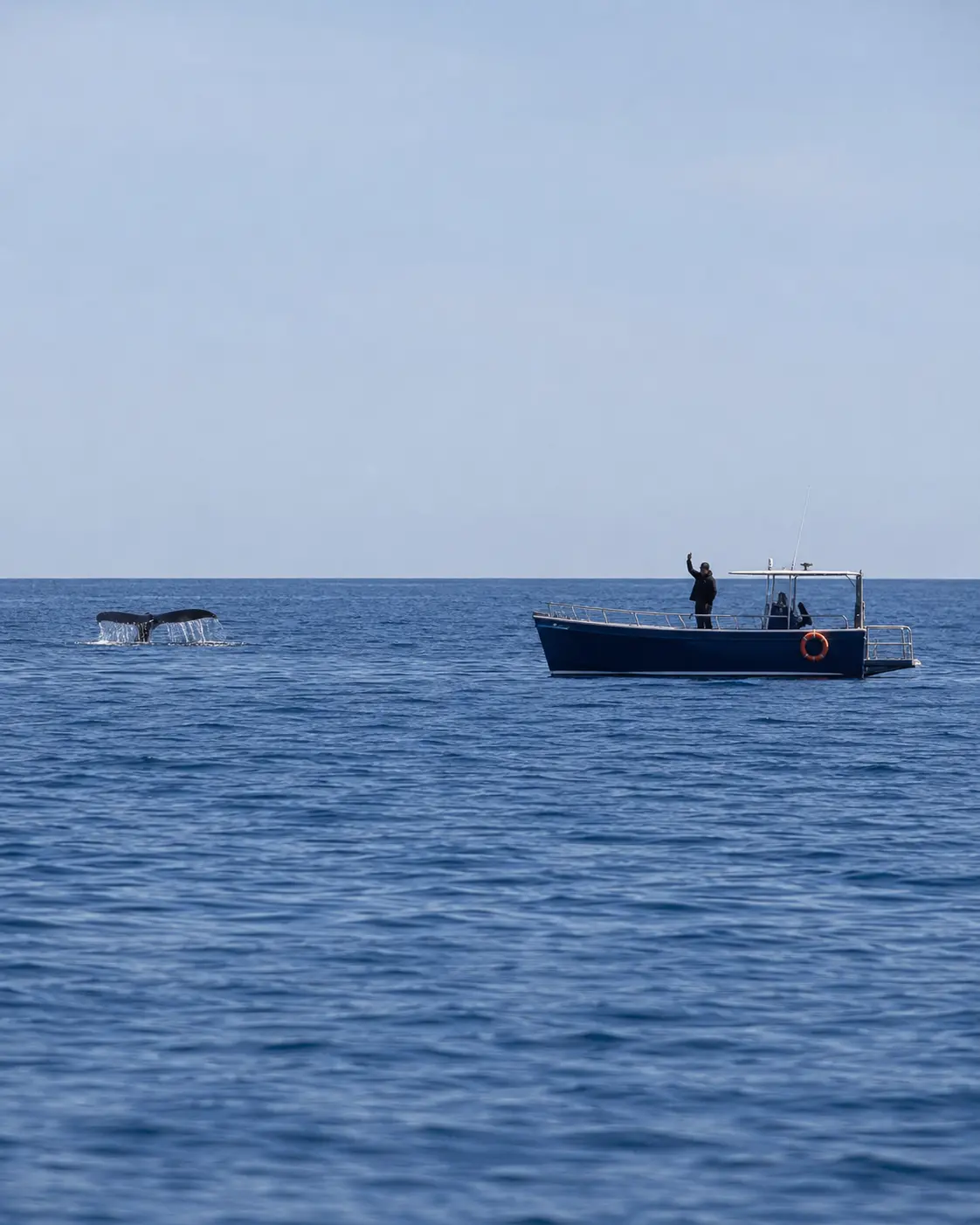
The guarantee is the warning
Wild animals do not keep appointments. A guaranteed sighting can encourage chasing, crowding or repeated disturbance unless it describes a transparent refund policy rather than animal behaviour.
Rules vary by species and jurisdiction. Find the competent local authority before the tour.
Questions that change behaviour
Ask how many guests and vessels can approach, what distance is maintained, how engines are handled, whether feeding or touching occurs, and what condition ends the activity.
A credible operator explains uncertainty before payment and records sightings without turning every animal into a performance.
- No touching, feeding or chasing.
- Local legal distances are stated.
- The animal controls the duration.
- The operator can cancel for welfare or weather.
The visitor’s role
Follow the briefing, keep movement and noise controlled, and resist asking the crew to move closer. Avoid geotagging vulnerable nesting or resting sites when local conservation groups advise against it.
The best review can praise what did not happen: no crowding, no pressure, no false certainty.
Before you decide
Keep these five things with you.
- 01Find the local authority
- 02Ask for distance rules
- 03Avoid guaranteed-animal promises
- 04Choose controlled groups
- 05Accept no-sighting days
How this story earns trust
Sources, method and relationship—visible.
Each reference is tagged by the geography and authority of the source—not by the reader’s location. A country tag means the evidence is country-specific; it is never presented as a global rule.
Method
Species-specific rules are not generalized as global law. The article supplies questions readers should verify with the destination’s authority.
Commercial relationship
Independent editorial. No wildlife operator or destination paid for inclusion.
Correction or improvement
Found a mistake, a missing perspective or a source we should review? Send it to the editorial desk ↗
- 01What Can You Do to Save Sea Turtles? ↗
NOAA Fisheries. Official visitor guidance on nesting beaches, distance and organised watches.
- 02Sea Turtle Week 2025 ↗
NOAA Fisheries. Reminder that viewing laws vary by region, state and species.
If this made you pause, pass the blue forward.
What travellers now ask before a marine-wildlife encounter
Ready to share
Made for personal and editorial sharing with Eight June attribution. Facts are shortened for the card; the article carries the full context, method and sources.
Questions readers ask next
Three sourced answers
to keep close.
What is the shortest answer?
Ask about legal distance, group size, time limits, vessel behaviour, wildlife briefing and cancellation rules—not whether an operator guarantees a sighting.
Which evidence is carrying the answer?
The evidence trail names What Can You Do to Save Sea Turtles?, Sea Turtle Week 2025. Open those records for their exact scope, geography, definitions and update dates.
What should I carry into the decision?
The page’s checklist highlights these points: Find the local authority; Ask for distance rules; Avoid guaranteed-animal promises; Choose controlled groups. Use the linked sources to confirm any detail that changes by place, provider or date. The editorial information on this page was last reviewed on 1 September 2026. Time-sensitive conditions, prices, rules and availability should still be confirmed at the linked source on the day they matter.