Where · Compass
Where ocean-led design moves beyond the obvious beach look
Ocean-led design does not require anchors, shells or a wall painted turquoise. It can begin with reflected light, air movement, weathered material, shade, repair and the fact that water changes how a place is used.
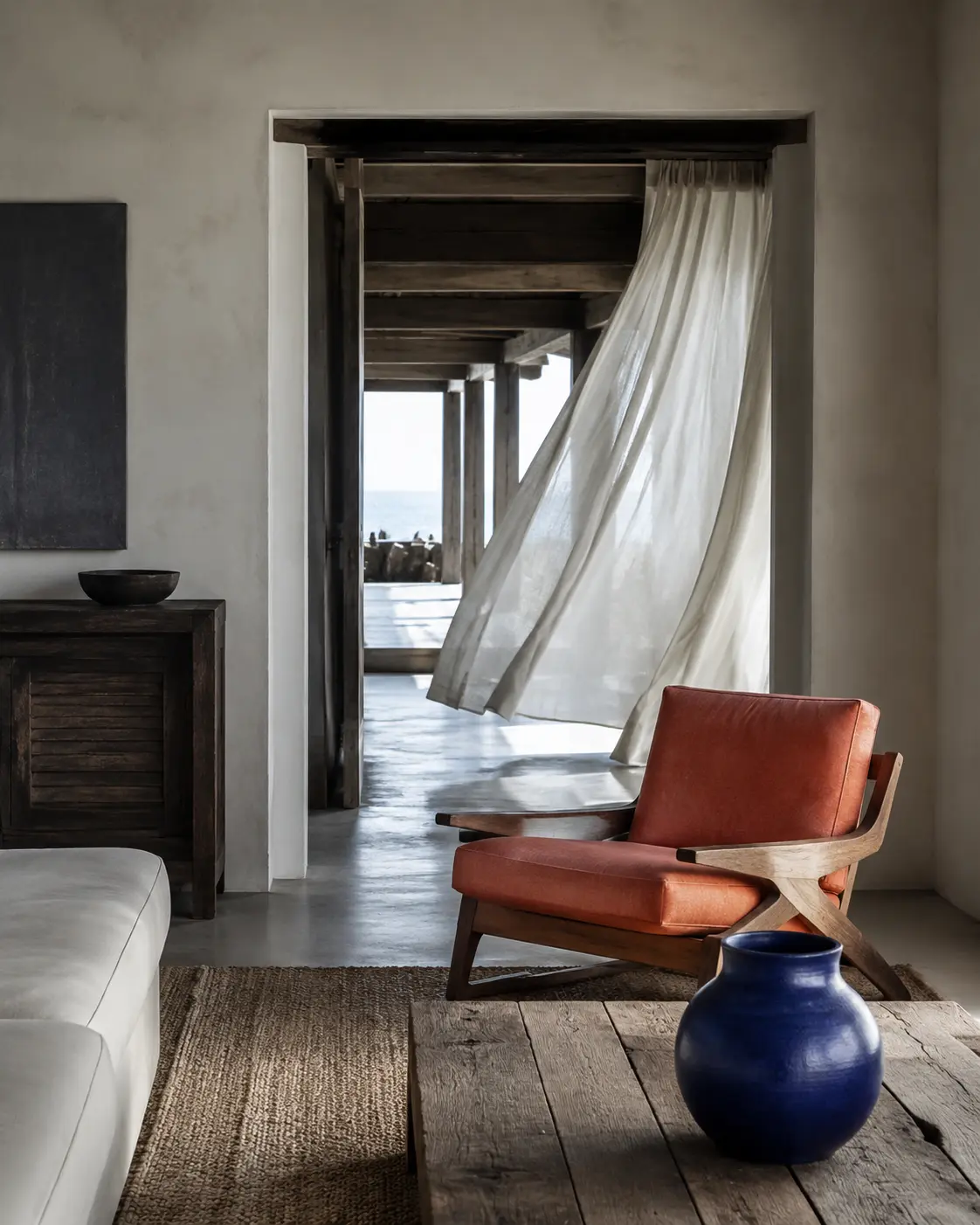
Begin with behaviour, not colour
A coastal room has a daily rhythm: wet feet cross a threshold, glare moves, doors catch wind, fabric dries, salt settles and evening air becomes valuable. Design becomes ocean-led when it answers those behaviours elegantly.
That may mean a shaded verandah, a deep window reveal, a washable texture, a place to rinse and dry, or furniture that can be repaired. None needs to look nautical.
Four places to look
Look at older coastal houses for climate intelligence, working harbours for honest material use, contemporary hospitality for spatial theatre and local workshops for craft that belongs to the region. Do not copy one literally; ask what problem each detail solved.
In clothing, the same principle applies. Breathability, movement, sun protection, quick drying and a palette drawn from more than bright blue can feel coastal without becoming costume.
- Architecture: shade, breeze, thresholds and drainage.
- Interiors: reflected light and replaceable surfaces.
- Objects: useful forms and repairable construction.
- Style: movement and comfort before motifs.
The anti-cliché test
Remove every shell, rope and blue stripe in your mind. Does the design still make sense beside water? Would it age with dignity? Can it be cleaned and repaired? Does it acknowledge local material and labour?
If yes, the ocean is probably present at a deeper level. If not, the object may still be joyful—just call it beach-themed rather than a lesson in place.
Before you decide
Keep these five things with you.
- 01Remove the motif and test the idea
- 02Ask how it handles light and moisture
- 03Look for local material intelligence
- 04Prefer repairable details
- 05Separate coastal function from beach styling
How this story earns trust
Sources, method and relationship—visible.
Each reference is tagged by the geography and authority of the source—not by the reader’s location. A country tag means the evidence is country-specific; it is never presented as a global rule.
Method
This is a critical design guide, not a product list. Technical claims are limited to cited building-science principles; aesthetic judgements are Eight June’s editorial point of view.
Commercial relationship
Independent editorial. No architect, hotel, fashion brand or product maker paid for inclusion. No named property is reviewed here.
Correction or improvement
Found a mistake, a missing perspective or a source we should review? Send it to the editorial desk ↗
- 01Recommendations for hot-humid coastal construction ↗
U.S. Department of Energy / Building Science Corporation. Climate-responsive principles for wetting, corrosion and material choice.
- 02Vancouver Test Hut Project ↗
Building Science Corporation. Measured coastal-climate enclosure research.
- 03Sustainable development ↗
UN Tourism. Environmental, economic and cultural destination context.
If this made you pause, pass the blue forward.
Where ocean-led design moves beyond the obvious beach look
Ready to share
Made for personal and editorial sharing with Eight June attribution. Facts are shortened for the card; the article carries the full context, method and sources.
Questions readers ask next
Three sourced answers
to keep close.
What is the shortest answer?
Look for design that responds to the ocean rather than decorating with symbols of it: light, ventilation, thresholds, durable materials, local craft, repair and views that reveal themselves gradually.
Which evidence is carrying the answer?
The evidence trail names Recommendations for hot-humid coastal construction, Vancouver Test Hut Project, Sustainable development. Open those records for their exact scope, geography, definitions and update dates.
What should I carry into the decision?
The page’s checklist highlights these points: Remove the motif and test the idea; Ask how it handles light and moisture; Look for local material intelligence; Prefer repairable details. Use the linked sources to confirm any detail that changes by place, provider or date. The editorial information on this page was last reviewed on 1 September 2026. Time-sensitive conditions, prices, rules and availability should still be confirmed at the linked source on the day they matter.