Where · Compass
Where to experience the world’s distinct coastal flavours
There is no single coastal cuisine. Every ocean edge is shaped by different waters, migrations, rains, faiths, crops, preservation methods and languages. The richest route follows those differences instead of collecting famous dishes.
Atlantic and Caribbean: salt, smoke, acid and movement
Portugal and Galicia read the Atlantic through grilled fish, shellfish, rice and preservation; Senegal and Ghana bring smoking, fermentation, grains, peppers and coastal trade into different conversations. Across the Caribbean, Indigenous, African, European and Asian histories meet in seafood, root crops, coconut, citrus and spice.
On Peru’s Pacific-facing table, ceviche is more than a dish name: species, cut, acid, chilli, corn and local practice matter. Travel north or south and the same ocean produces another vocabulary. Use countries as doors, never as a claim that every household cooks alike.
Indian Ocean, Mediterranean and Pacific: many blue worlds
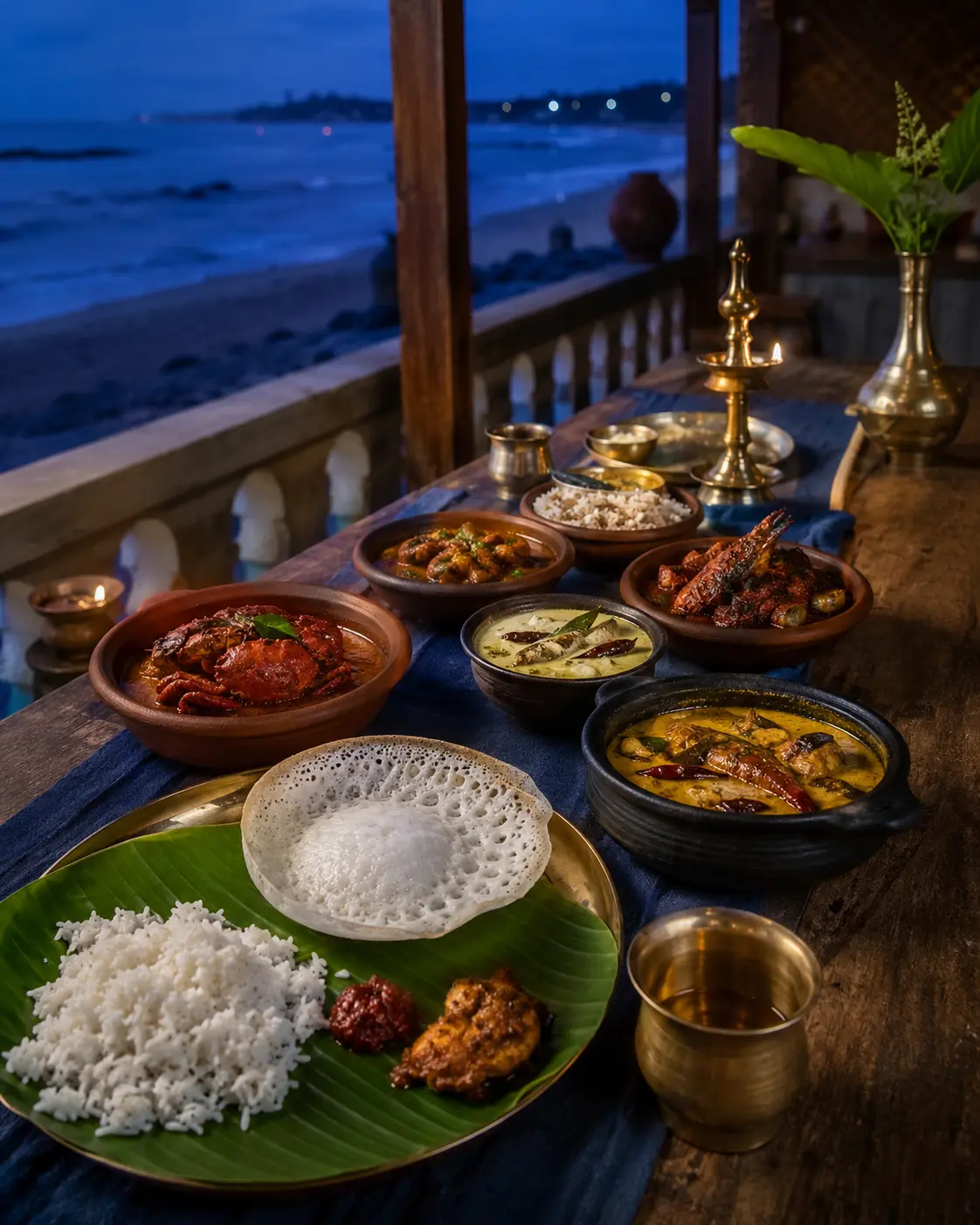
Along India’s coasts, Goa, Malabar, Tamil Nadu, Odisha and Bengal already resist one national summary. The Swahili coast links seafood, coconut, rice and long Indian Ocean exchange; Madagascar and island states add their own ingredients and histories.
Mediterranean fishing ports, Japanese coastal towns, Philippine islands and Pacific communities each organise freshness, preservation, starch, broth and celebration differently. Compare techniques—drying, grilling, fermenting, steaming, souring—then ask what the local water and season make possible.
A three-stop method that works anywhere
Begin at a market with a local guide or cook who can name species and explain what is in season. Eat one ordinary meal where residents eat regularly. Then choose a restaurant that can explain its sourcing and regional references without turning every dish into theatre.
Verify opening days, local fishing restrictions, weather and transport shortly before travel. A famous dish may not be available, sustainable or at its best every month.
- Market: learn names and seasonality.
- Everyday table: understand staples and proportion.
- Considered restaurant: see how tradition is interpreted.
- Producer stop: buy only where visits are welcomed.
Before you decide
Keep these five things with you.
- 01Choose one region at a time
- 02Include a market and an everyday meal
- 03Ask local species names
- 04Check seasonal availability
- 05Leave room for the route to change
How this story earns trust
Sources, method and relationship—visible.
Each reference is tagged by the geography and authority of the source—not by the reader’s location. A country tag means the evidence is country-specific; it is never presented as a global rule.
Method
This is an editorial route framework, not a ranked restaurant list. Individual venues are excluded until opening, sourcing and disclosure details can be verified.
Commercial relationship
Independent editorial. No destination, restaurant or guide paid for inclusion. There are no affiliate links or hosted experiences in this guide.
Correction or improvement
Found a mistake, a missing perspective or a source we should review? Send it to the editorial desk ↗
- 01Browse the Intangible Cultural Heritage Lists ↗
UNESCO. A global starting point for place-specific living food practices.
- 02Gastronomy and wine tourism ↗
UN Tourism. Global destination and community context for gastronomy travel.
- 03The State of World Fisheries and Aquaculture ↗
Food and Agriculture Organization of the United Nations. Global evidence on aquatic food systems and value chains.
- 04Goa ↗
Incredible India, Ministry of Tourism. One country-level example of layered coastal culinary influences.
If this made you pause, pass the blue forward.
Where to experience the world’s distinct coastal flavours
Ready to share
Made for personal and editorial sharing with Eight June attribution. Facts are shortened for the card; the article carries the full context, method and sources.
Questions readers ask next
Three sourced answers
to keep close.
What is the shortest answer?
Choose one coastal region, then taste across three settings: a market or harbour, an everyday local meal and one thoughtful restaurant. The method works from Peru and Portugal to Senegal, India, Japan and the Pacific islands.
Which evidence is carrying the answer?
The evidence trail names Browse the Intangible Cultural Heritage Lists, Gastronomy and wine tourism, The State of World Fisheries and Aquaculture, Goa. Open those records for their exact scope, geography, definitions and update dates.
What should I carry into the decision?
The page’s checklist highlights these points: Choose one region at a time; Include a market and an everyday meal; Ask local species names; Check seasonal availability. Use the linked sources to confirm any detail that changes by place, provider or date. The editorial information on this page was last reviewed on 1 September 2026. Time-sensitive conditions, prices, rules and availability should still be confirmed at the linked source on the day they matter.