Why · Essence
Why Kihnu’s striped skirts carry an island’s identity
UNESCO treats Kihnu’s woollen handicrafts and women’s clothing as visible parts of a wider cultural space that also includes language, music, ceremonies, community life and a maritime island setting.
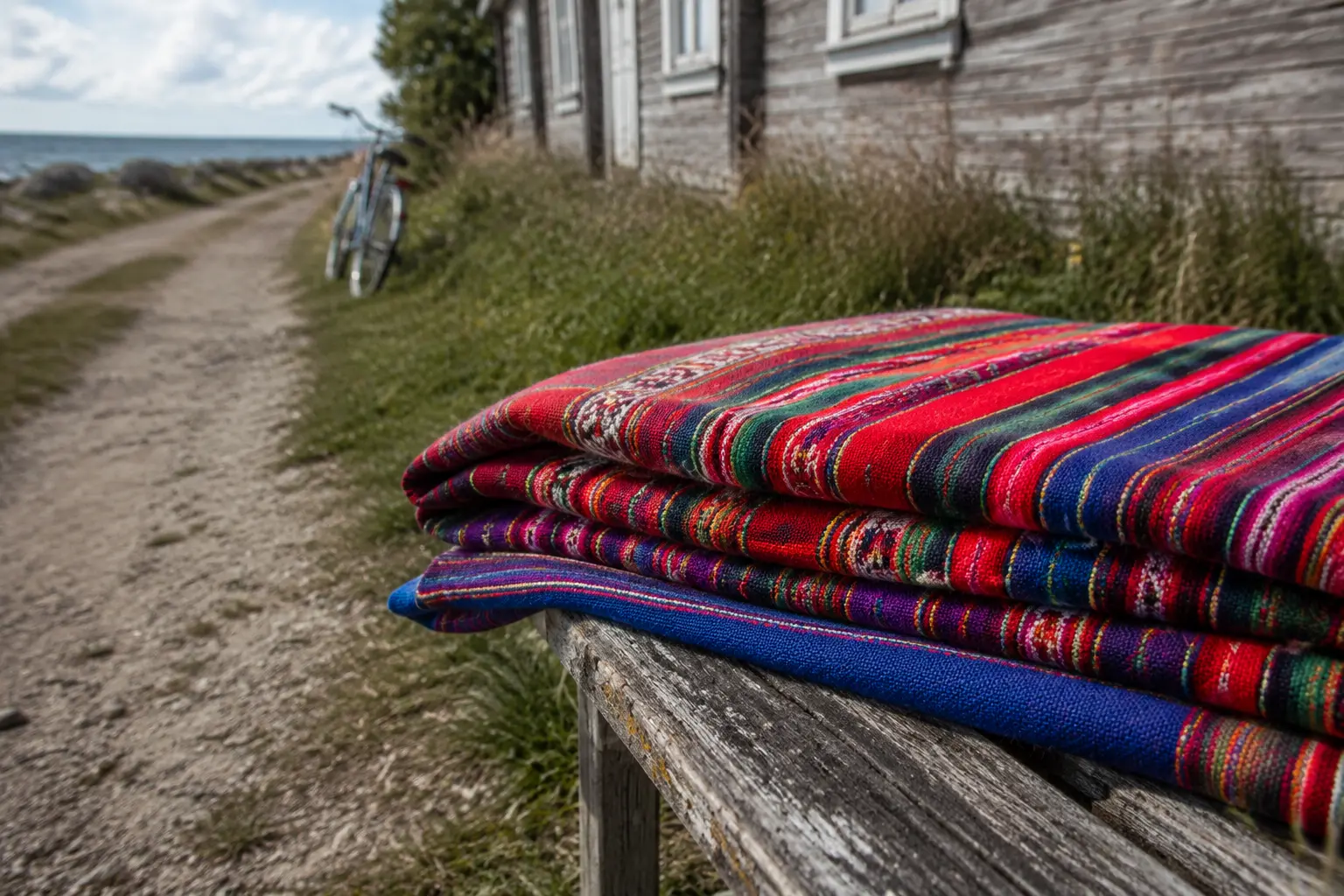
The cloth is visible; the cultural system is larger
UNESCO identifies woollen handicrafts worn by Kihnu women as one of the cultural space’s most visible emblems. Visibility can be misleading, however, if the stripes are treated as the entire heritage.
The official record places clothing within a network of songs, games, dances, wedding ceremonies, handicrafts and community practice. The textile is therefore an entry point into the cultural space, not a shortcut around it.
Documented origin: island life shaped who carried knowledge
Kihnu and neighbouring Manija developed distinctive cultural expressions in a Baltic island setting. UNESCO notes that, while men historically spent long periods at sea, women became principal custodians of many traditions and everyday practices.
That history helps explain why garments carry more than visual taste. Making and wearing them participate in identity, continuity and social knowledge; copying a colour sequence does not reproduce those relationships.
Present position: safeguarding means continued practice
Kihnu cultural space was proclaimed a Masterpiece of the Oral and Intangible Heritage of Humanity in 2003 and incorporated into the Representative List in 2008. Inscription recognises a living practice and its safeguarding needs; it is not a certification label for every product sold as Kihnu style.
The Kihnu Cultural Space Foundation states that its purpose is to preserve and develop the island’s cultural heritage in an authentic form. That is a current institutional route for understanding continuity beyond tourist imagery.
- Ask who made the textile
- Ask where it was woven
- Distinguish handwoven cloth from a printed stripe
- Learn how the garment is used in community life
A responsible opportunity begins with attribution
For readers and buyers, the source-supported opportunity is to learn from practitioner-connected institutions, museums and makers, then ask for product-specific origin and process. UNESCO recognition supplies cultural context, not authentication of an individual garment.
Eight June’s forward-looking interpretation is modest: wider interest can support transmission only when the people carrying the knowledge remain visible and benefit from the attention. The sources do not justify a blanket claim that any purchase achieves that result.
Before you decide
Keep these five things with you.
- 01Start with the UNESCO cultural record
- 02Name the maker and weaving place
- 03Ask whether the cloth is woven or printed
- 04Avoid turning community dress into a generic trend
- 05Use practitioner-connected sources for current context
How this story earns trust
Sources, method and relationship—visible.
Each reference is tagged by the geography and authority of the source. Country-specific evidence is never presented as a global rule.
Method
This Essence article uses UNESCO’s cultural record and the Kihnu Cultural Space Foundation’s stated role. It separates documented heritage from product-specific questions and editorial interpretation.
Commercial relationship
Independent editorial. No textile seller, tourism operator or cultural institution paid for inclusion.
Correction or improvement
Found a mistake, a missing perspective or a source we should review? Send it to the editorial desk ↗
- 01Kihnu cultural space ↗
UNESCO Intangible Cultural Heritage. Community, clothing, handicrafts, ceremonies and safeguarding context.
- 02Kihnu Cultural Space Foundation ↗
SA Kihnu Kultuuriruum. Current institutional purpose and cultural-preservation role.
If this made you pause, pass the blue forward.
Why Kihnu’s striped skirts carry an island’s identity
Ready to share
Made for personal and editorial sharing with Eight June attribution. Facts are shortened for the card; the article carries the full context, method and sources.
Useful questions
Quick answers,
kept specific.
Are Kihnu stripes only a fashion motif?
No. UNESCO presents woollen clothing as one visible element within a broader living cultural space.
Does UNESCO inscription authenticate a garment?
No. It recognises the cultural element; maker, place, material and method must be established for the individual object.
What is the best first question before buying?
Ask who made the cloth, where it was woven and whether the pattern is woven or merely printed.