Species identity
Ask for the common and scientific name when the distinction affects value, sustainability or allergy decisions.
EJ Catch · library
Move beyond market names to species, production and origin.
Begin with the biological species where possible, then add production method, origin and form. Market names can be useful, but they may hide important differences.
Use this page
General-information visitor workspace.
Sources, scope and local checks are visible on this page.
What you leave with
Identify seafood by species, production method, origin and product form before comparing sustainability, safety or price.
Evidence reviewed 8 August 2026Use the library
Move across the four decision areas, then use the source and local-check sections to test the choice before acting.
Ask for the common and scientific name when the distinction affects value, sustainability or allergy decisions.
Neither term is a complete verdict; location, method, management and handling change the picture.
Landing, farming, processing and sale may happen in different places. Ask which origin the seller means.
Fresh, previously frozen, frozen, live, smoked or preserved products need different expectations and handling.
Reference starting points
Five practical records selected for this page. Each one leads to the organisation, issuer, authority or business responsible for the information—not a copied listing.
Independently selected · No paid placement · Reference date 8 August 2026Northwest Atlantic · United States
NOAA’s profile connects species biology, fishery management and market information.
Use the scientific and market names before comparing origin or price.
Pacific Ocean
A highly migratory tuna managed across national and international jurisdictions.
Check stock, fishery and harvest method rather than relying on ‘tuna’ alone.
Atlantic · Pacific · Indian Oceans
Also called dolphinfish, this species appears under several market names.
Use the FDA Seafood List to connect acceptable market and scientific names.
Northwest Atlantic
A managed crustacean species with region-specific rules and market forms.
Check harvest area, legal size and whether the product is live, fresh or frozen.
United States market · Global species
FDA’s searchable guide connects scientific, common and acceptable US market names.
Use it to decode a label; apply the rules of the country where the product is sold.
A listing confirms a useful official starting point—not a recommendation, test result or guarantee. Availability, prices, access, certification and operating status can change; recheck the linked source before booking, buying or travelling.
Evidence behind this page
Market names and allowed species descriptions vary by jurisdiction; verify with the responsible local fisheries or food authority.
UN flagship evidence · Global
The global production, trade, nutrition and sustainability context behind seafood choices.
↗02Official naming database · United States
A searchable example showing how market names relate to scientific and common species names.
↗03National fisheries authority · United States
A transparent country-level example of connecting species identity with stock, production and management information.
↗FAO provides the global system view; FDA and NOAA are labelled country examples of species naming and management transparency.
Sources inform the framework; they do not endorse Eight June, a seller, product, destination or venue.
A simple way through
Name the species.
Add production and origin.
Check the form and handling before comparing price.
Go deeper with Ask Blue
Use these articles for the fuller explanation, examples and context. The utility above remains the practical decision layer.
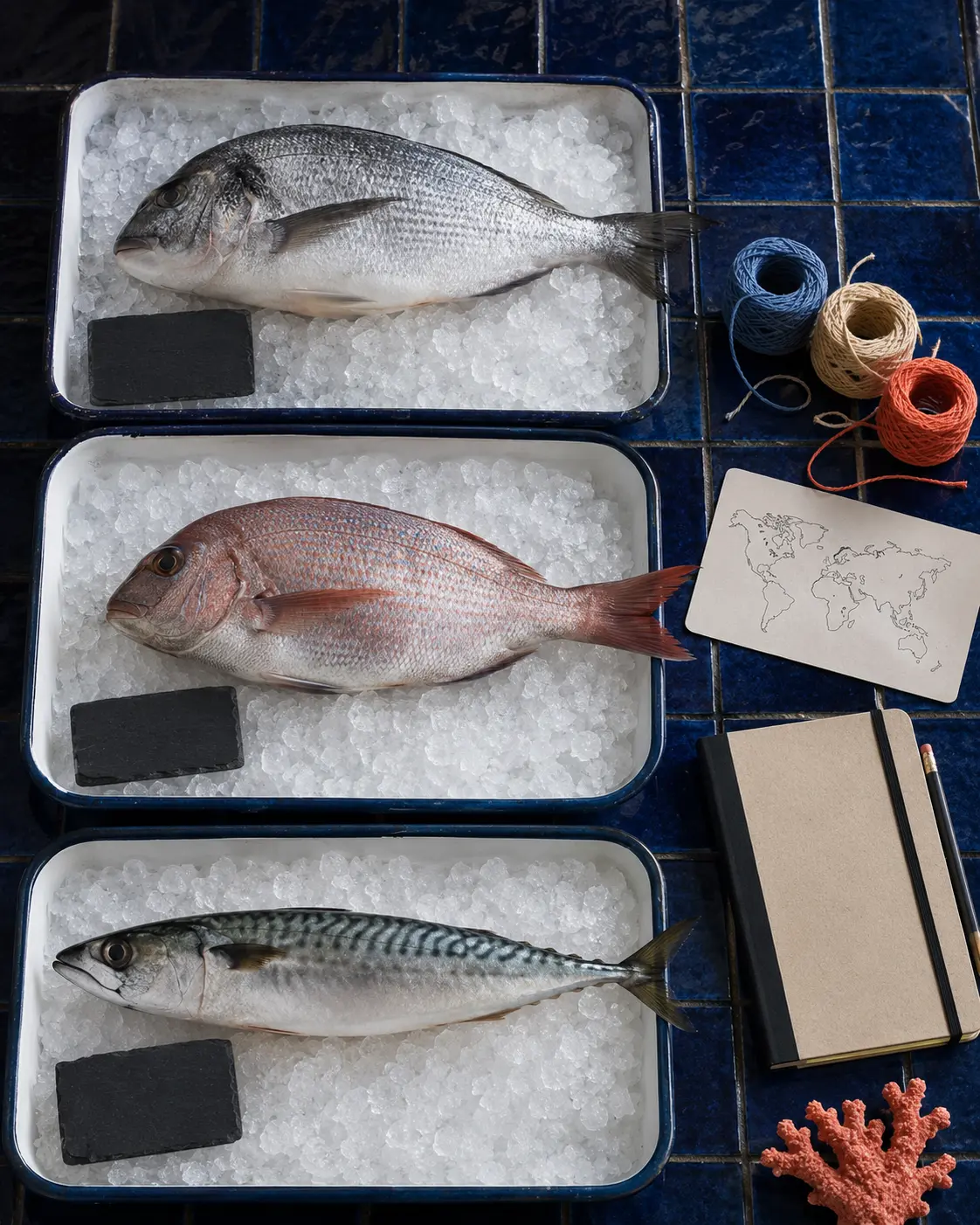
Species, origin, production method and the missing details behind a familiar menu word.
Read in Ask Blue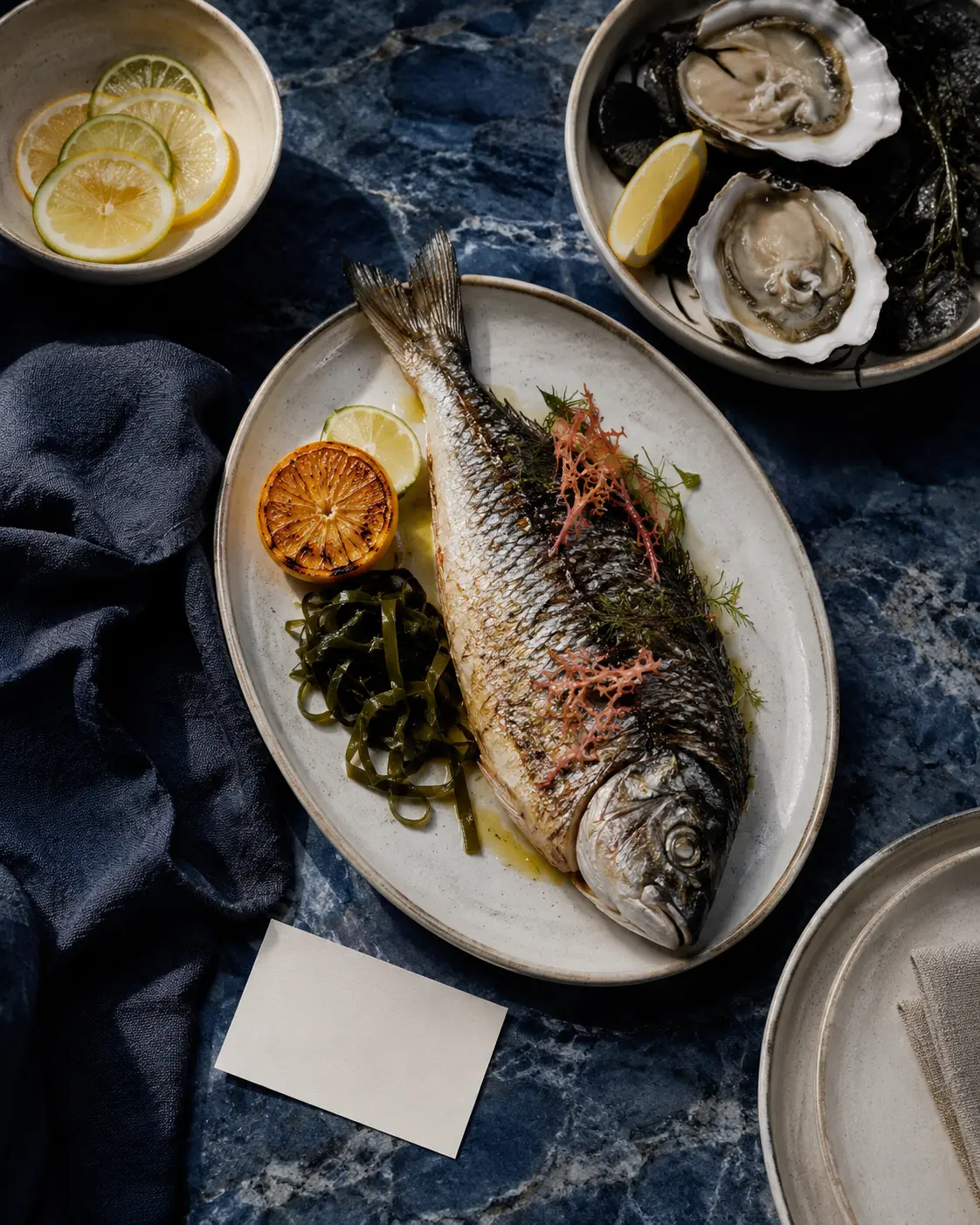
Traceability, freshness, regional identity and the questions influencing menus now.
Read in Ask Blue
Memory, technique, ingredients and the everyday work behind living food traditions.
Read in Ask Blue