Catch of the day
Ask which species, how it is prepared and whether the portion or price changes with the fish.
EJ Table · decoder
Translate species, origin, season and sourcing language before ordering.
The decoder turns polished menu language into useful questions without making the dining experience feel like an audit.
Use this page
General-information visitor workspace.
Sources, scope and local checks are visible on this page.
What you leave with
Translate polished menu language into a few useful questions about species, source, preparation, portion and price.
Evidence reviewed 8 August 2026Use the decoder
Move across the four decision areas, then use the source and local-check sections to test the choice before acting.
Ask which species, how it is prepared and whether the portion or price changes with the fish.
Ask whether the ingredient, recipe, producer or chef is local—and to which place.
Look for species, source, method or a verifiable programme rather than accepting the adjective alone.
Confirm the unit, portion and current price before ordering, especially for whole fish or shellfish.
Reference starting points
Five practical records selected for this page. Each one leads to the organisation, issuer, authority or business responsible for the information—not a copied listing.
Independently selected · No paid placement · Reference date 8 August 2026Sydney · Australia
A current restaurant menu useful for seeing how species, cut and preparation are named.
Check whether price, species and availability change on the day.
Getaria · Spain
Official material explains the restaurant’s grill-led treatment of whole fish.
Ask what is available, how it is priced and which parts are served.
Lima · Peru
A current source for ceviche, tiradito and Peruvian seafood terminology.
Confirm species substitutions, spice, raw preparation and allergens.
United States · General use
Official guidance explains labelling of fish species and crustacean shellfish allergens.
Use it to frame questions; restaurant allergen rules vary by country.
European Union
EU consumer guidance explains the required information for 14 regulated allergens.
Ask about sauces, broths and cross-contact in addition to the headline ingredient.
A listing confirms a useful official starting point—not a recommendation, test result or guarantee. Availability, prices, access, certification and operating status can change; recheck the linked source before booking, buying or travelling.
Evidence behind this page
Ask the restaurant for today's exact answer; labels and market names can have different legal meanings across countries.
UN flagship evidence · Global
The global production, trade, nutrition and sustainability context behind seafood choices.
↗02Intergovernmental code · Global food standards
Good-practice controls for identity, handling, processing, storage and safety across fishery products.
↗03Public-health evidence · Global
The shared responsibility for safe handling across production, transport, restaurants and the home.
↗FAO and Codex provide the product-chain foundation; WHO establishes why safe handling remains part of the dining decision.
Sources inform the framework; they do not endorse Eight June, a seller, product, destination or venue.
A simple way through
Choose one important question.
Listen for a specific answer.
Order what remains appealing after the answer.
Go deeper with Ask Blue
Use these articles for the fuller explanation, examples and context. The utility above remains the practical decision layer.
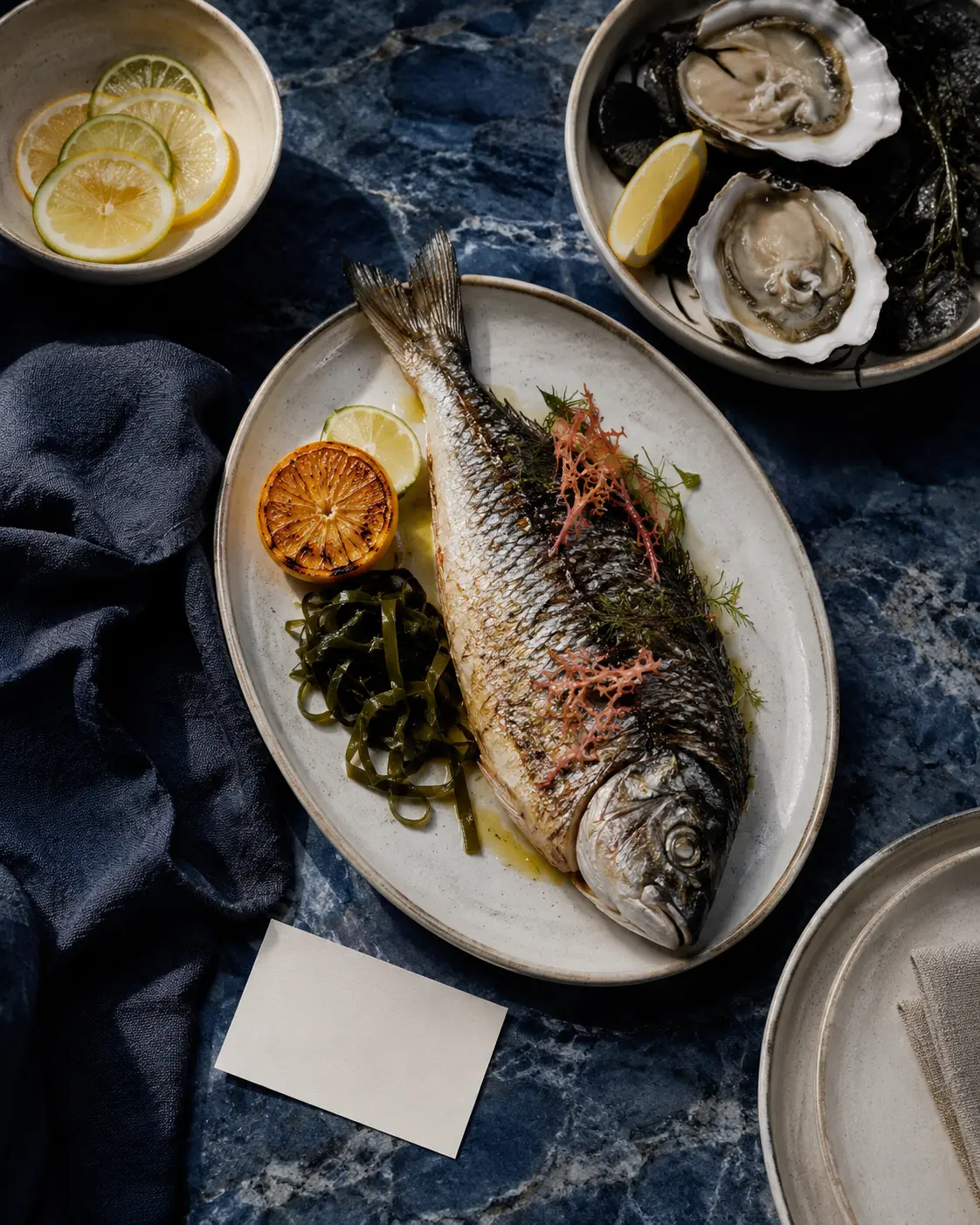
Traceability, freshness, regional identity and the questions influencing menus now.
Read in Ask Blue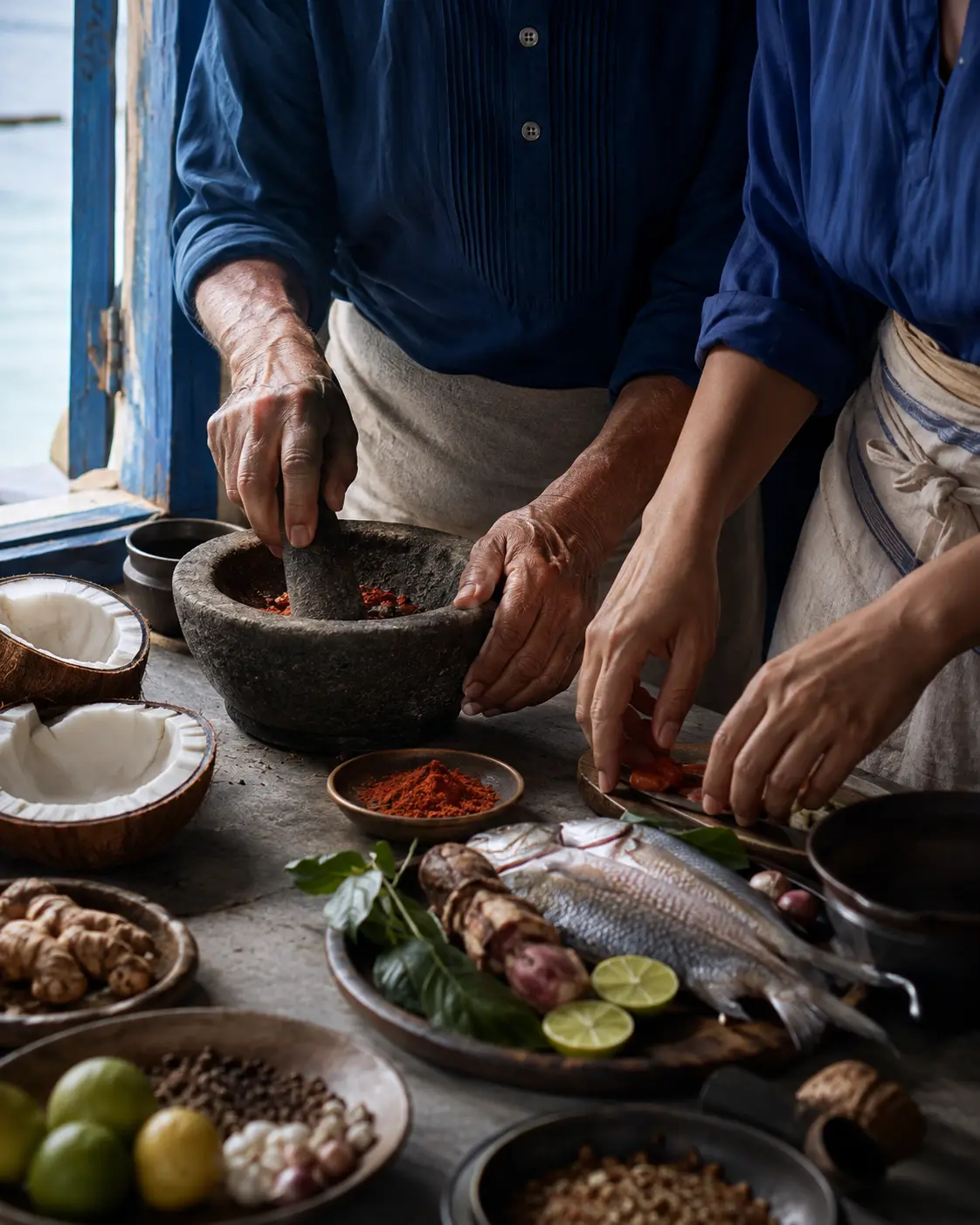
Memory, technique, ingredients and the everyday work behind living food traditions.
Read in Ask Blue
A route across oceans, techniques, markets and tables—without pretending one coast tastes like another.
Read in Ask Blue