Identity
Natural, cultured and imitation describe how the product came to exist. Ask for the exact description in writing.
EJ Pearl · library
Compare pearl types, visible qualities and the words sellers use.
Use this library to separate pearl identity from appearance and appearance from personal preference. It is a comparison starting point—not a remote grading service.
Use this page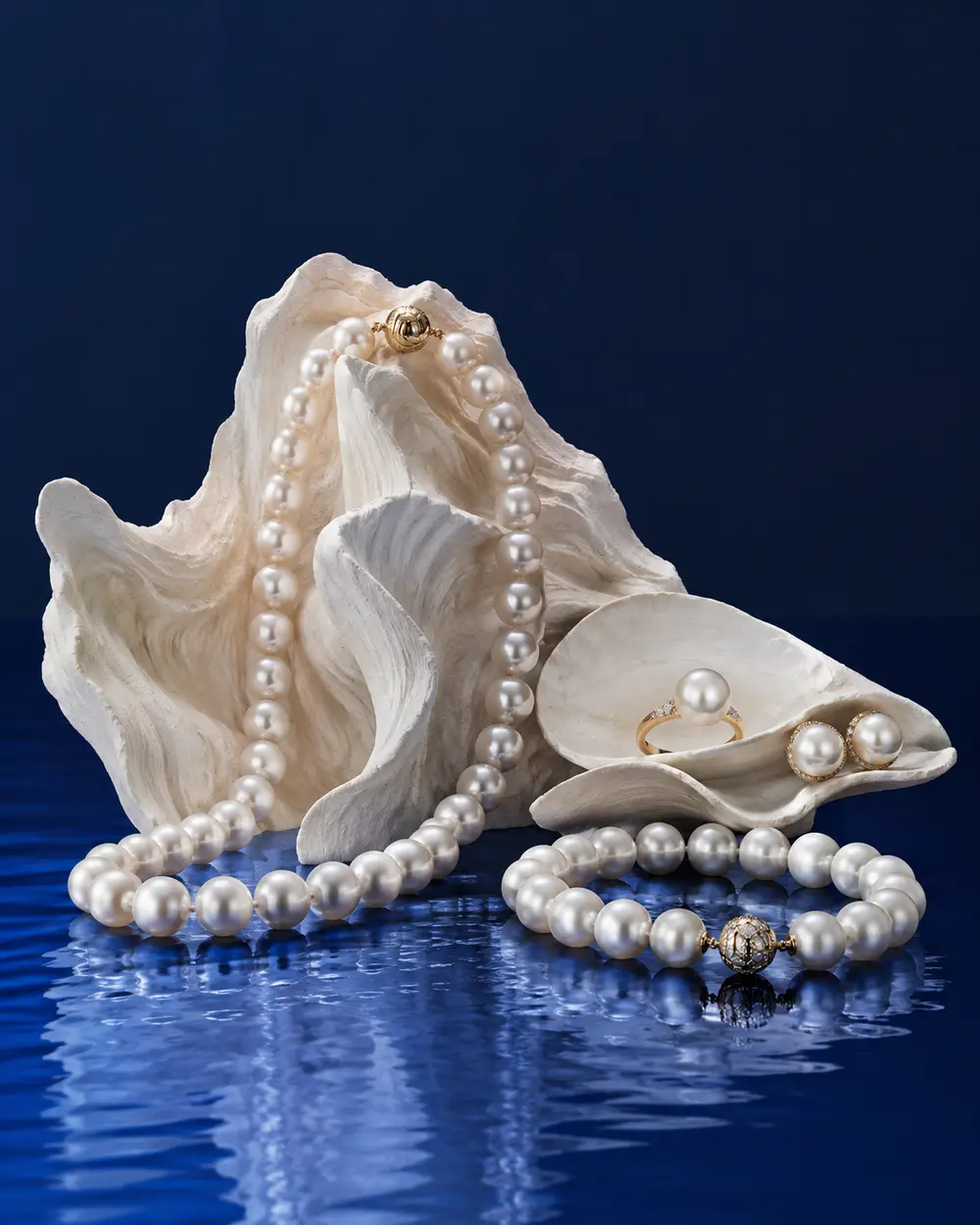
General-information visitor workspace.
Sources, scope and local checks are visible on this page.
What you leave with
Compare two pearl pieces using observable factors and internationally recognised terminology—not a seller's unexplained grade.
Evidence reviewed 8 August 2026Use the library
Move across the four decision areas, then use the source and local-check sections to test the choice before acting.
Natural, cultured and imitation describe how the product came to exist. Ask for the exact description in writing.
Begin with lustre, surface, shape, colour, size, nacre and matching rather than one headline grade.
Freshwater, akoya, Tahitian and South Sea pearls differ in typical range—not in a universal good-to-bad order.
The clasp, drill holes, knots, metal and setting affect how the finished piece wears and lasts.
Reference starting points
Five practical records selected for this page. Each one leads to the organisation, issuer, authority or business responsible for the information—not a copied listing.
Independently selected · No paid placement · Reference date 8 August 2026Japan · China · Vietnam
A saltwater pearl family often associated with round, white-to-cream pearls and high lustre.
Use GIA’s characteristics as a comparison baseline, not a remote grade.
French Polynesia
Saltwater cultured pearls whose naturally dark body colours can carry varied overtones.
Compare colour descriptions in neutral light before accepting trade names.
Australia · Southeast Asia
Large saltwater cultured pearls generally associated with Pinctada maxima oysters.
Compare actual lustre, surface and nacre rather than size alone.
Philippines · Indonesia
A South Sea pearl category with yellow-to-golden colour descriptions.
Ask whether colour is natural and whether treatment is disclosed in writing.
China · Global trade
A diverse category spanning many shapes, sizes, colours and nucleation methods.
Do not treat freshwater as a single quality tier; compare the individual pearls.
A listing confirms a useful official starting point—not a recommendation, test result or guarantee. Availability, prices, access, certification and operating status can change; recheck the linked source before booking, buying or travelling.
Evidence behind this page
Ask the seller to write down pearl identity, treatments, dimensions, metal and return terms. A page cannot grade the piece in your hand.
Laboratory guidance · Global gemmological reference
The seven observable value factors used to compare pearls without relying on a seller's single grade.
↗02Terminology standard · International jewellery trade
International terminology for natural, cultured, composite and imitation pearls, treatments and descriptions.
↗03Consumer-description rule · United States
A recognised national example of material disclosures and truthful pearl and jewellery descriptions.
↗GIA's value factors organise visible comparison; CIBJO defines the product language; the FTC source shows how one major consumer regulator treats disclosure.
Sources inform the framework; they do not endorse Eight June, a seller, product, destination or venue.
A simple way through
Choose two comparable pieces.
Observe them in neutral light.
Record identity, construction and return terms.
Go deeper with Ask Blue
Use these articles for the fuller explanation, examples and context. The utility above remains the practical decision layer.
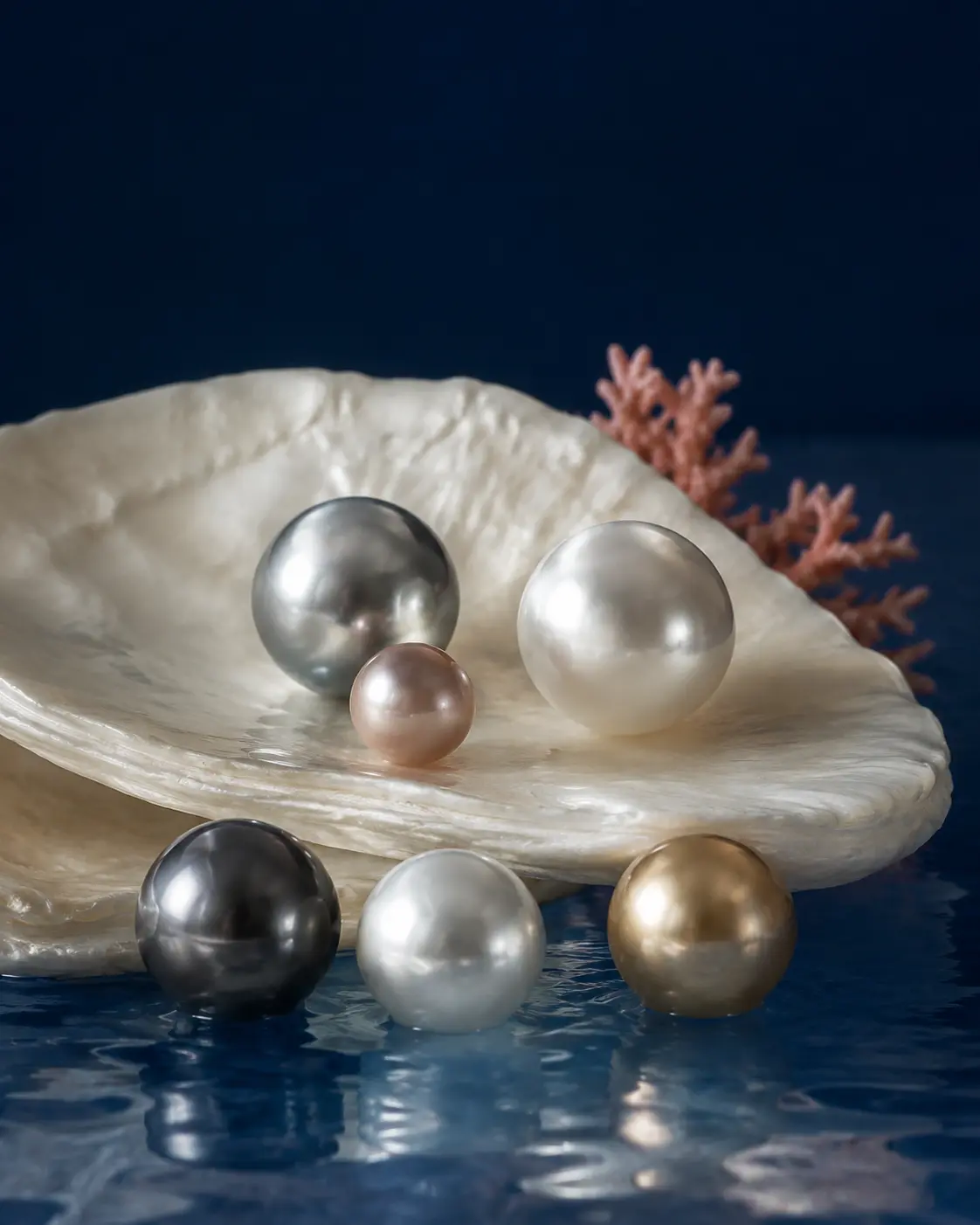
A clear look at lustre, surface, nacre and the details that shape what the eye sees.
Read in Ask Blue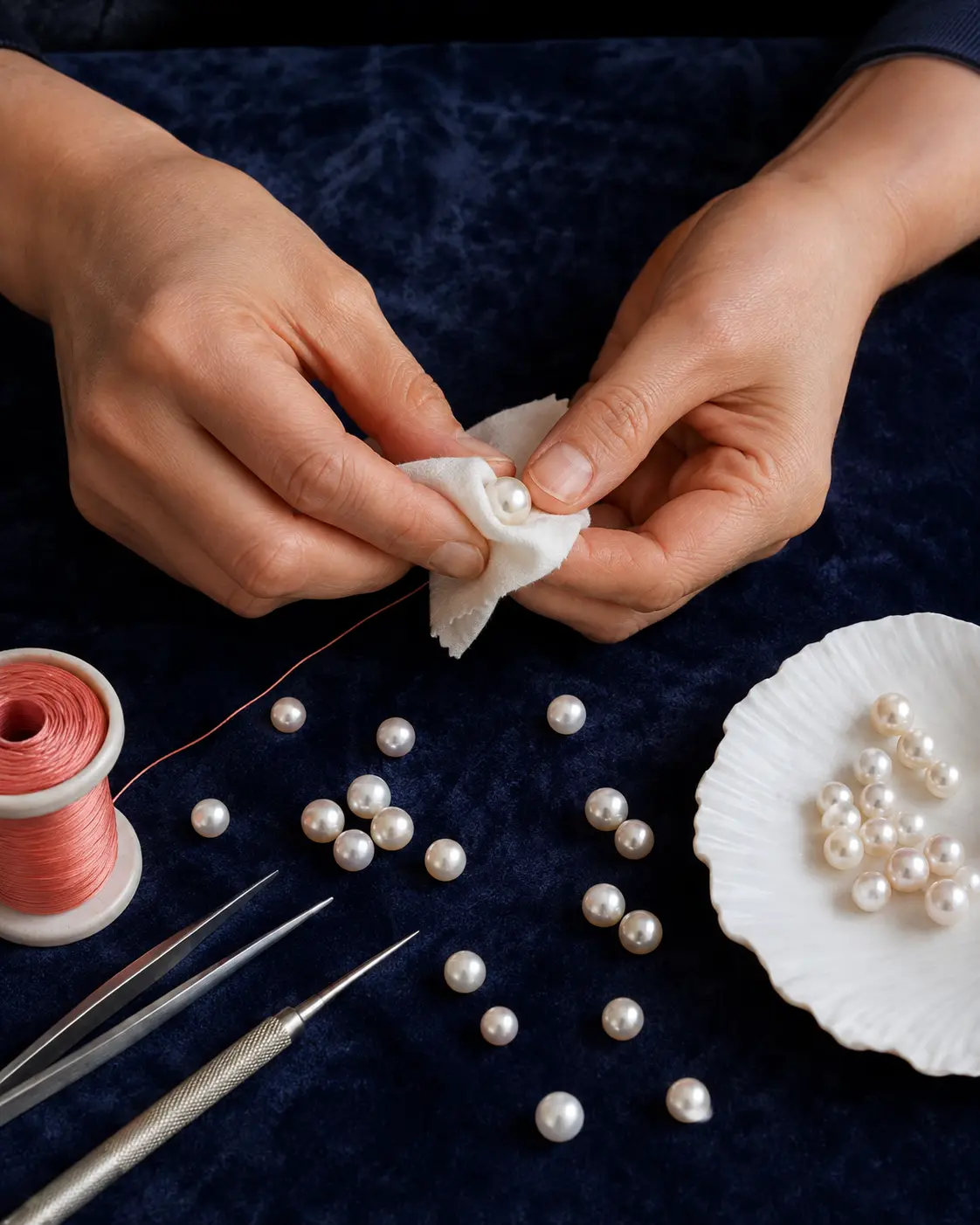
The people, judgement and patient work between cultivation and the finished piece.
Read in Ask Blue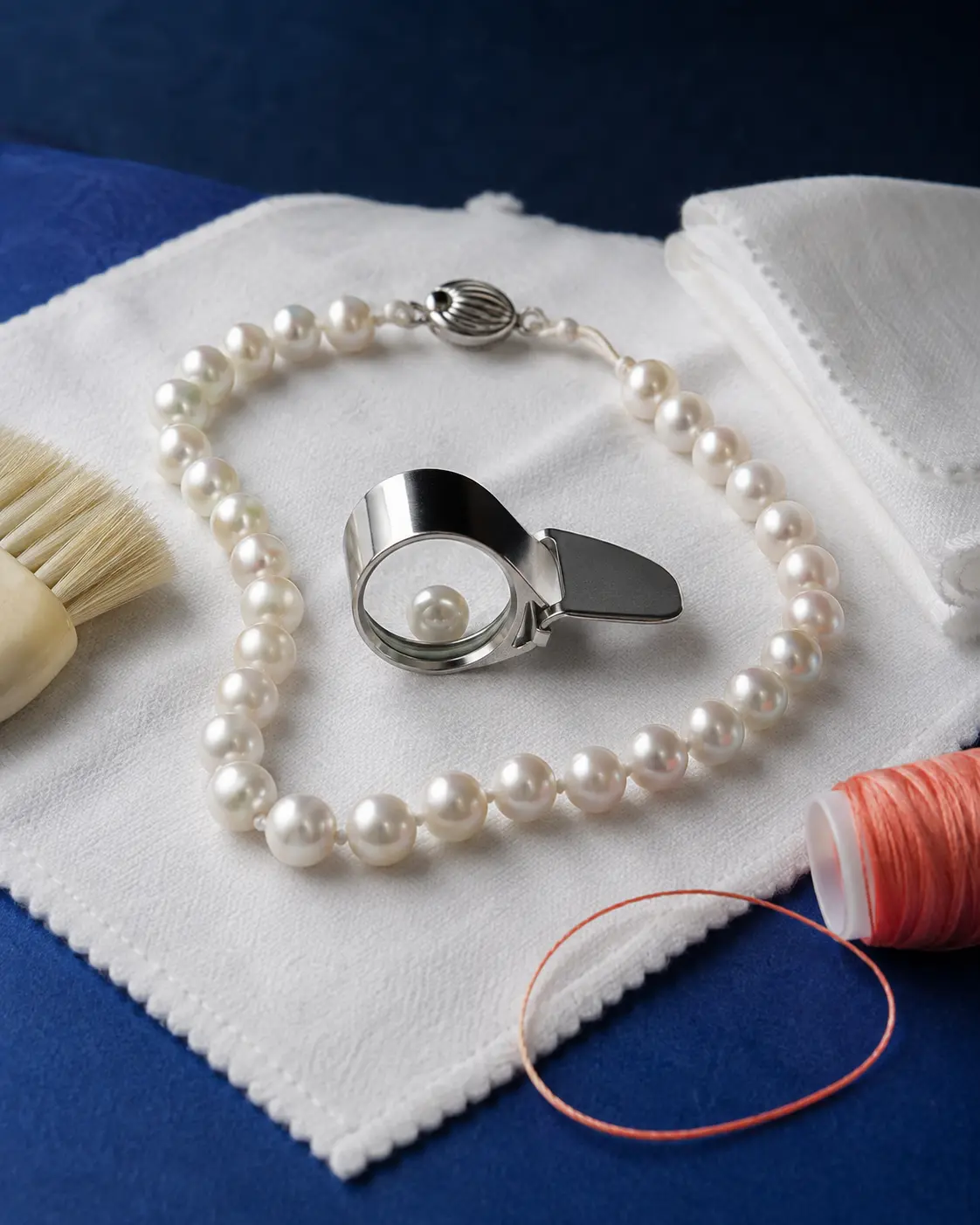
A practical care rhythm built around wear, storage and signs worth noticing.
Read in Ask Blue