Harvest and farming
Fishers, divers, gleaners, farmers and crew bring different knowledge, risk and access to the water.
EJ Catch · map
See the people and work hidden between landing and sale.
This map is about roles rather than pins. It reveals the work that can disappear when seafood is described only by vessel and chef.
Use this page
General-information visitor workspace.
Sources, scope and local checks are visible on this page.
What you leave with
See the people, rights and value hidden between harvest and sale so a food choice is not judged only by the final label.
Evidence reviewed 8 August 2026Use the map
Move across the four decision areas, then use the source and local-check sections to test the choice before acting.
Fishers, divers, gleaners, farmers and crew bring different knowledge, risk and access to the water.
Sorters, auction workers, traders and transporters influence identity, handling and price.
Cleaning, drying, smoking, fermenting and packing often carry specialised and gendered knowledge.
Vendors and cooks translate availability into local food culture, substitution and everyday value.
Reference starting points
Five practical records selected for this page. Each one leads to the organisation, issuer, authority or business responsible for the information—not a copied listing.
Independently selected · No paid placement · Reference date 8 August 2026Global small-scale fisheries
A multi-organisation hub for small-scale fisheries resources, organisations and initiatives.
Begin with community-authored and locally identified material where available.
Global
The internationally negotiated framework for sustainable small-scale fisheries and food security.
Use the guidelines to assess participation, tenure, gender and livelihoods—not only catch.
Global
A network documenting issues affecting artisanal and small-scale fishing communities.
Follow named community statements and distinguish advocacy from government data.
Asia-Pacific · Indian Ocean · Global partners
A network supporting locally managed marine areas and peer exchange.
Use country and community contacts to understand governance in the specific place.
Global small-scale fisheries
An international research partnership focused on small-scale fisheries visibility and governance.
Use its case material as research context and verify local conditions directly.
A listing confirms a useful official starting point—not a recommendation, test result or guarantee. Availability, prices, access, certification and operating status can change; recheck the linked source before booking, buying or travelling.
Evidence behind this page
Community claims require named, current evidence and consent; do not infer benefit from proximity or craft language alone.
UN policy framework · Global
Rights, livelihoods, gender, decent work and community value in small-scale fisheries—not only catch volume.
↗02UN traceability guidance · Global fisheries value chains
The role and limits of documentation in linking harvest, landing, processing and trade.
↗03UN flagship evidence · Global
The global production, trade, nutrition and sustainability context behind seafood choices.
↗FAO's small-scale fisheries framework provides the rights and livelihood lens; traceability and SOFIA provide the chain and global context.
Sources inform the framework; they do not endorse Eight June, a seller, product, destination or venue.
A simple way through
Trace the chain beyond harvest.
Look for who is named and paid.
Prefer stories that let communities speak for themselves.
Go deeper with Ask Blue
Use these articles for the fuller explanation, examples and context. The utility above remains the practical decision layer.
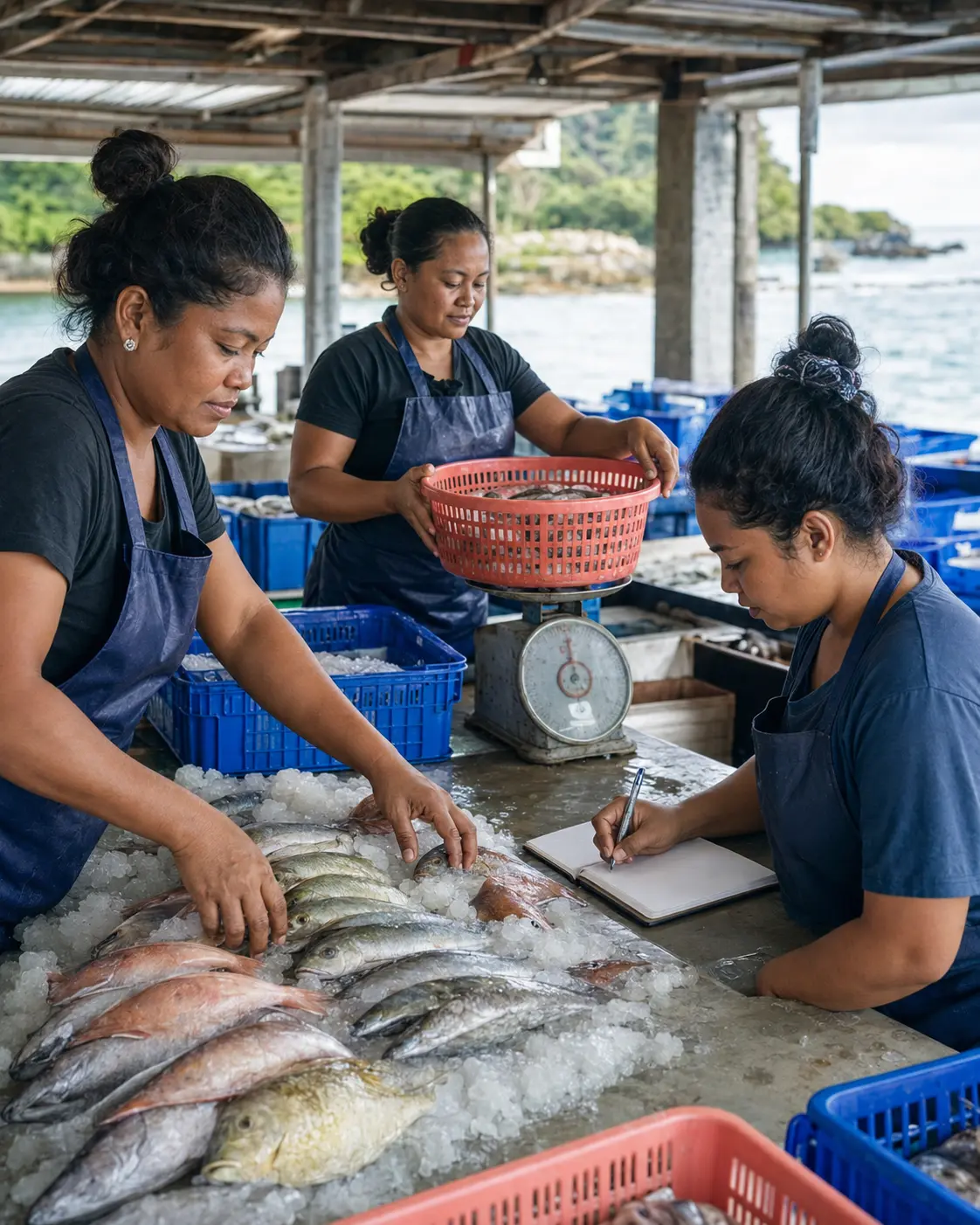
Work on shore, in markets and across supply chains that catch statistics can make easy to miss.
Read in Ask Blue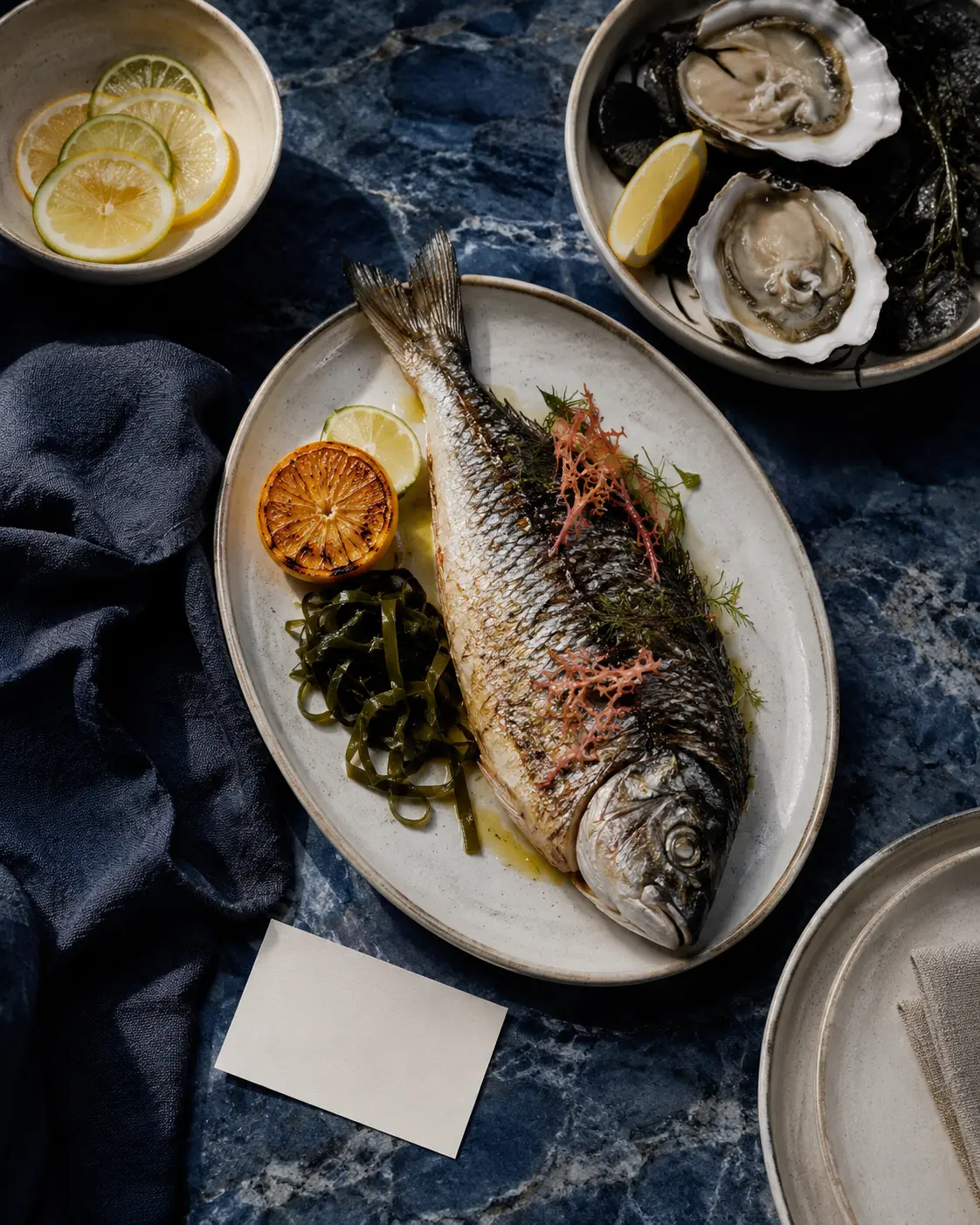
Traceability, freshness, regional identity and the questions influencing menus now.
Read in Ask Blue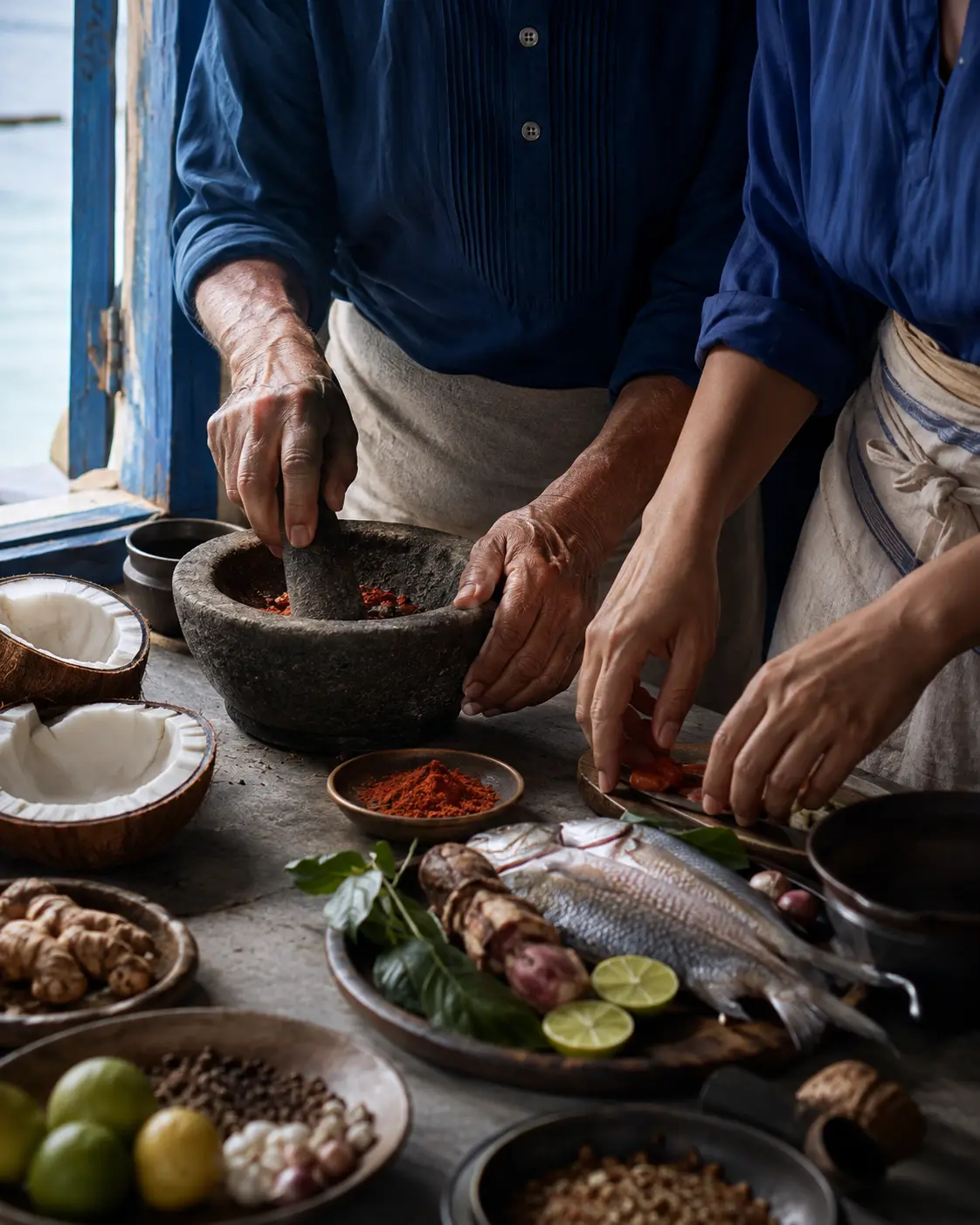
Memory, technique, ingredients and the everyday work behind living food traditions.
Read in Ask Blue